
Low-Carbon Steel Investment: Comparing EAF and Hydrogen-DRI Routes
A steel investment can look attractive on a decarbonization roadmap yet struggle commercially when electricity, metallic feedstock, or customer specifications are examined. For an existing mill expanding lower-carbon output, scrap-based electric arc furnace production is usually the more established, less infrastructure-intensive starting point. Hydrogen-based direct reduced iron paired with an EAF becomes more compelling when dependable low-emission electricity, suitable ore, hydrogen supply, and demand for low-residual steel can be secured together.
The choice is not simply “EAF versus hydrogen.” Both routes can use an EAF to melt and refine steel; the main difference is where the metallic iron comes from. This distinction matters to steel buyers as well as investors: a pipe or machinery manufacturer needs material that meets its grade, delivery, and carbon requirements, not merely a supplier advertising a particular furnace type.
Compare the complete production routes
In scrap-based production, an EAF melts recovered steel, often with additions of direct reduced iron or other metallic inputs to control chemistry and operating performance. Its emissions depend heavily on electricity supply, scrap preparation, charge composition, fuel use, and downstream processing. An EAF connected to a carbon-intensive grid is not automatically a low-carbon source.
Hydrogen-DRI uses hydrogen to remove oxygen from iron ore in the solid state. The resulting iron is then melted, typically in an EAF, before casting and rolling. Hydrogen production, ore preparation, reduction, and melting must therefore be included in the investment and emissions assessment. Calling a project “hydrogen-ready” does not establish how much hydrogen it currently uses or the emissions of that hydrogen.
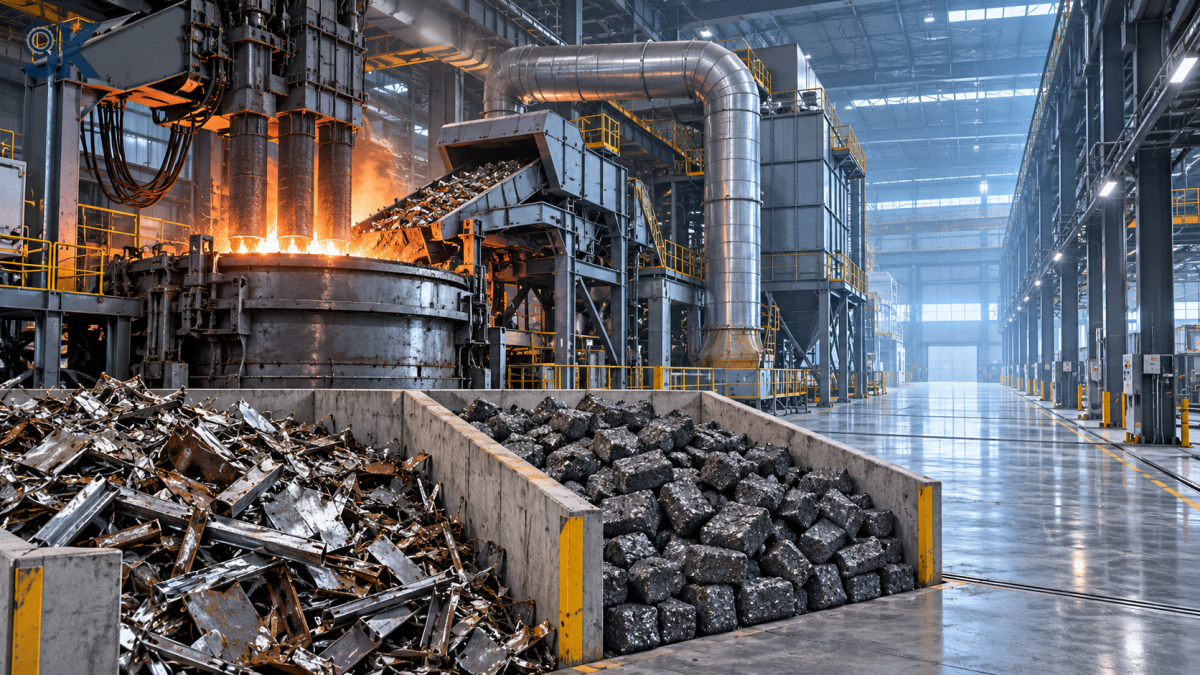
Some projects buy DRI or hot briquetted iron rather than build a reduction plant. Others blend scrap and DRI in changing proportions. Compare these configurations separately: purchasing iron units transfers part of the capital requirement to a supplier but retains price, availability, transport, and embedded-emissions exposure.
Start with the steel specification, not the emissions label
A proposed scrap-EAF investment may appear suitable until the intended product mix is tested against available scrap. Copper and tin are particularly important residuals because conventional EAF refining does not readily remove them. Buying more scrap is not equivalent to securing enough scrap of the required quality.
For demanding sheet, tube, or engineering applications, assess the charge mix against chemistry limits, forming requirements, weldability, toughness, and surface quality. Higher-quality scrap and ore-based iron units may be needed to dilute residuals. Those purchases can change the apparent cost advantage of a scrap-heavy route.
Hydrogen-DRI can provide low-residual iron units, but that does not automatically produce compliant finished steel. Slag volume, refining practice, alloy additions, casting control, rolling, and heat treatment still affect performance. Ore gangue content also influences energy use, flux demand, slag handling, and metallic yield.
The same distinction applies when procuring a finished section such as an I Beam: its production route and carbon documentation do not replace the specified grade, dimensions, or inspection requirements. For steel pipe, separately confirm whether the product is welded or seamless and identify the relevant strip, plate, or billet supply chain.
Price electricity, hydrogen, and feedstock as operating systems
Electricity: availability matters alongside the tariff
An EAF requires sufficient connection capacity and a power system able to accommodate its operating profile. A favorable average electricity price can conceal demand charges, network upgrades, curtailment exposure, or expensive production hours. Model the actual operating schedule rather than applying one annual tariff to every tonne.
Hydrogen-DRI adds another electricity question when hydrogen is produced through electrolysis. The reduction plant needs a stable reducing-gas supply, while renewable generation may vary. Storage, grid purchases, backup arrangements, and electrolyzer utilization determine whether inexpensive generation translates into affordable hydrogen delivered continuously.
For either route, distinguish physical power availability from contractual emissions claims. Establish how electricity-related emissions are calculated and whether the evidence will satisfy the intended customer reporting framework.
Hydrogen: assess the delivered supply arrangement
A hydrogen price at the electrolyzer outlet is not necessarily the price at the reduction plant. Compression, transport, storage, losses, and backup supply can alter the economics. Supply contracts should identify pressure, purity, volume flexibility, outage provisions, and the method used to substantiate hydrogen emissions.
Natural-gas-based DRI designed for later hydrogen conversion may provide a staged pathway. However, conversion timing, equipment compatibility, gas availability, and future hydrogen cost require explicit assessment. Future capability should not be presented as current low-emission production.
Feedstock: qualify usable tonnes
Scrap contracts need more than broad category descriptions. Review residual chemistry, contamination, size, density, moisture controls, and acceptance procedures. Delivered price should be adjusted for preparation costs, metallic recovery, and reject risk.
Hydrogen-DRI projects need ore or pellets suitable for the selected reduction process. General iron ore availability is not enough. Confirm feedstock specifications, supplier capacity, transport options, and performance assumptions with the process supplier before treating supply as bankable.
Build the financial comparison around saleable steel
A meaningful investment model uses the same output definition for both routes: a tonne of saleable steel at an agreed grade and delivery point. Comparing liquid steel from one route with finished rolled material from another can produce a misleading result before any assumptions are challenged.
Separate capital spending into steelmaking equipment, upstream facilities, utilities, site works, environmental controls, and supporting infrastructure. An existing EAF site may reuse casting, rolling, or logistics assets. A greenfield hydrogen-DRI project may need major off-site investment that does not appear in the main equipment quotation.
Include ramp-up losses, maintenance, refractory and electrode consumption, yield, working capital, and financing during construction. For DRI integration, assess whether hot charging is feasible and how interruptions between reduction and melting would be managed. A theoretically efficient integrated layout can become vulnerable if one unit repeatedly constrains the other.
Stress-test the model with a small set of commercially distinct cases:
- Power-cost pressure: higher electricity prices, restricted operating hours, or delayed grid connection.
- Feedstock pressure: more expensive clean scrap, tighter pellet supply, or additional virgin iron required to meet chemistry limits.
- Hydrogen disruption: delayed supply, lower electrolyzer utilization, or extra storage and backup costs.
- Revenue pressure: slower qualification, reduced utilization, or customers unwilling to pay the assumed low-carbon premium.
Report the break-even conditions, not just a single cost forecast. Decision-makers need to know which electricity price, hydrogen cost, utilization level, and realized premium make the project viable—and which variables are contractually protected. Treat policy support and carbon-related value according to their actual eligibility and duration, rather than assuming they remain available throughout the asset life.
Verify the carbon claim before paying a premium
Steel Industry Development depends partly on whether lower-emission production can be distinguished credibly from ambitious labeling. A route name alone cannot establish product carbon intensity. Scrap-EAF production still involves electricity, electrodes, fuels, alloys, and processing; hydrogen-DRI also carries emissions from ore preparation, hydrogen supply, and transport.
Request a product-level footprint with a defined system boundary and reporting period. Determine whether it covers crude steel, billet, hot-rolled coil, or the finished pipe or section being purchased. Heat treatment, coating, fabrication, and freight may sit outside the stated boundary.
Scrap accounting and allocation methods can materially affect comparisons. Check whether suppliers apply compatible rules and whether evidence is independently verified. Where a claim uses certificate allocation or mass balance, establish what is assigned to the order and whether that approach is accepted by the end customer. A mill test certificate establishes material characteristics; it does not by itself verify carbon performance.
Choose a commitment that matches the unresolved risks
For an existing producer with access to suitable scrap and dependable lower-emission power, improving or expanding EAF production can offer a practical near-term pathway. The investment case is stronger when the target grades can be made consistently without relying on uncertain quantities of premium scrap or virgin iron.
Hydrogen-DRI merits closer consideration where low-residual metallics are strategically important and the site can support ore logistics, hydrogen supply, electricity, and sustained utilization. Before a full commitment, the project needs aligned evidence across those interfaces—not separate optimistic forecasts from each supplier.
A mixed-charge EAF or externally sourced DRI arrangement may preserve flexibility while hydrogen infrastructure develops. Evaluate that flexibility explicitly: charge-handling systems, furnace design, contracts, and storage arrangements must support the proposed operating range. “Flexible” equipment has limited commercial value if feedstock contracts prevent switching.
- Define the output: establish grades, annual saleable volume, qualification requirements, and the carbon boundary customers will accept.
- Validate the location: obtain credible power-connection, feedstock, water, hydrogen, and logistics assessments appropriate to each configuration.
- Test integrated economics: reconcile equipment performance, delivered inputs, ramp-up assumptions, and downside cases in one model.
- Stage the commitment: link major expenditure or long-term procurement obligations to verified supply readiness and customer acceptance.
For pipe buyers and machinery manufacturers, the immediate decision may be procurement rather than plant ownership. Qualify material through the normal technical process, request traceable carbon evidence, and confirm which mill and production route will supply the order. Trial orders can test documentation and processing suitability before longer commitments, but they do not replace checks on ongoing capacity.
A low-carbon supply agreement should address substitution between mills, changes in charge mix, carbon-data updates, delivery interruptions, and remedies for unsupported claims. These terms connect the investment promise to the material actually received—and prevent a lower-emission sourcing commitment from becoming an avoidable quality or continuity risk.
Latest News
- How do iron ore prices affect steel pipe price trends?
- How do tariffs affect square tube export markets?
- How steel pipe price trends affect inventory valuation
- Steel pipe price forecast for 2026 amid changing raw material costs
- Square Tube Export News: What Buyers Should Watch in Freight and Supply
- What new trade investigations mean for steel pipe exports
Send Us A Message

