
News center
How do tariffs affect square tube export markets?
Tariffs can change a square tube export market quickly because they alter the price an importer pays at the border and, with it, the relative appeal of competing origins. A supplier with a competitive mill price may lose an order once duties are included, while a higher-priced supplier in another country may become the more economical choice.
The effect is rarely uniform across all square tube. It depends on the importing country’s rules, the product’s classification and origin, the duties already in place, and the buyer’s ability to pass higher costs on to its own customers. For commercial evaluators, the useful question is how a specific measure changes the economics and reliability of a particular supply route.
How tariffs change the price buyers compare
A square tube quotation is only one part of the importer’s cost. Freight, insurance, customs charges and domestic delivery can all influence the final comparison. Tariffs add another layer, and some shipments may also face trade remedy duties, such as anti-dumping or countervailing duties, depending on the applicable order.
A simplified example shows why the tariff rate alone can change a sourcing decision. Assume two suppliers offer comparable tube and that the relevant customs value for each shipment is $1,000 per tonne. If one shipment faces a 20% duty and the other faces a 5% duty, the illustrative duty amounts are $200 and $50 per tonne respectively. Before other charges, the first shipment costs $150 more per tonne at the border.
That difference is illustrative, not a quotation or a statement of any current tariff. Actual calculations depend on the customs value, the applicable measures and how each charge is assessed. Duties may apply on different bases, and additional taxes or fees can affect the amount paid at import. Commercial teams should ask a qualified customs professional to calculate the charges for the specific shipment.
Tariffs also affect the point at which a lower mill price becomes attractive. If an exporter reduces its offer to offset a duty, it may retain an order but give up margin. If the exporter maintains its price, the importer must either absorb the increase or seek a higher selling price. Neither response is costless, and the outcome depends on the alternatives available to both sides.
Contract terms determine who feels the immediate impact. A delivered-duty-paid offer places different obligations on the seller from an arrangement where the buyer acts as importer and pays duties. Even when a seller quotes a delivered price, the contract should make clear how a tariff change between quotation, shipment and customs entry will be handled.
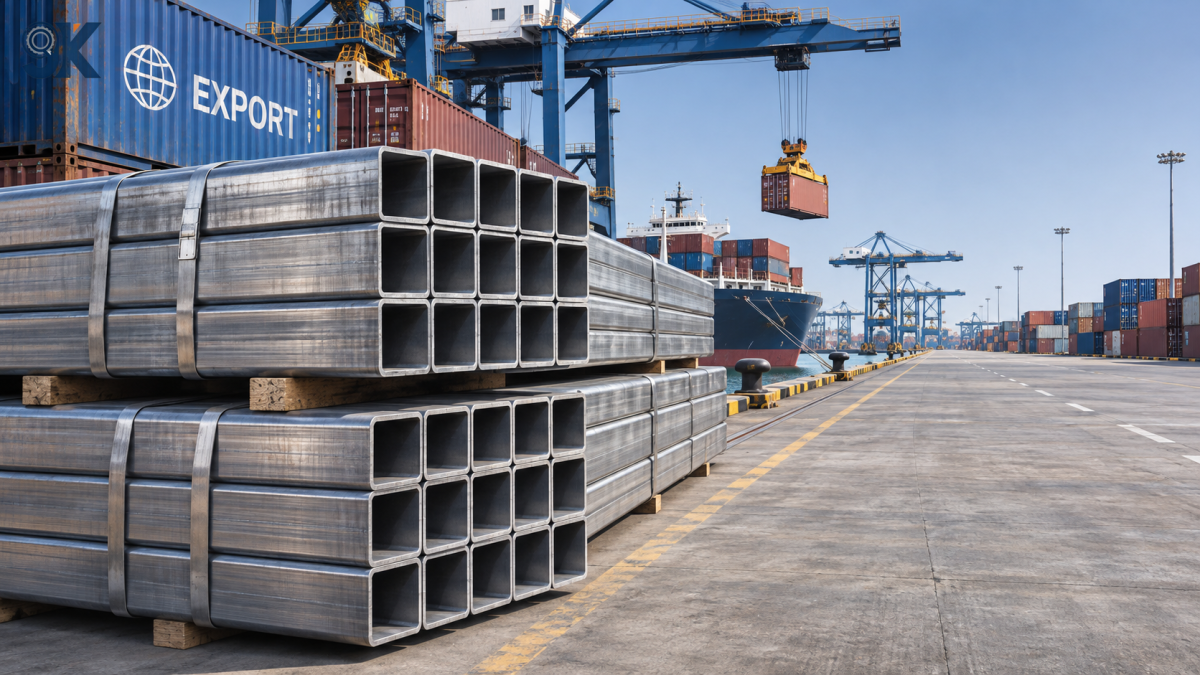
Why square tube trade flows can shift
When an importing market raises the cost of a particular origin, buyers may look for tube from countries facing lower duties. Exporters, in turn, may seek customers in markets where their landed prices remain competitive. The resulting shift can affect suppliers and buyers that are not directly covered by the original measure.
For example, tube redirected from one destination may increase competition in another. Local distributors there could gain access to more offers, while domestic mills and established exporters face pressure on prices. The size and duration of the effect depend on available production, freight costs, import rules and demand in the alternative market.
A lower tariff does not automatically make a new origin a practical substitute. A buyer may need a particular wall thickness, length tolerance, steel grade, finish or inspection regime for machinery fabrication. A replacement source must also be able to meet delivery schedules and provide acceptable documentation. If those conditions are difficult to satisfy, buyers may continue purchasing from a higher-duty origin while adjusting prices or contract volumes.
The effect can differ between standard stock and customized tube. A distributor buying common sizes may be able to compare several qualified origins. A manufacturer using tube made to a drawing may have fewer immediate alternatives, particularly if changing the material or production route requires customer approval. In the latter case, a tariff can raise costs before the buyer has time to qualify another supplier.
Demand can also change beyond the import transaction itself. Higher tube costs may cause fabricators to delay purchases, reduce inventory or revise quotations for finished equipment. Some may redesign a component or compare another material, provided engineering requirements allow it. Others will accept a higher input cost because changing a design would be more expensive than paying the duty.
The same product description can lead to different duty outcomes
“Square tube” is a commercial description, not a complete customs classification. The applicable treatment can depend on the material, manufacturing process, dimensions, product form, origin and the wording of a tariff measure. Carbon steel and stainless steel products, for example, should not be assumed to fall under the same provisions.
Trade remedy orders require particular care. Their scope may be defined in technical language and can contain exclusions or conditions that are not obvious from a supplier’s invoice description. A product’s tariff classification is relevant, but it does not necessarily settle whether the product falls within a particular trade remedy order.
Processing and shipment through another country also require a careful origin analysis. Cutting, finishing or forwarding tube elsewhere does not automatically change its origin for customs purposes. The outcome depends on the importing country’s rules and the operations performed. A lower-duty route only works commercially if its origin and supporting records withstand customs scrutiny.
Buyers evaluating a new route should assemble the technical and transaction details before relying on a duty estimate:
- Steel grade and composition, production method, dimensions and intended product form.
- Country of manufacture and details of any processing performed elsewhere.
- Proposed customs classification and the specific tariff or trade remedy measures to be reviewed.
- Commercial invoice, mill documentation and origin records needed to support the declaration.
- Contract terms identifying the importer and allocating duties, taxes and the cost of later adjustments.
These details help distinguish a genuine landed-cost advantage from an assumption that could be challenged after shipment. They also make supplier quotations easier to compare on a consistent basis.
Where material substitution changes the calculation
Tariff pressure can lead buyers to consider a different material or manufacturing route, but the comparison must include more than the duty rate. A fabricator considering stainless material for a formed component, for example, may examine input costs such as 201 Stainless Steel Coil alongside forming, welding, inspection and finishing expenses.
That coil is not a direct substitute for finished square tube. The proposed component must first be manufacturable from the material and acceptable for the application. Grade suitability, corrosion exposure, mechanical requirements and customer specifications can rule out a switch even if the duty-adjusted input price looks attractive. The resulting product’s own customs treatment also needs separate assessment.
The same discipline applies when comparing carbon steel tube from different origins. A lower quoted price may reflect a different specification, coating, testing scope or delivery basis. A meaningful comparison uses equivalent requirements and includes the cost of closing any gaps.
How to assess a market when tariffs may change
For an exporter assessing a destination, a single landed-cost calculation is a starting point. The more useful exercise is to test how much room the offer has before a duty increase, freight change or competitor price move makes it uncompetitive.
Build a comparison for the intended product and delivery terms, then vary the duty assumption. Keep freight, customs-related costs and domestic delivery visible as separate items. If a modest change in duty eliminates the advantage over an alternative origin, the opportunity is more exposed than a comparison of mill prices suggests.
Buyers can use the same approach to assess supply continuity. Compare the current route with at least one feasible alternative, including qualification time and minimum order quantities. A backup supplier that cannot meet the required specification or delivery window has limited value during a disruption, even if its quoted price is attractive.
Timing matters because the rate relevant to a transaction may depend on the applicable rules at customs entry, rather than the date the quotation was issued. A long production and shipping cycle can leave both parties exposed if a measure changes before clearance. Contract clauses should address who bears that change, when either party can revise a price, and what happens to goods already in production or transit.
Inventory can provide temporary protection, but it creates a separate cost and does not resolve a lasting tariff disadvantage. Bringing purchases forward may also strain storage capacity or working capital. The decision should reflect the buyer’s order book and the shelf life of its commercial commitments, rather than an assumption that every tariff change will be reversed quickly.
For market monitoring, focus on developments that can alter a specific route: changes to tariff schedules, trade remedy investigations or orders, origin requirements, and official implementation dates. Distributor quotations, freight offers and competitor availability show how those measures translate into commercial prices. A policy headline alone rarely reveals whether a particular square tube order remains viable.
The strongest opportunities are those that remain workable across a reasonable range of duty outcomes and can be supported by clear product and origin documentation. Where the margin depends on one narrow interpretation or an unusually low duty assumption, the business case deserves a closer review before volumes are committed.
Latest News
- How do iron ore prices affect steel pipe price trends?
- How do tariffs affect square tube export markets?
- How steel pipe price trends affect inventory valuation
- Steel pipe price forecast for 2026 amid changing raw material costs
- Square Tube Export News: What Buyers Should Watch in Freight and Supply
- What new trade investigations mean for steel pipe exports
Send Us A Message

