
Square Tube Export News: What Buyers Should Watch in Freight and Supply
For procurement teams, keeping up with Square tubeExport News is essential to managing costs and avoiding supply disruptions. Freight rates, shipping schedules, steel availability, and export documentation can all affect the timing and landed cost of an order.
This article explores the key freight and supply factors buyers should monitor when sourcing square tubes, helping them plan purchases, evaluate suppliers, and make more informed decisions in a changing global market.
The practical takeaway is straightforward: compare delivered cost, production readiness, and shipment reliability together. A low tube price offers limited value if freight, delays, or documentation problems disrupt manufacturing.
Which Freight Changes Matter Most to Square Tube Buyers?
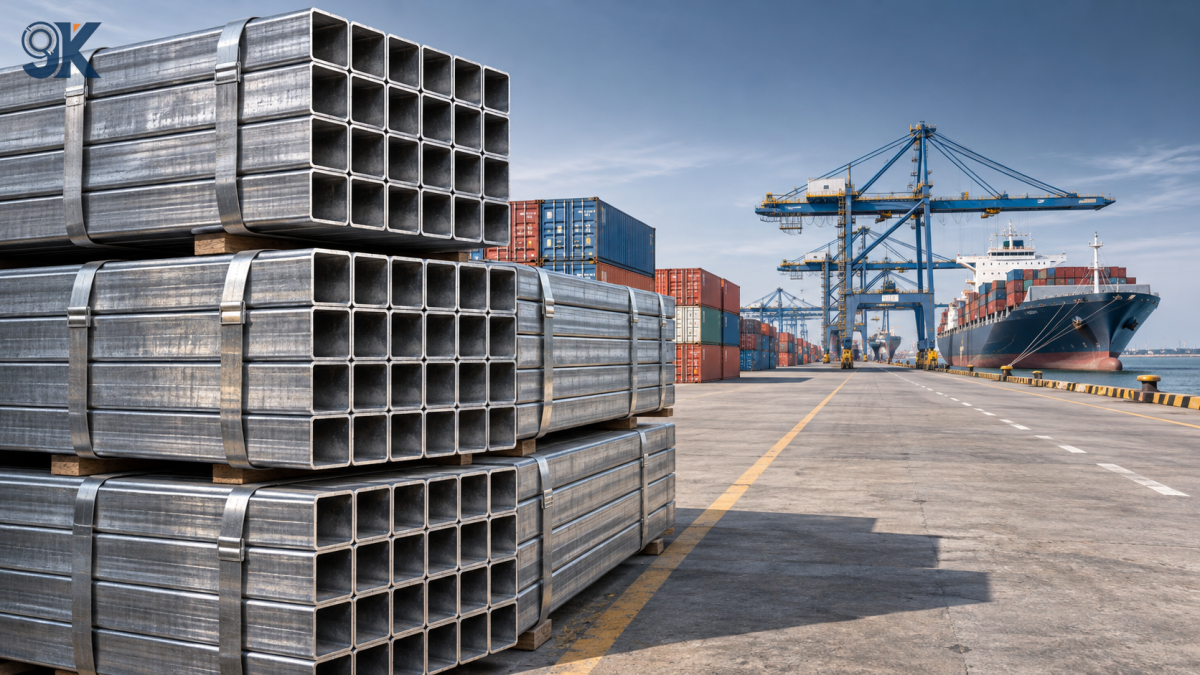
Freight rates are important, but they are only one part of shipping risk. Buyers should also monitor sailing frequency, transit time, container availability, and congestion at both ends.
A rate quoted today may change before the cargo is ready, especially when the supplier has not booked space. Ask how long the quote remains valid and which charges can change.
Request a breakdown covering inland transport, export handling, ocean freight, destination charges, and any applicable surcharges. Confirm which party pays each item under the agreed Incoterms rule.
For time-sensitive orders, compare the expected arrival window, not just the advertised transit time. A cheaper service with infrequent sailings may create a longer overall wait.
When reviewing Square tubeExport News, look for developments affecting your actual route and shipment date. Broad global averages may not reflect conditions between your loading and destination ports.
Ask the forwarder for the next available sailing, estimated transshipment points, booking deadline, and recent schedule reliability. Treat all estimates as subject to carrier confirmation.
How Should Buyers Compare FCL, LCL, and Bulk Shipping?
Full container load, or FCL, can work well when order volume and weight justify a dedicated container. It also gives buyers more control over cargo consolidation.
However, a container’s usable payload and internal dimensions vary by equipment and carrier. Confirm both limits before assuming that a particular tube length or tonnage will fit.
Less than container load, or LCL, may suit trial orders and smaller purchases. It avoids paying for an entire container, but consolidation and destination handling can add cost and time.
Compare LCL quotations using the forwarder’s chargeable weight or volume calculation, along with minimum charges. Long steel bundles may also face handling restrictions or special packing requirements.
Bulk or breakbulk shipping may be appropriate for larger shipments or cargo unsuitable for containers. Availability depends on the route, port facilities, shipment size, and vessel schedule.
Before choosing a mode, ask for an itemized comparison based on the same cargo dimensions, weight, origin, destination, insurance assumptions, and delivery date.
Include unloading arrangements at the destination. A shipment that is inexpensive at sea may become costly if the receiving facility lacks suitable lifting equipment or storage space.
What Determines Whether Supply Will Be Ready on Time?
Start by separating stock availability from production capacity. A supplier may have standard square tubes available while your required grade, wall thickness, length, or finish needs new production.
Ask whether the quoted quantity is physically in stock, allocated to your order, or dependent on incoming material. Request an estimated production schedule for any unallocated portion.
For custom orders, confirm the availability of input steel and the time needed for forming, cutting, inspection, packing, and inland delivery to the port.
Production capacity is not the same as a reserved production slot. Ask when scheduling becomes firm and which approvals, payments, or drawings are required before work can start.
Buyers should also clarify the timing of inspection. If third-party testing is required, arrange it early enough to avoid missing the cargo delivery deadline for the booked vessel.
For repeat purchases, review the supplier’s historical performance by specification and shipment, including late deliveries, rejected material, and the quality of corrective actions.
A supplier offering customization, processing, warehousing, and logistics coordination may simplify communication. Even so, buyers should verify who performs each activity and who is accountable for delays.
How Can Buyers Calculate the Real Landed Cost?
A useful landed-cost estimate starts with the tube price and adds every expense required to bring compliant goods to the receiving location.
Depending on the transaction, these may include inland freight, export charges, ocean freight, cargo insurance, import duties, taxes, customs brokerage, destination handling, and final delivery.
Also consider inspection fees, financing costs, expected storage charges, and a reasonable allowance for delay. Keep recoverable taxes separate from costs that remain with the business.
For example, compare two suppliers using the same delivered quantity and destination. A lower factory price may disappear once additional trucking, port charges, and handling are included.
Check whether quotations use actual weight, theoretical weight, or another billing basis. Differences in tolerances, tube length, and bundle weight can affect both the invoice and transport cost.
Exchange rates can also change the comparison. Record the quotation currency, payment schedule, and rate assumptions, then test how a currency movement would affect your budget.
Incoterms define the division of certain costs and risks, but they do not replace a detailed contract. State the named place, applicable Incoterms edition, and any agreed responsibilities.
Before committing, ask each supplier and logistics provider to identify exclusions. Destination charges, demurrage, detention, and inspection costs should not remain hidden assumptions.
Which Specifications and Documents Should Be Confirmed Before Booking?
A shipment can arrive on schedule and still fail the purchase requirement. The purchase order should identify the applicable standard, steel grade, dimensions, tolerances, length, and quantity.
For machinery applications, clarify any requirements for surface condition, straightness, weld quality, end preparation, and traceability. Provide drawings where tube geometry or processing affects assembly.
Confirm the required inspection method and acceptance criteria before production. Specify whether mill test certificates, dimensional reports, or independent inspection documents are needed.
Documentation requirements vary by destination and transaction. Common documents include the commercial invoice, packing list, transport document, and any required certificate of origin or product certificates.
Ask your customs broker or importer to confirm local requirements before shipment. Product classification, applicable duties, trade remedies, and permit requirements depend on the goods and importing jurisdiction.
Ensure descriptions, quantities, weights, and consignee details agree across the documents. Inconsistencies can trigger clarification requests, clearance delays, or additional storage charges.
Request draft documents before the original transport document is finalized. This gives the buyer, supplier, forwarder, and broker time to correct errors before they affect clearance.
When preferential origin treatment is claimed, verify eligibility and documentation with a qualified customs adviser. A certificate alone does not guarantee that the goods qualify.
How Can Procurement Teams Reduce Disruption Risk?
Build a timeline backward from the date the tubes must be available for production. Include manufacturing, inspection, inland delivery, port cutoffs, ocean transit, clearance, and final transport.
Add a buffer based on the consequences of delay and the reliability of the route. A critical production line may justify more protection than a flexible replenishment order.
Consider splitting shipments when a partial delivery can keep operations running. Check the additional freight and handling cost first, because multiple shipments may increase the total bill.
For critical specifications, qualify an alternative supplier before an emergency occurs. Confirm that the second source can meet the same technical requirements, documentation standards, and inspection criteria.
Safety stock can absorb short disruptions, but it ties up cash and warehouse space. Set the quantity using consumption, replenishment uncertainty, and the operational cost of a shortage.
Agree on escalation points with suppliers and forwarders. Useful triggers include missed production milestones, unavailable vessel space, changed departure dates, and unresolved document discrepancies.
Request milestone updates supported by evidence, such as inspection completion, cargo handover, booking confirmation, and the final transport document. A booking is not proof that cargo has sailed.
What Should Buyers Ask a Square Tube Export Supplier?
Begin with the order itself: which items are available now, which require production, and when can each quantity be ready for inspection and dispatch?
Then ask for a written quotation stating the specification, quantity, price basis, payment terms, lead time, quotation validity, and the named delivery point under the selected Incoterms rule.
Discuss packing and loading in detail. Bundles should suit the tube dimensions, handling method, transit conditions, and destination equipment; agree on protection and securing responsibilities.
Ask who arranges trucking, export clearance, vessel booking, and document preparation. Where subcontractors are involved, identify the contact responsible for coordinating the full shipment.
For buyers sourcing from China, compare practical routing options through ports such as Qingdao, Tianjin, and Rizhao. The best choice depends on cargo origin, sailing availability, and total cost.
Shandong Jiukai Metal Materials Co., Ltd. offers custom production, processing, warehousing, export clearance, and logistics support, including arrangements for large orders and small trial batches.
Buyers considering Jiukai or another supplier should still request order-specific evidence, confirm technical and commercial terms, and independently assess whether the proposed schedule meets their needs.
Conclusion: Turn Export News Into Purchasing Decisions
The most useful export update is one that changes a decision: when to order, which route to book, how much stock to hold, or which supplier can deliver.
Track freight and supply signals against your own specifications and destination, then compare complete landed costs and realistic delivery windows. Confirm documentation before cargo leaves the supplier.
With clear milestones, verified capacity, and a contingency plan for critical orders, procurement teams can respond to changing conditions without relying on freight headlines or price alone.
Latest News
- How do iron ore prices affect steel pipe price trends?
- How do tariffs affect square tube export markets?
- How steel pipe price trends affect inventory valuation
- Steel pipe price forecast for 2026 amid changing raw material costs
- Square Tube Export News: What Buyers Should Watch in Freight and Supply
- What new trade investigations mean for steel pipe exports
Send Us A Message

