
Steel pipe price forecast for 2026 amid changing raw material costs
The steel pipe price forecast for 2026 points to a market where raw material changes, production costs, and regional conditions can pull quotations in different directions. A fall in iron ore prices does not guarantee an immediate reduction in pipe offers, while a stable mill price can still leave the delivered cost exposed to freight, currency movements, and trade charges. The most useful forecast is therefore a range of purchasing outcomes tied to clear assumptions, rather than a single price applied to every pipe specification.
For 2026 budgeting, distinguish the price of the pipe at the mill from the total cost at the delivery point. Seamless and welded products follow different production routes, and the effect of a raw material movement varies with grade, dimensions, order size, and the time between quotation and shipment. A workable budget should also identify the period for which each quotation is valid and the costs that remain adjustable.
Raw material direction is only the starting point
Iron ore and coking coal influence the cost of making steel through the blast furnace route. Scrap prices matter more directly where steel is produced in electric arc furnaces, although electricity and other inputs also affect that route. A rise in one input does not translate into an equal change in the price of finished pipe: the share of each input in total cost differs by producer, and inventories purchased earlier can delay the effect on current quotations.
Pipe mills also buy steel in different forms. Welded pipe often starts with strip, coil, or plate, while seamless pipe is made from a solid billet or round. If hot-rolled coil prices rise while billet prices remain comparatively stable, the immediate pressure on welded and seamless pipe offers can diverge. The reverse is also possible. Comparing pipe prices with a single steel index can therefore give a misleading picture of the cost pressure facing a particular mill.
For welded structural applications, the quoted cost of suitable coil is relevant to the feedstock portion of production. For example, Q355B / Q355C Carbon Steel Coil illustrates the type of material whose grade and availability can influence a welded pipe quotation. The coil grade alone does not establish that a finished pipe meets a specified product standard, dimensional requirement, or intended service condition.
Timing matters as much as direction. A producer holding higher-cost feedstock may resist lowering offers immediately after a spot market decline. Conversely, a mill with available inventory and limited orders may discount pipe even when replacement material is becoming more expensive. A quotation reflects both production economics and the seller’s current order position.
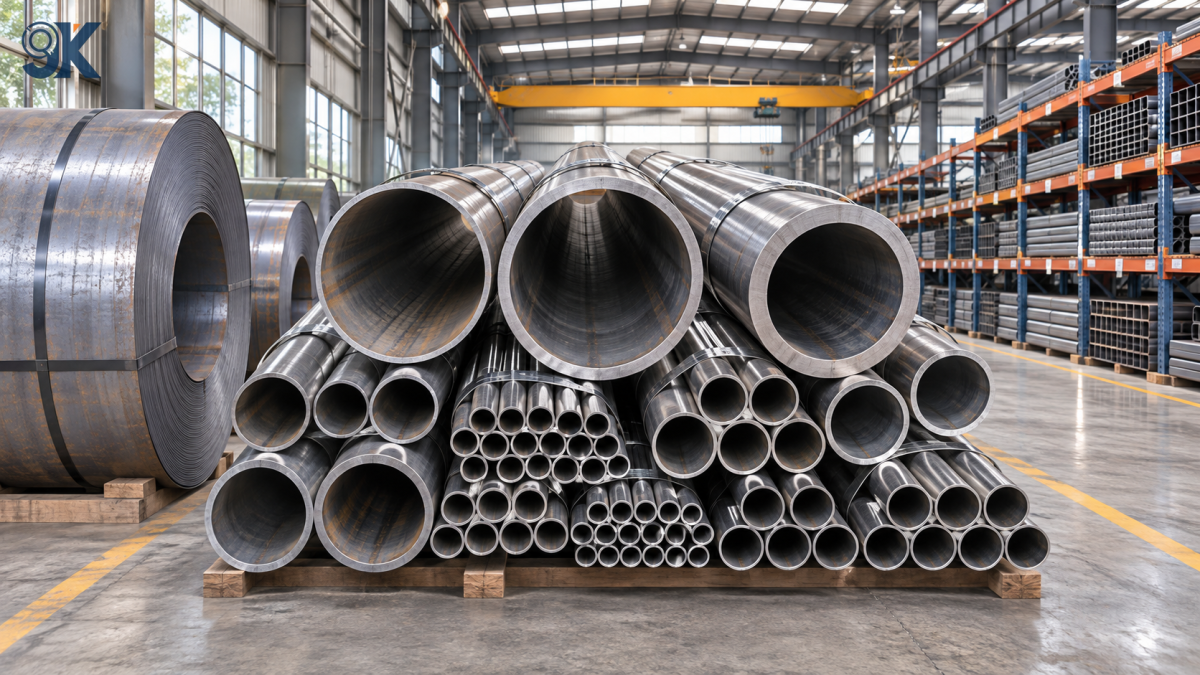
Three scenarios for the 2026 price outlook
Without a verified current price series for the exact product and destination, a numerical forecast would imply more certainty than the available information supports. Scenario planning gives a clearer basis for comparing offers and setting budget allowances.
These scenarios are directional, not predictions of a particular quarterly movement. A market can show rising raw material costs and falling finished pipe quotations at the same time if excess supply outweighs the immediate cost pressure. The duration of that divergence matters: persistent losses can eventually encourage production cuts, while mills with existing inventory can continue to quote aggressively for a period.
Regional demand can produce the opposite result. When capacity is available in one market but a particular destination faces limited local supply, delivered offers there can remain firm. The forecast should be tied to the intended origin, destination, pipe type, and delivery window before it is used for a project budget.
Why two pipe quotations can move differently
Welded pipe pricing is closely linked to the availability of suitable flat steel, forming capacity, welding, and finishing. Narrower tolerances, additional inspection, cutting, or coating add costs that do not necessarily follow the coil market at the same pace. If the base material becomes cheaper while a specialized processing line is fully booked, the total quote may change little.
Seamless pipe has a different cost structure. Billet supply, heating, piercing, rolling, and finishing all affect the offer. Heavy wall sections or less common outside diameters can require a specific production schedule, so their price and lead time may respond more to mill scheduling than to a short-lived movement in a general steel benchmark.
Order size also changes the comparison. A standard dimension available from stock can be quoted against existing inventory. A small custom order may need a new production run, with setup and testing costs spread over fewer tonnes. Combining compatible requirements can reduce that burden, but only when grade, dimensions, inspection, and delivery dates genuinely align. Consolidating incompatible specifications can create extra processing or unusable stock.
When offers are expressed per tonne, compare the theoretical and actual weight basis. Wall thickness tolerance, length, end preparation, and the method used to calculate weight affect the relationship between the quoted unit rate and the quantity actually received. A lower price per tonne is not automatically a lower cost per usable length.
Energy, freight, and the gap between mill price and landed cost
Steelmaking and pipe production consume energy at several stages, including melting, reheating, forming, and heat treatment. Changes in fuel or electricity costs can affect mill offers even when ore and scrap are steady. The exposure is especially relevant where the specification calls for heat treatment or substantial additional processing, because those operations add energy and handling to the base pipe cost.
Freight should be treated as a separate forecast variable. The practical shipping choice depends on quantity, pipe length, weight, packing, port handling, and vessel or container availability. A shipment that fits efficiently into a full container has a different cost structure from a small consolidated load. Long or heavy pieces can also introduce handling constraints that are invisible in a per-tonne mill price.
Compare quotations under the same delivery term and named place. An offer covering loading at origin is not directly comparable with one covering ocean freight to a destination port. Insurance, terminal charges, inland transport, customs clearance, and unloading may sit outside either offer. The allocation of each cost should be stated rather than inferred from the headline price.
Currency adds another layer. If the pipe is priced in one currency and the final budget is held in another, an unchanged supplier quote can translate into a different local cost before payment. The relevant exposure depends on the payment schedule: an advance and a later balance may be converted at different times. A budget sensitivity should reflect those actual payment dates, not only the exchange rate on the quotation date.
Trade measures can change the delivered comparison
Import duties, trade remedies, origin rules, and customs requirements vary by destination and product classification. Their effect on a 2026 purchase cannot be assumed from a general statement about steel imports. Pipe material, manufacturing method, dimensions, origin, and declared use can all be relevant to classification or eligibility for a particular treatment.
When quotations come from different origins, calculate the landed comparison using the charges applicable to each proposed shipment. A lower ex-works price can be offset by freight or import charges; equally, a higher starting price can become competitive when transit and border costs are included. Confirm the applicable treatment with the relevant customs information and shipment documents before fixing the budget. Potential policy changes should be shown as a separate scenario until their scope and effective date are established.
Turning a forecast into a comparable quotation
A useful request for quotation fixes the technical basis before comparing commercial terms: pipe type, grade, applicable product specification, outside diameter, wall thickness, length, quantity, inspection, and required documents. State whether the requirement is for stock material or new production. If dimensions or acceptance criteria differ between offers, the price difference cannot be attributed confidently to the market.
Ask for the base pipe price and material extras to be identifiable where the seller is willing to provide them. Cutting, coating, special packing, inspection, and documentation should have a defined scope, whether they appear as separate lines or are included in the quoted rate. This makes a later revision easier to interpret: a change in coating scope should not be mistaken for a change in the underlying pipe market.
Quotation validity deserves particular attention during volatile periods. A price valid at the time of an initial estimate may expire before technical approval or order placement. For longer projects, a fixed-price offer can reduce exposure during its validity, while an adjustable offer can link future changes to an agreed reference. Either approach needs clear terms covering the reference, adjustment timing, calculation method, and any costs excluded from adjustment. An index for flat steel, for example, is a poor standalone proxy for every element of a seamless pipe order.
Lead time should be linked to a defined starting point. “Production time” beginning after receipt of an advance, approval of drawings, or confirmation of material availability is different from a delivery date measured from the initial quotation. Include transit and customs time separately, and allow for the possibility that a delayed approval moves the order into a different production slot or price-validity period.
Set the budget around the actual exposure
A practical 2026 estimate can use a current, specification-matched quotation as its starting point, then model changes in the costs that remain open. For example, a fixed pipe price with unbooked freight requires a freight sensitivity; an adjustable pipe price in a foreign currency requires attention to both the adjustment formula and the exchange rate at payment. Applying the same allowance to every line obscures which variable could move the final cost.
Separate committed quantities from forecast demand. A firm order may secure a production slot and price under its agreed terms, while future releases remain exposed to the market unless their pricing and quantities are covered by contract. Staged orders can limit the risk of buying all material before a market decline, but they can also leave later quantities exposed to higher prices or longer lead times. The choice turns on storage capacity, project certainty, and the cost of a delayed shipment.
Refresh the estimate when the underlying assumptions change: a revised specification, expired offer, different shipping route, or new delivery date can matter more than a small movement in a broad steel indicator. Retaining the original quotation and its assumptions makes it possible to distinguish a genuine market change from a change in what is being purchased.
Latest News
- How do iron ore prices affect steel pipe price trends?
- How do tariffs affect square tube export markets?
- How steel pipe price trends affect inventory valuation
- Steel pipe price forecast for 2026 amid changing raw material costs
- Square Tube Export News: What Buyers Should Watch in Freight and Supply
- What new trade investigations mean for steel pipe exports
Send Us A Message

