How do ASTM A53 and A106 carbon steel pipes differ?
Choosing the right Carbon Steel Pipe for a project requires a clear understanding of the applicable material standards. ASTM A53 covers seamless and welded pipe for mechanical and pressure applications, while ASTM A106 covers seamless pipe intended for high-temperature service. For technical evaluators, differences in manufacturing methods, chemical composition, testing requirements, and operating conditions can influence specification decisions. This article compares the two standards to help you assess suitability for your application.
The distinction starts with scope, not appearance
Two pipes may have the same nominal pipe size, wall schedule, and external appearance yet be supplied to different material specifications. ASTM A53/A53M covers black and hot-dip galvanized pipe in seamless and welded forms. It is commonly used for mechanical and pressure applications and is also suitable for certain ordinary uses in steam, water, gas, and air lines, subject to the applicable design rules.
ASTM A106/A106M covers seamless carbon steel pipe for high-temperature service. Its scope makes it an obvious specification to assess for elevated-temperature piping, but it does not establish a universal maximum operating temperature or pressure for every installation. Those limits depend on the governing construction code, the selected grade, design temperature, wall thickness, and other project requirements.
The practical question is therefore not simply which standard is “better.” It is whether the specified material, product form, and documented test results satisfy the actual design basis.
Manufacturing route: welded pipe is not interchangeable with seamless by assumption
A53 includes Type S seamless pipe, Type E electric-resistance-welded pipe, and Type F furnace-butt-welded, continuous-welded pipe. Type E and Type S are available in Grades A and B; Type F is Grade A. A106, by contrast, specifies seamless pipe in Grades A, B, and C. Availability of a particular size, grade, and manufacturing route should be confirmed with the supplier.
That distinction matters when a project specification requires seamless construction. An A53 Grade B pipe is not automatically acceptable merely because an A106 Grade B pipe was requested: the A53 pipe may be welded, and the two designations have different chemical and testing requirements. Conversely, seamless A53 does not automatically satisfy A106.
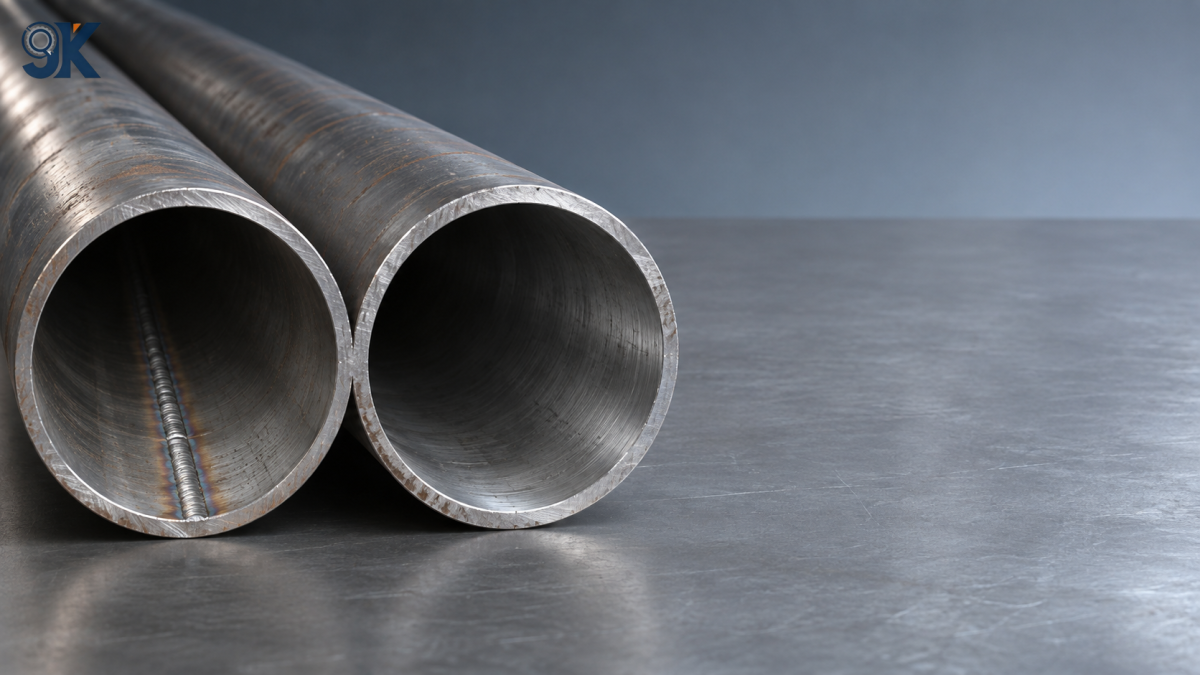
Seamless construction also does not eliminate the need to evaluate the material. Surface condition, wall thickness, heat treatment where applicable, and inspection records remain relevant. If welded pipe is permitted, the project should address the applicable weld-seam examination and any additional fabrication or service requirements rather than rejecting or accepting it on appearance alone.
Grade B is a useful comparison, but not a complete specification
Grade B is widely specified under both standards. For the standard Grade B requirements, both A53 and A106 list a minimum tensile strength of 415 MPa and a minimum yield strength of 240 MPa. These matching room-temperature minimums can make the grades look equivalent on a purchase requisition, but they do not erase the differences between the specifications.
Chemistry is one reason. A106 Grade B includes a minimum silicon requirement of 0.10%, while A53 Grade B does not specify that same minimum. Carbon limits and other composition provisions also depend on the specification and, for A53, the pipe type. A106 permits specified increases in manganese above its normal maximum when carbon is reduced below its specified maximum. Evaluators should check the complete chemistry table and its footnotes in the edition named on the order rather than comparing isolated values.
Matching room-temperature tensile values do not mean identical allowable stresses at elevated temperature. For a pressure design, use the allowable stress values and material listings in the applicable code edition. Do not substitute a mill test report’s ambient yield strength into a high-temperature design calculation as though it were the code allowable stress.
Chemistry can also affect fabrication. Carbon equivalent, welding procedure qualification, preheat, and post-weld heat treatment are project-specific considerations. A material designation alone does not establish that an existing welding procedure covers the supplied heat or the intended service conditions.
Testing and inspection: specify the evidence you need
Both specifications contain requirements for chemical analysis, mechanical testing, and examination, but the precise obligations depend on product type, dimensions, the applicable edition, and any permitted alternatives. For example, hydrostatic testing and nondestructive electric examination provisions must be read with the relevant clauses and purchase-order instructions. It is unsafe to assume that every pipe has received both tests simply because it carries an ASTM marking.
Before approving a quotation, distinguish the minimum standard requirements from additional project requirements. If the design calls for a particular examination method, coverage, acceptance criterion, or witness point, state it explicitly. Supplementary requirements may be available, but they generally need to be invoked in the order rather than presumed.
A mill test report should be checked against the purchase order and the pipe markings, not treated as a generic quality certificate. At a minimum, verify the specification and edition where required, grade, manufacturing type, heat identification, reported chemistry, mechanical results, dimensions, and any required examination records. Confirm that traceability remains intact after cutting or processing; a correct report is less useful if the individual lengths can no longer be linked to the reported heat.
Can one pipe be certified to both ASTM A53 and A106?
Yes, a pipe can be supplied with dual certification when it meets all applicable requirements of both specifications, including the relevant manufacturing, chemistry, mechanical, testing, and marking provisions. Since A106 requires seamless pipe, an A53/A106 dual-certified product must meet that seamless requirement as well.
Dual certification is not established by a supplier describing a pipe as “A53/A106 equivalent.” Ask for documentation showing both specifications and grades, then check the actual results and order conditions. Even a properly dual-certified pipe still has to meet the project’s dimensional, code, end-preparation, and service-specific requirements. Certification to two ASTM material standards is not blanket approval for every pressure application.
Temperature, pressure, and environment change the decision
For a moderate-temperature utility line where the governing code and project specification permit welded pipe, A53 Type E may be an option worth evaluating. The decision still depends on pressure, corrosion allowance, fluid, joint design, and inspection requirements. If the project instead specifies seamless pipe, the selection narrows to permitted seamless products, which may include A53 Type S or A106 depending on the design basis.
For a high-temperature steam or process line, A106 is often the more directly relevant starting point because high-temperature service is within its stated scope. That is not a substitute for checking code-listed material properties, sustained-load calculations, thermal expansion, and the effects of temperature on the complete piping system. At temperatures where long-term exposure mechanisms are significant, the engineer must assess the material against the applicable design rules and service life assumptions.
Neither specification by itself proves resistance to a particular corrosive fluid, sour service, or low-temperature brittle fracture. A low ambient or minimum design metal temperature may trigger impact-testing or other requirements under the governing code and project specification. Similarly, internal corrosion and external exposure must be addressed through materials selection, corrosion allowance, coatings, or other measures appropriate to the service.
Dimensional compatibility is separate from material compliance
Nominal pipe size and schedule help identify a pipe’s dimensions, but they are not a complete engineering description. The order should state the outside diameter, required wall thickness or schedule, length, end finish, and dimensional standard where applicable. The design review must also consider permitted wall-thickness tolerances and the minimum wall needed after corrosion allowance and any forming or threading.
Ends deserve attention. A pipe ordered for butt welding may need a specified bevel and end condition; pipe intended for threading has different dimensional and fabrication considerations. Galvanized A53 should not be treated as interchangeable with bare pipe without considering the coating, fabrication method, and intended fluid service.
On machinery projects, the pipe may also interface with separately specified frames and supports. A structural item such as Steel I beam-(1) should be evaluated under its own material and dimensional requirements; the pipe specification does not qualify the supporting steelwork.
Turn the comparison into a workable purchase specification
A clear requisition reduces the risk of receiving dimensionally correct pipe with the wrong manufacturing route or incomplete documentation. Alongside ASTM designation and grade, identify whether seamless or a particular welded type is acceptable. Include the governing edition if the project requires one, the dimensional standard, size and wall, quantity, lengths, end preparation, and any coating or protection requirements.
Then state what must accompany the material: mill test reports, heat traceability, required inspection records, and any supplementary testing or third-party witness requirements. If the order includes cutting or other processing, agree how pieces will be identified afterward and whether the work affects the required documentation. These details are especially useful when material is purchased for several assemblies or delivered in multiple lots.
Shandong Jiukai Metal Materials Co., Ltd. supports machinery manufacturers with drawing review, specification selection, processing, warehousing, and export documentation. For an international order, the practical discussion can include whether full-container, less-than-container, or bulk shipment suits the quantities and lengths involved, as well as how markings and records will be preserved through handling.
Before accepting an A53 alternative for an A106 requirement—or the reverse—resolve the design-code permission, manufacturing method, grade, test evidence, and service conditions in writing. A substitution that looks straightforward in a size schedule may otherwise create an avoidable approval problem after the pipe has already been delivered.
Latest News
- Which export market trends affect demand for square tubes?
- How do iron ore prices affect steel pipe price trends?
- How do tariffs affect square tube export markets?
- How steel pipe price trends affect inventory valuation
- Steel pipe price forecast for 2026 amid changing raw material costs
- Square Tube Export News: What Buyers Should Watch in Freight and Supply
Send Us A Message

