
News center
Which export market trends affect demand for square tubes?
Which export market trends are shaping demand for square tubes? Changes in construction activity, machinery manufacturing, trade measures and freight costs can all affect purchasing decisions and inventory planning. Yet a busy market does not automatically mean every size or grade will sell. For companies trading steel sections internationally, the more useful question is where demand is coming from—and whether it can be supplied at an acceptable landed cost.
This Square tubeExport News overview looks beyond headline steel prices to the signals that influence orders, specifications and delivery risk across export markets.
Construction demand is shifting with project funding
Square hollow sections are used in applications ranging from building frames and architectural supports to gates, walkways and fabrication work. Demand therefore depends not just on how much construction is announced, but on which projects reach the procurement stage and what their designs specify.
Public infrastructure announcements can suggest future activity, but funding approval, tendering and design changes may delay material orders. Commercial and residential projects respond to a different mix of financing conditions, occupancy expectations and local building costs. A distributor that treats all announced projects as immediate demand can end up holding stock long before a fabricator needs it.
The product mix matters as much as total tonnage. A market with active light fabrication may favor smaller sections and shorter replenishment cycles, while larger structural projects may call for specified grades, documentation and coordinated deliveries. Before expanding inventory, ask customers which dimensions they consume repeatedly and which are tied to individual contracts.
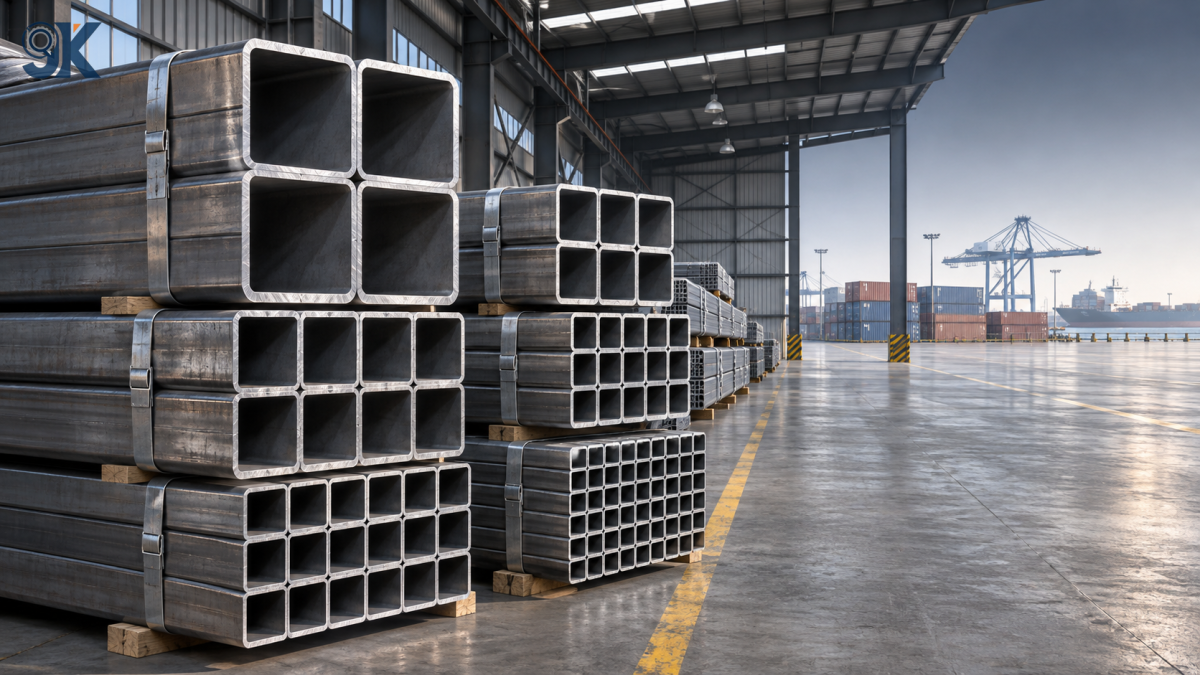
Machinery orders can change the specification mix
Manufacturers of equipment, storage systems, agricultural machinery and industrial frames buy square tubes for different reasons than construction contractors. Their purchasing may follow production schedules, replacement cycles or confirmed equipment orders rather than local building activity alone.
A machinery customer may care about consistent wall thickness, straightness, cut length and weld characteristics because variation affects downstream cutting, welding and assembly. Two products described as the same nominal size are not necessarily interchangeable if their tolerances, steel grades or inspection requirements differ. A lower offer is less attractive when it increases sorting, scrap or rework at the customer’s plant.
This is also why a rise in machinery output does not translate neatly into demand for every tube. Designs can change, local fabricators may substitute other profiles, and some buyers will reserve custom sizes for established suppliers. For an agent testing a new market, a drawing and a realistic trial quantity often reveal more than a broad inquiry for “standard square tube.”
Regional demand is not a single export story
Southeast Asian demand can be influenced by manufacturing investment, industrial facilities and construction, but requirements vary considerably by country and end user. Import rules, local stock availability and the ability to replenish quickly may determine whether a buyer imports directly or purchases from a local warehouse.
In Middle Eastern markets, project schedules, exposure conditions and requirements set by contractors can shape orders. Material for an outdoor installation may need a different corrosion-protection strategy from tube used inside a factory. The base steel specification and any coating requirement should be discussed separately; a galvanized finish, for example, should not be assumed simply because a project is in a coastal area.
European, American and Australian buyers may place particular attention on the standard, traceability and documentation required for the intended application. Those requirements are not uniform across all products or jurisdictions. African markets likewise cannot be treated as one destination: port access, inland transport, project financing and local distribution networks can produce very different buying patterns.
The practical lesson is to segment by application and customer, not just by region. A repeat machinery order and a one-off building contract in the same country may require different stock, paperwork and delivery terms.
Trade measures can redirect orders quickly
Tariffs, trade remedies and customs requirements can alter the economics of a shipment even when demand at the end-user level remains healthy. A buyer may postpone an order, switch origin or reduce its exposure until the applicable treatment is clearer. Suppliers may also compete more aggressively in markets where access remains workable, changing local price expectations.
The description “square tube” is not enough to establish import treatment. Classification and applicable measures can depend on the material, manufacturing method, dimensions, origin and other product details. Before quoting a destination price, confirm the proposed customs classification and check current measures with the importer, customs broker or relevant authority. Do not assume that a rate or exemption used on a previous shipment still applies.
It is equally important to distinguish a customs requirement from a customer’s technical specification. One concerns entry into the market; the other may determine whether a fabricator or project owner accepts the material. Both can affect the commercial viability of an order.
Freight changes the price comparison
Square tube is a relatively heavy, space-sensitive product. The cheapest mill price may lose its advantage once freight, handling, duties, financing and inland delivery are included. Longer lengths can also influence loading options and destination handling, so a quote should state the packing and shipment assumptions rather than present freight as an afterthought.
Full container load can suit a sufficiently large, consistent order; less-than-container load may be useful for a trial or a mixed shipment, although consolidation and handling costs need attention. Bulk shipping can be worth examining for larger volumes where routes, port facilities and cargo arrangements support it. The right option depends on the actual shipment, not a universal rule.
Compare offers on the same Incoterms basis and identify who pays for origin charges, insurance, destination handling and inland transport. Transit time should be considered alongside production lead time and customs clearance. A low freight quote is of limited value if an uncertain sailing or an incomplete document set leaves a customer’s production line waiting.
Material choice is becoming a more specific conversation
Carbon steel square tubes remain relevant to a wide range of fabrication work, but corrosion exposure, appearance and maintenance expectations can change what a customer asks for. Buyers may compare painted or galvanized carbon steel with stainless options, depending on the environment and design. The comparison should cover fabrication and service conditions as well as initial purchase price.
Adjacent material demand can offer another signal about a customer’s production plans. For example, a fabricator that also purchases 304L Stainless Steel Strip may be working across several product components or material categories. Strip is not a substitute for a finished square tube, however; forming route, dimensions, surface requirements and the finished product specification need separate evaluation.
Environmental reporting and product traceability are also becoming part of some purchasing discussions. Requirements depend on the destination, customer and product. Rather than promising a particular compliance outcome, establish early which mill documents, origin records or emissions-related information the buyer actually needs and whether those documents can be supplied for the proposed order.
Turn market signals into an inventory decision
A useful forecast starts with confirmed customer demand, then separates repeat consumption from project-specific requirements. Historical sales help identify fast-moving sizes, but they should be checked against current orders, customer production plans and stock already held locally. An increase in inquiries is worth investigating; it is not the same as an increase in committed purchases.
For regular sizes, compare replenishment lead time with the rate at which customers actually draw stock. For unusual grades, lengths or processing requirements, a smaller trial order may be safer than a speculative shipment. Agree in advance on how dimensions and tolerances will be checked, what constitutes an acceptable surface, and how discrepancies will be handled. These details protect both the resale relationship and the supplier’s production schedule.
Price exposure deserves the same discipline. Steel input costs, exchange rates and freight can move between quotation and delivery. Confirm the quotation validity, currency, payment terms and point at which the price becomes firm. If the customer’s project is not yet awarded, avoid treating an indicative inquiry as a firm basis for a long inventory position.
What to confirm before placing an export order
The strongest market signal will not rescue an order with an incomplete specification. A workable inquiry should identify the outside dimensions, wall thickness, grade or applicable standard, length, quantity, intended use and destination. Add tolerances, surface treatment, testing, marking and documentation requirements where the application calls for them. If the customer supplies a drawing, resolve discrepancies between the drawing and purchase order before production.
Shandong Jiukai Metal Materials Co., Ltd. combines custom production, processing, warehousing and export support, including drawing evaluation and documentation handling. Its shipping options through Tianjin, Qingdao and Rizhao, as well as support for trial and longer-term orders, give buyers ways to discuss shipment size and routing against actual demand rather than forecast alone.
Before committing inventory, match the proposed specification to a named application, verify current import treatment and calculate the landed cost using a realistic delivery schedule. Those checks make market trends actionable—and make it easier to distinguish a promising inquiry from an order that is ready to move.
Latest News
- Which export market trends affect demand for square tubes?
- How do iron ore prices affect steel pipe price trends?
- How do tariffs affect square tube export markets?
- How steel pipe price trends affect inventory valuation
- Steel pipe price forecast for 2026 amid changing raw material costs
- Square Tube Export News: What Buyers Should Watch in Freight and Supply
Send Us A Message

