How mill schedules affect steel plate lead times from China
A steel plate delivery delay can disrupt fabrication, installation, and an entire project schedule. Steel plate lead time from China depends in part on when a mill plans its rolling campaigns, allocates production capacity, and schedules maintenance. For project managers, understanding these factors is essential to setting realistic procurement milestones and reducing the risk of costly delays. This guide explains how mill schedules influence lead times and what to confirm with suppliers before placing an order.
Why the mill schedule matters more than the order date
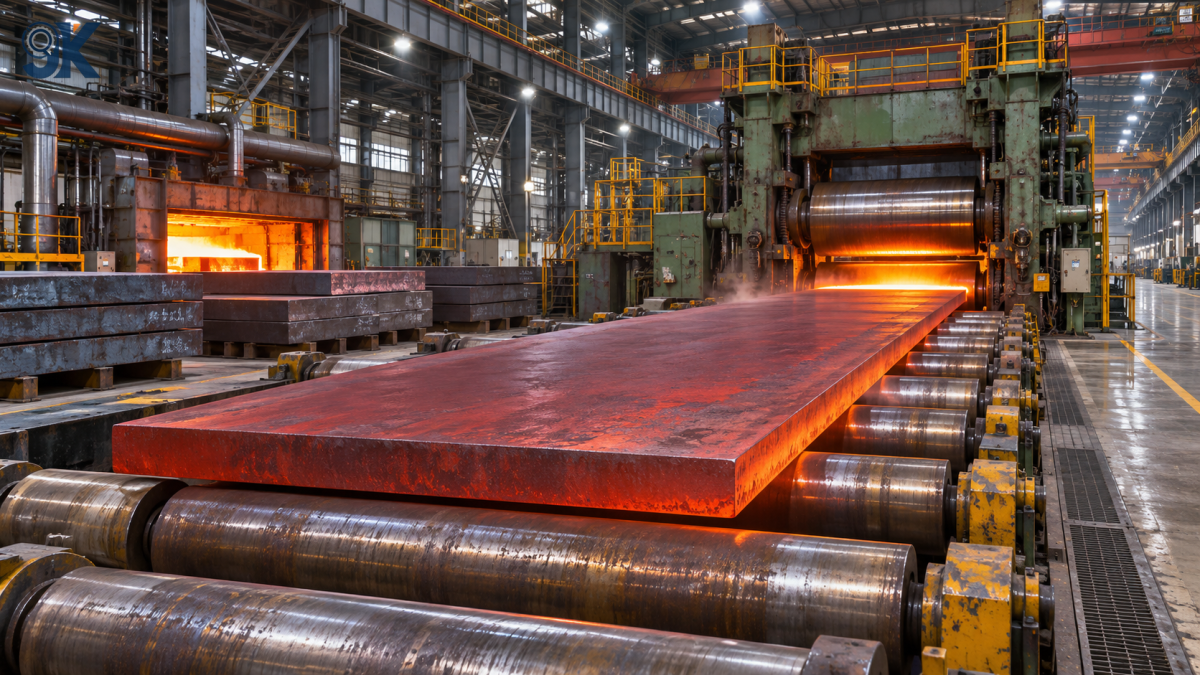
A purchase order does not necessarily put steel plate straight into production. Mills organize rolling around their equipment, available feedstock, order book, and groups of compatible specifications. An order confirmed just before a suitable campaign may enter the schedule relatively quickly. The same order confirmed after that campaign has closed may wait for another production window.
This distinction matters when a supplier quotes a lead time from “order confirmation.” Ask what confirmation means: receipt of the purchase order, approval of technical details, payment of an agreed deposit, or formal acceptance by the mill. A schedule based on an unapproved specification is not yet a reliable production plan.
Also distinguish a mill’s proposed rolling window from a committed delivery date. A window indicates when production is planned; it does not guarantee when inspection will finish, the plate will reach a port, or the cargo will arrive at the project site.
How rolling campaigns shape availability
A rolling campaign groups material that can be produced efficiently with compatible equipment settings and production arrangements. The grouping depends on the mill and its order book, but grade, thickness, width, and downstream treatment can all affect where an order fits.
For a project team, the practical question is not simply whether a mill can produce a plate. It is whether the mill plans to produce that combination of requirements when the project needs it.
A commonly ordered specification may have several sourcing options, including stock held by a distributor. An unusual thickness, tightly controlled chemistry, or a combination of special testing and treatment may narrow the options. In that situation, missing a suitable campaign can matter more than the actual time the plate spends in the rolling mill.
Order volume matters too. A small quantity may need to be combined with other compatible orders, subject to the mill’s minimum production arrangements. A large quantity may justify dedicated planning but can also depend on a larger capacity allocation. Neither small nor large orders are automatically faster.
The specification determines which production slot is useful
Two plates with the same nominal dimensions may follow different routes through a mill. Before treating a rolling date as actionable, check whether the schedule includes the full scope of the order, not just the initial rolling operation.
Grade, dimensions, and tolerances
The applicable material standard and grade establish requirements that the mill must meet. Thickness, width, length, quantity, and tolerances then determine whether a particular production route is suitable. Tight flatness requirements or unusual dimensions may require additional processing or restrict the choice of mill.
Do not assume that a near-match in stock is acceptable. Any substitution should be reviewed against the design, fabrication requirements, and the applicable purchasing specification. A faster shipment is of little value if the material cannot be released for use.
Treatment, testing, and inspection
Depending on the grade and order requirements, plate may require heat treatment, ultrasonic examination, mechanical testing, or other checks after rolling. Some stages depend on separate equipment or inspection availability. If an independent inspector or customer witness is required, that visit must also be coordinated before the material can move forward.
Clarify which tests are mandatory under the specified standard and which are additional project requirements. State the required inspection documentation and release procedure in the purchase order. A late request for witnessed testing or extra documentation can create a new scheduling constraint even if production itself remains on time.
From rolling window to site delivery
A useful procurement schedule separates the mill’s work from the activities that follow it. Rolling completion is a milestone, not the end of the lead time. The sequence may include cooling and finishing, treatment, testing, document review, packing, inland transport, export clearance, sea freight, import clearance, and final delivery.
Some activities can overlap, but that should be confirmed rather than assumed. For example, a freight booking may be arranged before final inspection, yet the cargo still needs to be released and delivered in time for the carrier’s receiving deadline. If it misses that deadline, the next available departure may become the controlling milestone.
Shipping terms also change what a quoted date represents. A date for material ready at the mill, delivery to a Chinese port, and arrival at the destination are different commitments. Identify the agreed delivery point and the party responsible for each transport and customs activity. Then work backward from the date fabrication actually needs the plate, allowing for the project’s inspection and receiving procedures.
For an indicative planning exercise, consider a plate needed before cutting can begin. If final drawings are released late, the order may miss its intended rolling window. Even if a later shipment reaches the port as planned, the fabrication sequence can still be affected. The issue is not necessarily one failed activity; it is the loss of flexibility between linked milestones.
What can change a mill’s plan?
Scheduled maintenance can remove rolling or finishing capacity from the calendar. Unplanned equipment problems, changes in the order book, feedstock availability, or production quality issues can also lead a mill to resequence work. Public holidays and local transport arrangements may affect staffing, inspections, trucking, or document processing around the same period.
Not every change causes a delay to the project. The risk depends on the order’s position in the queue and the float between production, shipping, and the required site date. Ask the supplier which milestones have actual capacity allocated and which are still estimates. A date supported by a mill production allocation carries a different level of confidence from one based on a historical average.
Technical changes deserve the same attention as external disruptions. A revised drawing, added test, different plate length, or change in quantity may require the mill to review the order again. Before approving a change, request its effect on the rolling slot, inspection plan, and delivery commitment—not just its effect on price.
Stock plate or new rolling: a scheduling decision
Stock can reduce exposure to a future rolling campaign, but only if the available material is genuinely suitable. Ask for the exact grade, dimensions, quantity, identification, material test documentation, and location. Confirm that the documents can be matched to the individual plates and meet the project’s traceability and acceptance requirements.
New rolling offers a route for specifications that stock cannot satisfy, but it introduces mill scheduling and production risk. It may also be the more appropriate route when the project requires specific testing or a defined inspection plan that cannot be applied retrospectively. Check the requirements before comparing availability dates.
A mixed approach may be possible: use acceptable stock for an early fabrication package and procure the remaining plates through a scheduled roll. This only works if engineering permits the split, traceability is maintained, and the supplier can deliver each package with the right documents. Splitting an order without coordinating inspection and logistics can create more interfaces than the schedule can absorb.
Questions to settle before the purchase order
A useful supplier discussion should produce a sequence of dates and responsibilities, not just a single lead-time figure. For a schedule-sensitive order, ask for:
- The proposed mill and whether the plate is existing stock or requires new production.
- The next suitable rolling window, its allocation status, and the deadline for accepting the order.
- The information and approvals needed before the mill will place the order in its production plan.
- Separate target dates for rolling, treatment, testing, inspection release, and readiness for dispatch.
- Any minimum quantity, potential need to combine orders, or restriction on partial deliveries.
- The quoted delivery point, transport assumptions, required documents, and responsibility for customs clearance.
- The process for reporting schedule changes and the options if a planned production or shipping window is missed.
Record these answers alongside the drawing revision and purchase specification. If the supplier offers an alternative grade, size, or mill, route it through the project’s normal technical approval process before relying on the revised schedule.
Build the schedule around decisions, not just dates
Project teams often focus on when steel will arrive, but the earlier decision points are just as important: when the specification must be frozen, when an inspection agency must be appointed, and when the order must be accepted to retain a production slot. Put those dates into the project schedule and assign owners to them.
It is also worth asking for periodic milestone updates rather than waiting for the original dispatch date. An update that distinguishes “scheduled,” “produced,” “tested,” and “released” helps the team identify where uncertainty remains. If a milestone moves, assess the effect on the fabrication sequence and shipping connection before deciding whether expediting or resequencing is warranted.
Coordination across material processing and export logistics can help make those handoffs visible. Shandong Jiukai Metal Materials Co., Ltd., a steel pipe service provider, works across custom production, processing, warehousing, logistics, and export documentation. Its experience coordinating shipments through ports including Tianjin, Qingdao, and Rizhao illustrates why production readiness and the chosen shipping arrangement should be discussed together. For a plate requirement, the relevant mill source, processing scope, and delivery route should still be confirmed for the specific order.
Before fixing a project delivery date, confirm the complete plate specification, the status of the mill allocation, the inspection release conditions, and the delivery point. Those details turn a general estimate into a schedule the fabrication team can actually use.
Latest News
- How do iron ore prices affect steel pipe price trends?
- How do tariffs affect square tube export markets?
- How steel pipe price trends affect inventory valuation
- Steel pipe price forecast for 2026 amid changing raw material costs
- Square Tube Export News: What Buyers Should Watch in Freight and Supply
- What new trade investigations mean for steel pipe exports
Send Us A Message

