
How does coil thickness affect corrugated sheet production costs?
Coil thickness affects the production costs for corrugated sheets primarily through the amount of metal required to cover a given area. If the material, coating and sheet profile stay the same, a thicker coil generally produces heavier sheets and raises material cost per square metre. It can also change forming speed, tooling requirements, freight costs and the amount of usable output from each coil.
For a finance approver, the lowest coil price or the thinnest gauge is therefore an incomplete basis for a decision. A thinner sheet can be economical when it meets the required span, load and handling conditions. If it requires closer supports, creates more installation damage or fails the project specification, the apparent saving may disappear elsewhere in the budget.
Start with cost per usable covered area
Steel coil is often priced by weight, while a roofing or cladding project is planned by the area it must cover. Thickness connects those two measures. For the same steel grade and effective sheet width, increasing thickness increases the steel weight per metre of sheet approximately in proportion to the change in thickness.
For example, increasing nominal base-steel thickness from 0.40 mm to 0.50 mm is a 25% increase. Under otherwise identical conditions, the base-steel weight needed for the same formed sheet area also rises by approximately 25%. That does not mean the finished sheet price must rise by 25%: coating, forming, packaging, freight, yield and supplier margin may behave differently.
The reverse calculation needs care. Reducing thickness from 0.50 mm to 0.40 mm reduces base-steel weight by 20%, not 25%. For a large order, using the wrong percentage can materially distort a budget comparison.
A practical cost model begins with:
- Net material cost: the coil purchase price, adjusted for the weight needed per unit of effective coverage.
- Processing cost: forming, cutting, changeovers, inspection and any thickness-related differences in line productivity.
- Yield and handling: material lost or downgraded during setup, cutting, damage and coil-end processing, less any agreed scrap recovery.
- Delivered cost: packaging and freight allocated to the quantity of usable sheet delivered.
- Project-level effects: changes in supports, fastening, installation, maintenance or replacement that arise from the selected sheet.
Use the same unit throughout the comparison. A price per tonne can make a thin sheet appear expensive or cheap for reasons that disappear when the quote is converted to cost per square metre of effective cover. Equally, a low price per sheet means little if the sheets have different lengths or provide different coverage.
For an internal calculation, the relationship can be expressed as: cost per usable covered area = total delivered and applicable processing cost ÷ usable covered area. Define whether the denominator means factory output, net installed coverage after overlaps and cutting, or some other agreed measure. Different definitions produce different results.
Nominal thickness is only useful when the measurement basis matches
Two quotations labelled with the same thickness are not necessarily equivalent. One may state base-metal thickness, while another may refer to the overall thickness including metallic and paint coatings. Tolerances also matter: nominal thickness is a specified target, not a guarantee that every measurement will equal that figure.
For an initial commercial comparison, ask each supplier to state the base-metal thickness, applicable tolerance, steel grade and coating specification. The measurement method and location should follow the agreed specification. Measurements taken on a corrugation, for example, may not be comparable with measurements taken on the flat coil.
Coating deserves separate attention because it affects both cost and service life. A thin substrate with a substantial coating is not automatically equivalent to a thicker substrate with a lighter coating. One choice may change corrosion performance; the other may change structural or handling performance. Finance should avoid treating a difference in total measured thickness as proof that both alternatives contain the same amount of steel.
Actual thickness within an agreed tolerance also influences weight. If a contract specifies a nominal value and permissible range, the commercial documents should make clear how weight and area are calculated and what evidence accompanies delivery. For a weight-priced purchase, this helps explain why the final tonnage may differ from a budget based only on nominal dimensions.
Where thickness changes the factory cost
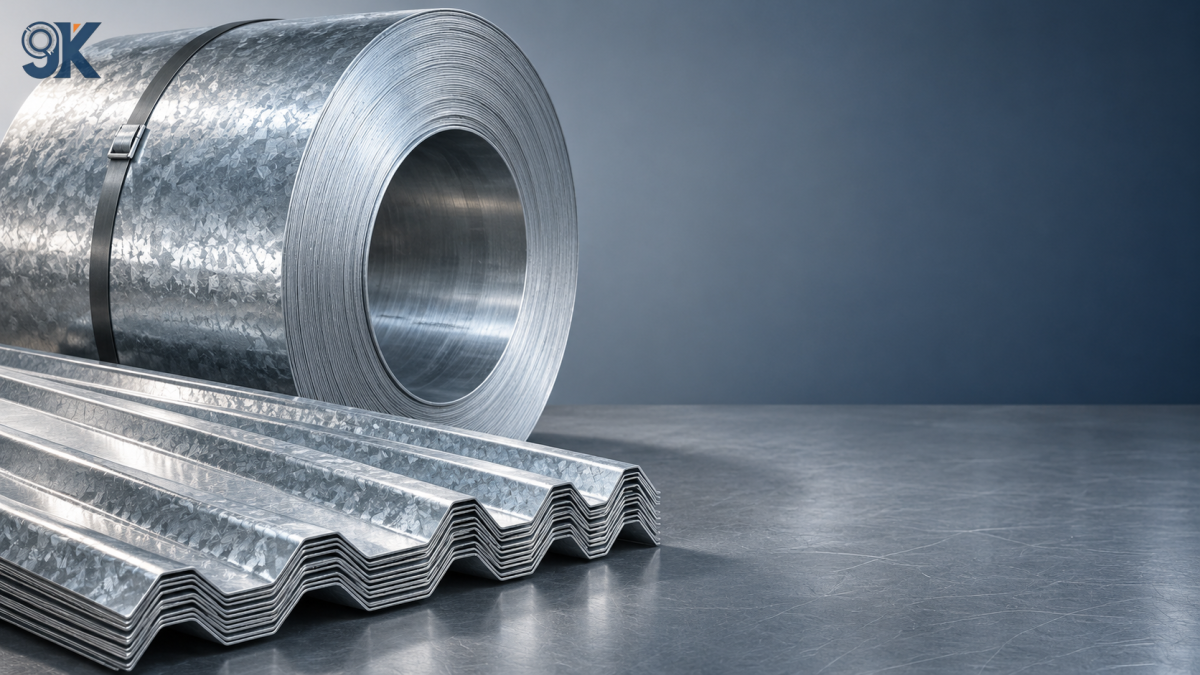
Material is often the largest visible effect, but the forming line can change the result. Corrugated sheets are made by passing coil through a sequence of rolls and cutting the formed strip to length. A line set up for one thickness may need adjustment for another to maintain the required profile, dimensions and surface condition.
Thicker material can demand more forming force and may limit production on equipment with insufficient capacity. It can also affect cutting requirements and tooling wear. A supplier may recover those costs through a higher processing charge, a setup fee or a different minimum order. The size of that effect depends on the line, material strength, profile and order volume; thickness alone cannot establish it.
Thinner coil can reduce metal consumption but may be more susceptible to handling damage or surface distortion under some conditions. Forming parameters, sheet length, packaging and the experience of the operator all influence the outcome. It would be a mistake to assume that every reduction in thickness increases scrap, just as it would be a mistake to budget on the basis of zero change in yield.
Order size affects the comparison as well. Setup and trial material have a greater cost per usable square metre when spread over a short run. A thickness that a supplier already processes on an established line may therefore carry a lower conversion charge than a less familiar specification, even when the difference in steel weight is small.
When a quotation combines coil and conversion into one sheet price, ask how the price changes if thickness changes while the profile, coating and order quantity remain constant. This gives the finance team a more useful comparison than applying the percentage change in metal weight to the entire quoted price.
Check what a thinner sheet does to the installed cost
The lowest factory cost is attractive only if the sheet remains suitable for its intended application. Thickness affects stiffness and resistance to local deformation, but it does not act alone. The profile shape and depth, steel grade, support spacing, fasteners, loads and installation method all contribute to performance.
A thinner sheet with a suitable profile may satisfy a particular wall-cladding application. The same thickness should not automatically be approved for a roof subject to different spans, wind loads, maintenance traffic or other project demands. The design team should establish the required performance and applicable standards before finance treats a thinner option as a genuine saving.
Consider a proposed reduction that saves money on sheets but requires additional support members or closer fixing. The sheet purchase may fall while the installed cost rises. Additional supports can also affect labour, fabrication and delivery schedules. Those costs should be attributed to the alternative that causes them, rather than left outside the comparison because they sit in a different budget line.
Damage is another possible cost. A sheet that is adequate once installed may still require different care during unloading, storage or installation. Dents and coating damage can lead to rejected material, repair work or shorter service life, depending on their extent and the exposure conditions. The right allowance depends on the proposed handling method and the consequences of damage, not on a universal percentage.
Service life should be assessed with the same discipline. Greater thickness can provide a different margin against metal loss, but corrosion performance also depends on coating, detailing, environment and maintenance. Paying for a thicker substrate does not by itself solve a coating or drainage problem. Conversely, removing thickness solely to meet an initial budget can be costly if the sheet no longer meets the specified performance or replacement expectations.
Compare quotations on the same commercial basis
A useful approval review separates differences caused by thickness from differences in the rest of the offer. Request a consistent set of information for each alternative:
- Base-metal thickness and tolerance, material grade, and metallic and paint coating specifications.
- Corrugation profile, sheet length, nominal width and effective cover width after the specified side lap.
- Quoted quantity, pricing unit and whether the price includes forming, cutting, packaging and delivery.
- Expected usable coverage, including the treatment of end laps, cutting allowances and unusable material.
- Any setup charge, minimum quantity, freight condition or other cost that changes between the options.
- Evidence that each alternative meets the project’s structural, durability and installation requirements.
Effective cover width matters because corrugation and side laps reduce the area covered by a sheet compared with its developed flat width. If two offers use different profiles or overlap assumptions, a simple comparison of coil thickness and price per tonne will not isolate the thickness effect. The same applies if one quote includes delivery and another ends at the factory gate.
Freight should be calculated against the shipment’s actual charging basis. A thinner sheet may reduce shipment weight for the same coverage, but a load can be constrained by dimensions, packing configuration or available space as well as weight. The reduction in freight cost may therefore be smaller than the reduction in steel weight.
Finally, distinguish guaranteed terms from planning assumptions. If the supplier quotes a price per tonne but the project needs a fixed area, the buyer needs a clear basis for converting between them. If the supplier quotes per square metre, confirm whether that area refers to the sheet’s gross dimensions or its effective cover. These details determine whether a seemingly favourable rate survives the conversion into the project budget.
Set the decision around an acceptable range
Finance does not need to choose a thickness in isolation. A more reliable approval process starts with the project team defining the acceptable specification or range, supported by the required design checks. Procurement can then obtain comparable prices within that range and identify any changes to delivery, yield or installation costs.
If the lower-cost option meets the same performance requirements and does not introduce offsetting project costs, the thinner coil may be the sensible choice. If it changes the support design or leaves too little allowance for the specified service conditions, the comparison should include those consequences before the purchase is approved. The decision belongs in the delivered and installed cost per usable area, with the technical requirements held constant.
Latest News
- How do iron ore prices affect steel pipe price trends?
- How do tariffs affect square tube export markets?
- How steel pipe price trends affect inventory valuation
- Steel pipe price forecast for 2026 amid changing raw material costs
- Square Tube Export News: What Buyers Should Watch in Freight and Supply
- What new trade investigations mean for steel pipe exports
Send Us A Message

