
Can custom cutting extend steel plate lead time from China?
Custom cutting can extend steel plate lead time from China when the order requires material sourcing, drawing approval, a reserved cutting slot, additional inspection, or special packing. The effect on the delivery date is not always equal to the cutting time: a short operation can hold up an order if it misses a production slot or waits for an unresolved drawing. Equally, cutting can sometimes be scheduled alongside other preparation without changing the planned dispatch date.
The cost decision depends on the whole fabrication schedule. Pre-cut parts can reduce work after arrival, while full plates may be available sooner and leave cutting under local control. A useful comparison starts with the date that usable components are needed, then works backward through shipping, handling, cutting, inspection, and any work still required at the destination.
Where custom cutting enters the delivery schedule
A quoted steel plate lead time from China should identify its starting point and finish point. A period measured from receipt of payment or a confirmed order is different from one measured from approval of final drawings. Likewise, a date when parts are ready at the works is different from a departure date or arrival at the project site.
For cut plate, the sequence often runs from material allocation and drawing confirmation to nesting, cutting, inspection, packing, and dispatch. Nesting is the arrangement of parts on a plate before cutting. It affects material use and the number of plates required, so a revision to the part list can trigger a new layout even when the steel has already been reserved.
Ask for the planned dates of material readiness, drawing approval, completion of cutting, and release for shipment. These milestones reveal where extra processing sits in the schedule. If cutting is planned during a period already needed for shipping arrangements, it may not delay dispatch. If production cannot begin until the drawings are approved, a late design change can move every later milestone.
Stock availability deserves separate attention. A supplier may have the correct grade but not the required thickness or plate size. Material listed as available may also be unallocated, held at a different location, or awaiting verification of its identification and documentation. Confirm that the specific material is reserved for the order and that its condition and certificates meet the purchase requirements.
Which cutting requirements add the most time?
Straight cuts to divide a plate into rectangles generally require less preparation than a set of irregular profiles with internal openings. Complexity affects programming, machine setup, cutting path length, part identification, and inspection. A large quantity of identical parts can be planned differently from the same total weight spread across many unique shapes.
Thickness and material grade influence the suitable cutting process and processing conditions. Laser, plasma, oxy-fuel, and waterjet cutting have different capabilities and limitations; the appropriate choice also depends on the required edge condition, tolerances, equipment capacity, and downstream fabrication. Selecting a process by its quoted speed alone can lead to extra work if the cut edge needs dressing, machining, or removal of heat-affected material before welding.
Cutting tolerances need particular care. A drawing may state a tight dimension without making clear whether it applies to a rough-cut blank or to a finished, machined component. If a part will be machined after delivery, specify the required machining allowance and identify the surfaces that must retain it. If the cut edge is the final working edge, state the dimensions and acceptance criteria accordingly. An unnecessarily tight requirement can limit process choice and increase inspection time; an incomplete one can leave too little material for the next operation.
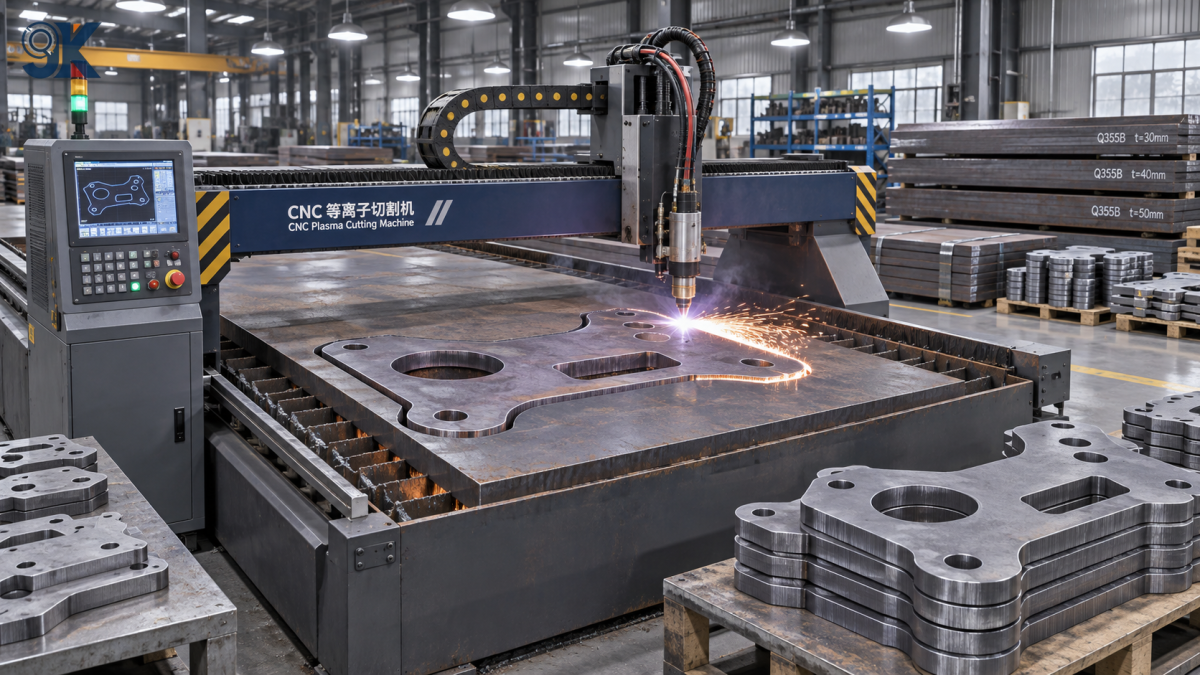
Holes and slots often create a similar decision. A cut opening may serve as clearance, a pilot for later machining, or a finished feature that must align with an assembled component. Those uses call for different dimensional control. A part with many small openings can also require more pierces and verification than its outer profile suggests. Show the relevant datums, hole positions, and any subsequent machining on the drawing rather than relying on the part’s overall dimensions alone.
Edge preparation adds another potential stage. Bevels for welding, deburring, edge grinding, marking, and removal of slag are separate operations unless the quotation explicitly includes them. A profile that is quick to cut may spend longer in finishing if every edge needs treatment. The delivery promise should reflect the condition in which the parts are to be received.
Compare the date of usable material, not just dispatch
Pre-cutting is attractive when it removes a constraint at the destination: limited cutting capacity, a congested workshop, or a need to feed parts directly into fabrication. It is less attractive when the design is still changing or when local cutting can run in parallel with ocean transit and site preparation. The relevant measure is the date each option makes acceptable parts available for the next operation.
For a sound comparison, request quotations against the same grade, thickness, quantity, documentation, and delivery destination. Separate the price of the plate from cutting, finishing, inspection, packing, and freight where possible. Include material loss in the comparison: a cut-parts quotation may account for the plate consumed by the nesting layout, while a full-plate purchase leaves offcuts at the destination. Ownership and delivery of offcuts should be stated if they have value to the project.
Pre-cut parts can also change the shipping plan. Small or irregular pieces may require bundling, pallets, crates, or protective separators to prevent movement and damage. Large profiles can create handling constraints even when their total weight is modest. Full plates have their own lifting and transport requirements, so compare the actual packed dimensions, gross weight, and unloading arrangements before choosing a route.
Freight quotations must use comparable delivery terms and destinations. A lower processing quote does not establish a lower delivered cost if packing, inland transport, port handling, or destination charges are treated differently. Estimated vessel departure and transit dates should remain separate from the confirmed production completion date, because shipping schedules can change after the steel is ready.
Drawing changes can outweigh the time spent cutting
A drawing package should connect every part number to its quantity, material, thickness, dimensions, and revision. If several assemblies use similar profiles, distinctive part marks reduce the chance of mixing pieces during sorting and later fabrication. State whether marking is permitted on a visible or finished surface, and whether traceability back to the source plate is required.
Before production begins, establish which file controls the order. A CAD file can describe a shape while an accompanying drawing contains tolerances or machining notes that are not obvious from the cutting geometry. Conflicting revisions or missing units can stop programming. A clear approval point allows the schedule to distinguish time reserved for review from time reserved for manufacture.
Once a nesting layout is approved, even a small change can affect more than one part. A revised outline may no longer fit the original plate, alter the number of plates needed, or require material already cut to be replaced. The quotation or order should state how changes are handled after material allocation, programming, and cutting. This makes the likely time and cost of a revision visible before it is released.
Where several material forms appear in one project, keep their processing requirements distinct. For example, PPGI Steel Coil has a coated surface and a coil format; its handling and processing sequence should be specified separately from the thick plate profiles being scheduled for structural or machinery fabrication.
Build the delivery plan around release points
A single completion date can conceal whether the order is progressing. A more useful schedule identifies the release points that control the next activity: confirmed plate allocation, approved drawings, completed cutting, accepted inspection, and packed goods ready for collection. Each date should have an agreed basis. If inspection requires photographs, dimensional records, or material certificates, state when those documents will be reviewed and who is authorized to accept them.
Inspection scope should reflect the parts’ intended use. Critical interfaces may need documented checks of selected dimensions, while other features can be assessed against an agreed sampling plan. Requirements introduced after cutting can hold finished parts in the workshop or require additional measurement. If third-party attendance is specified, its availability and the notice needed for the visit belong in the schedule from the start.
Partial shipment can protect an installation sequence when the first group of parts is clearly identified and can be fabricated independently. It can also add packing, handling, freight, and administrative costs. Splitting an order only makes sense if the early batch contains the complete set of components and documentation needed for the next operation; receiving isolated pieces may leave the work waiting anyway.
For a fixed installation date, allow time after arrival for unloading, identification, inspection, and any local finishing before the first planned fabrication activity. Agree on the response if a milestone slips, such as resequencing parts or assessing an alternative cutting route. A revised date is useful only when it shows which downstream activity changes and whether the required parts will still arrive in the sequence needed.
Latest News
- How do iron ore prices affect steel pipe price trends?
- How do tariffs affect square tube export markets?
- How steel pipe price trends affect inventory valuation
- Steel pipe price forecast for 2026 amid changing raw material costs
- Square Tube Export News: What Buyers Should Watch in Freight and Supply
- What new trade investigations mean for steel pipe exports
Send Us A Message

