
News center
Which Incoterms are commonly used for steel pipe exports?
Choosing the right Incoterms is a key part of any Steel Pipe Export transaction, influencing freight costs, insurance responsibilities, customs clearance, and the point at which risk transfers between seller and buyer.
For commercial evaluators, understanding commonly used terms such as FOB, CFR, CIF, and FCA helps make supplier quotations easier to compare and purchasing budgets more reliable.
This article examines how these terms work and what to consider when selecting the right option for your shipment.
In practice, FOB, CFR, and CIF are familiar choices for ocean shipments, while FCA often fits containerized cargo better when the carrier receives the goods before loading.
The right choice depends on who can secure reliable freight, where the pipes are handed over, and how each party wants to manage cost and risk.
Which Incoterms are commonly used for steel pipe exports?
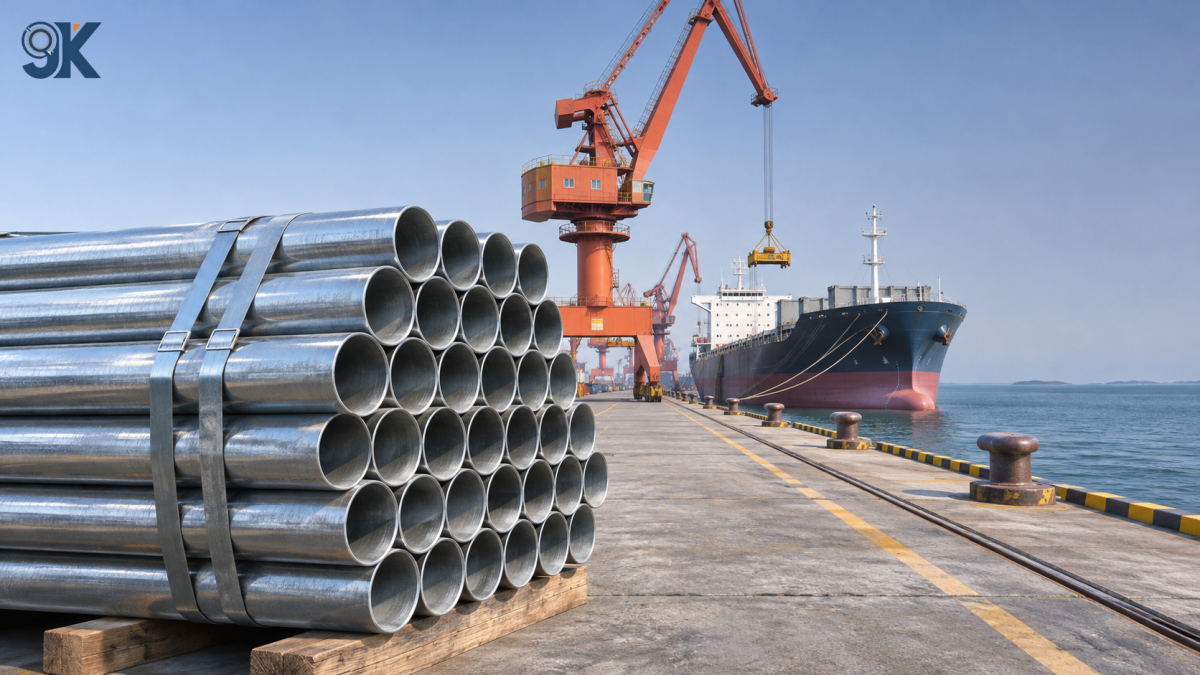
FOB, CFR, and CIF appear frequently in steel pipe quotations for sea freight. FCA is also relevant, particularly when containers are delivered to a terminal or another inland location.
These terms define specific delivery obligations, cost allocations, and risk transfer points under Incoterms 2020. They do not determine payment terms, ownership transfer, or product quality requirements.
The following comparison assumes the parties have incorporated Incoterms 2020 into their contract and identified the relevant named place or port precisely.
FOB, CFR, and CIF apply only to sea or inland waterway transport. FCA can be used for any transport mode, including shipments involving several modes.
A quotation should state the term, named location, and edition together, such as “FCA Qingdao terminal, China, Incoterms 2020,” with the actual terminal identified.
FOB: when the buyer wants control of sea freight
Under Free On Board, the seller delivers the pipes on board the vessel nominated by the buyer at the named shipment port. Risk transfers at that point.
The seller handles export clearance and the costs of delivering the goods on board. The buyer generally arranges and pays for the main sea carriage and any insurance.
FOB can suit buyers with established carrier contracts, strong freight purchasing power, or operational teams that regularly coordinate shipments from Chinese ports.
For loose or breakbulk steel pipes, the on-board delivery point can align with the physical loading process. Confirm loading arrangements and port charges before accepting the quote.
For containerized pipes, however, the seller commonly hands the container to a carrier at a terminal before it is loaded. FCA may better reflect that handover.
Commercial evaluators should ask whether the quoted FOB price includes inland haulage, export declarations, terminal handling, loading, and any charges specific to oversized or heavy cargo.
Although FOB allocates obligations, actual carrier invoices and local practices can complicate billing. The contract should identify who pays each expected charge and how exceptions are handled.
FCA: a practical option for containerized shipments
Free Carrier allows delivery at an agreed place, such as the seller’s premises, an inland depot, or a named port terminal. The seller clears the goods for export.
At the seller’s premises, delivery occurs when the goods are loaded onto the collecting vehicle arranged by the buyer. Risk transfers at that point.
At another named place, delivery generally occurs when the goods are placed at the nominated party’s disposal on the arriving vehicle, ready for unloading. Risk then transfers.
These details matter for heavy steel pipes because loading, unloading, securing, and equipment availability can materially affect both the schedule and the shipment budget.
FCA can give buyers control over their freight contracts while matching the actual handover point for an FCL container or cargo delivered to a consolidation facility.
For LCL shipments, identify the receiving warehouse, cargo acceptance requirements, and responsibility for consolidation charges. Do not assume a port name alone defines the handover location.
If a bank requires an on-board bill of lading under a letter of credit, discuss the documentation process early. Incoterms 2020 provides an FCA option addressing this situation.
That option relies on the buyer instructing its carrier to issue the on-board bill to the seller; the parties should agree how this will work in practice.
CFR and CIF: what does the seller’s freight price include?
Under Cost and Freight, the seller arranges and pays for carriage to the named destination port. The buyer is responsible for arranging any cargo insurance it wants.
Under Cost, Insurance and Freight, the seller also arranges insurance for the buyer’s benefit. Both terms require the seller to clear the goods for export.
The critical commercial distinction is that paying freight to destination does not extend the seller’s transit risk to destination. Under both terms, risk transfers when goods are on board.
For example, a CIF quotation naming a destination port includes seller-arranged freight and insurance, but the buyer bears transit risk after loading at the shipment port.
Under Incoterms 2020, CIF requires minimum insurance cover, generally Institute Cargo Clauses C or similar, for at least 110% of the contract price, subject to the stated rules.
Minimum cover has exclusions and may not address every damage scenario relevant to steel pipes. Ask for the policy terms, insured value, deductible, and claims procedure.
If broader protection is needed, specify the desired coverage in the contract or arrange additional insurance. Check risks such as handling damage, corrosion, and exposure to seawater.
CFR and CIF can simplify supplier comparison when the buyer lacks local freight purchasing capacity. They are less transparent if freight, destination charges, and insurance are not itemized.
Confirm whether freight is prepaid, which destination terminal charges are included, and who pays for discharge. The answers depend on the carriage contract and quotation details.
How can buyers compare steel pipe export quotations fairly?
Start by matching the commercial basis. An FOB price at Qingdao, a CIF price at the destination port, and an FCA warehouse price cover different services.
Build a landed-cost estimate for each offer using the same pipe specification, quantity, delivery schedule, destination, and assumptions about exchange rates and local charges.
For every quotation, identify the purchase price, inland transport, export formalities, main freight, insurance, destination handling, import duties, taxes, and delivery to the final site.
Add costs that may be specific to pipes, including protective packaging, container securing, lifting equipment, special handling, inspection, and storage if clearance is delayed.
Separate charges included in the supplier’s price from charges estimated by the buyer. Obtain written confirmation for items described only as “port charges” or “local fees.”
Compare transit time and shipment frequency alongside price. A lower ocean freight rate may be less attractive if it requires expensive storage or delays production.
Consider cash flow as well. Incoterms do not prescribe deposits, letters of credit, payment milestones, or when ownership passes; negotiate these separately in the sales contract.
A useful evaluation shows both the expected total cost and the range of uncertain expenses, such as destination handling or freight surcharges, rather than relying on one headline figure.
For illustration, an FOB offer of USD 50,000 plus USD 6,000 in estimated remaining costs totals USD 56,000 before any costs excluded from that estimate.
A CIF offer of USD 54,000 plus USD 3,000 in remaining costs totals USD 57,000 on the same basis. The CIF offer is simpler, but not cheaper here.
These figures are illustrative only. A meaningful comparison requires equivalent coverage, shipment assumptions, and destination charges, as well as an assessment of supplier and carrier reliability.
Which term fits your shipment and purchasing priorities?
Choose FCA when the buyer controls freight and the shipment is handed to a carrier before vessel loading. Specify the exact handover point and loading responsibilities.
Consider FOB for sea shipments where on-board delivery reflects the actual process and the buyer has a dependable freight arrangement. It can suit breakbulk cargo particularly well.
Consider CFR when the supplier can obtain competitive sea freight and the buyer prefers to arrange its own insurance. Review destination charges and the early risk transfer.
Consider CIF when the buyer values seller-arranged freight and baseline insurance. Verify whether the policy provides sufficient protection for the cargo and the buyer’s contractual obligations.
For small trial orders, consolidation and documentation charges can represent a significant share of total cost. Ask for a complete LCL breakdown before selecting a term.
For large or long-term orders, compare negotiated freight rates, shipment schedules, capacity commitments, and the administrative effort required to manage repeated bookings and claims.
The same evaluation principles can also apply to other steel products, including A36 H Beam, although handling and loading requirements may differ.
Do not treat a familiar term as a substitute for shipment planning. The best option is the one whose delivery point, freight arrangements, and risk allocation match operational reality.
What should the contract and shipping documents make clear?
Specify the Incoterms 2020 rule and exact named location. For FCA, identify the premises or terminal; for FOB, identify the shipment port.
For CFR and CIF, name the destination port and separately identify the expected shipment port. The destination port defines paid carriage, while risk transfers at shipment.
State the pipe grade, dimensions, quantity, tolerances, inspection requirements, packaging, markings, and delivery schedule. Incoterms do not define whether the goods meet technical requirements.
Agree which documents are required, such as the commercial invoice, packing list, transport document, inspection certificate, and any certificate required for the destination market.
Confirm responsibility for import clearance, duties, taxes, and permits. Under FOB, FCA, CFR, and CIF, the buyer generally handles import clearance and related charges.
Set procedures for shipment notices, document corrections, cargo damage, delays, and claims. For insured shipments, identify whom to contact and what evidence the insurer requires.
Review any letter of credit against the sales contract before shipment. A document requirement that conflicts with the agreed delivery process can delay payment.
How can a Chinese supplier support the evaluation?
Shandong Jiukai Metal Materials Co., Ltd. provides steel pipe services spanning custom production, processing, warehousing, logistics, and export customs clearance, with independent import and export rights.
Its team can discuss specifications, documentation, and shipping arrangements for large orders or smaller trials. Available options include FCL, LCL, and bulk shipping, depending on the cargo.
When requesting a quotation, provide the destination, required delivery date, pipe dimensions, quantity, packaging needs, and preferred term. Ask for alternatives where freight control is uncertain.
Ports such as Qingdao, Tianjin, and Rizhao may offer different routing and cost options. Compare actual schedules and charges for the proposed shipment before making a decision.
A useful supplier response should identify the named place or port, included services, expected documentation, and any charges the buyer must arrange or pay separately.
Conclusion: choose the delivery point before comparing prices
FOB, CFR, and CIF are common sea freight terms, while FCA is often appropriate when containerized pipes are handed to a carrier before vessel loading.
For a sound Steel Pipe Export decision, compare total expected cost, freight control, insurance coverage, and the precise risk transfer point on the same shipment assumptions.
Record the selected rule, named location, and Incoterms edition in the contract, then confirm operational details with the supplier, freight provider, insurer, and relevant bank.
Latest News
- How do iron ore prices affect steel pipe price trends?
- How do tariffs affect square tube export markets?
- How steel pipe price trends affect inventory valuation
- Steel pipe price forecast for 2026 amid changing raw material costs
- Square Tube Export News: What Buyers Should Watch in Freight and Supply
- What new trade investigations mean for steel pipe exports
Send Us A Message

