News center
What Is Steel Pipe? Common Types and Their Industrial Uses
Steel pipe is a versatile industrial material used to transport fluids, support structures, and manufacture machinery. Its construction and properties determine where it can perform reliably.
Seamless and welded pipes are the two main manufacturing categories. Neither is universally better: the right choice depends on pressure, environment, dimensions, applicable standards, and cost.
This guide explains common steel pipe types and their industrial uses, then outlines the specifications and checks that help engineers and buyers compare suitable options.
What Is Steel Pipe and How Is It Made?
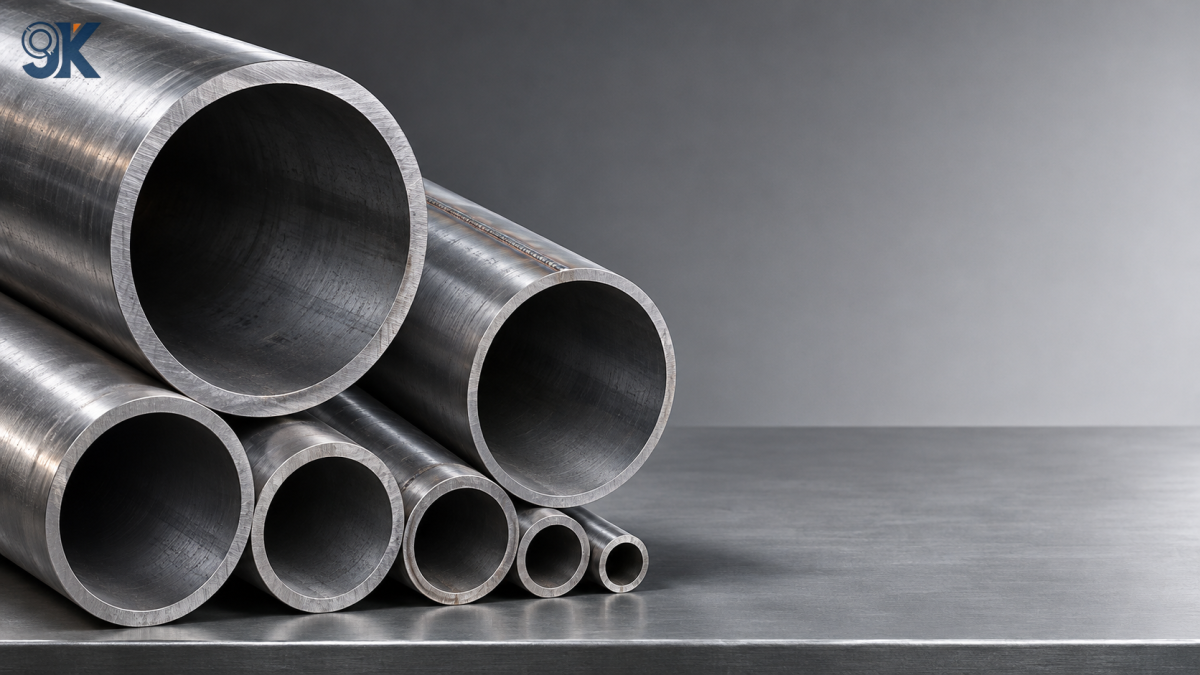
Steel pipe is a hollow steel product, usually circular in cross-section, manufactured for applications such as conveying fluids, carrying loads, or forming parts of machinery.
Manufacturers produce it either without a welded seam or by forming steel plate or strip into a cylinder and joining its edges through welding.
After forming, pipe may undergo heat treatment, straightening, inspection, cutting, threading, coating, or other processing, depending on the product standard and intended application.
Its performance depends on more than manufacturing method. Steel grade, wall thickness, dimensional accuracy, surface condition, and inspection requirements all influence suitability for service.
Pipe is often specified for fluid transport, while tube is frequently associated with precise dimensions or structural applications. However, industry terminology overlaps, so specifications matter more than labels.
Seamless vs. Welded Steel Pipe: What Is the Difference?
Seamless pipe is formed from a solid steel billet that is heated and pierced to create a hollow section. It has no longitudinal weld seam.
Depending on the manufacturing route, the hollow section is subsequently rolled, drawn, or otherwise reduced to reach the required diameter, wall thickness, and finish.
Seamless products are commonly considered for demanding pressure and temperature applications. However, being seamless does not automatically make a pipe suitable for every high-pressure system.
Welded pipe starts as flat steel that is formed into a cylinder. Its edges are joined by a welding process and inspected according to the relevant specification.
Welded products can offer competitive pricing and are available across a broad size range, including large diameters. Suitable welded pipe is also used in pressure service.
The practical comparison is between specific products, not abstract categories. Check the required standard, grade, pressure rating, operating temperature, inspection level, and delivered price.
For example, a structural support may favor readily available welded pipe, while a pressure component may require a particular seamless grade specified by its design code.
What Are the Common Types of Steel Pipe?
Steel pipes can be classified by manufacturing process, material, coating, or intended use. These categories overlap: a pipe can be both welded and galvanized, for example.
Seamless Steel Pipe
Seamless pipe is available in carbon steel, alloy steel, and stainless steel grades. It is used in pressure systems, mechanical components, and certain energy applications.
Common examples include boiler tubing, hydraulic cylinders, and process piping. The applicable product specification determines required properties, manufacturing controls, and testing for each use.
Its absence of a longitudinal weld is useful where specified by design requirements, but dimensions, material quality, and verified compliance remain essential selection factors.
Electric Resistance Welded Pipe
Electric resistance welded, or ERW, pipe is made from formed steel strip whose edges are joined using electrical resistance heating and pressure.
ERW pipe is widely used for water lines, structural members, fencing, and mechanical applications. Certain grades and specifications are also suitable for oil and gas service.
Actual pressure capability depends on the specified product, dimensions, inspection, and governing design code. Buyers should not assume all ERW pipe is interchangeable.
Submerged Arc Welded Pipe
Submerged arc welded, or SAW, pipe is commonly produced with either a longitudinal seam or a helical seam, depending on the manufacturing process.
Longitudinal SAW pipe is often identified as LSAW, while helically welded SAW pipe may be called HSAW or SSAW. Applicable terminology varies by market.
These products are frequently used for larger-diameter pipelines, piling, and structural work. Their suitability depends on the project specification and the required weld inspection.
Galvanized Steel Pipe
Galvanized pipe has a zinc coating intended to slow corrosion in suitable environments. The underlying pipe may be welded or seamless, depending on its specification.
It is used in applications such as fencing, outdoor structures, and some water systems. Coating requirements and local plumbing rules should be checked before selection.
Zinc is not a universal corrosion solution. Water chemistry, temperature, contact with other metals, coating damage, and environmental exposure can affect service life.
Stainless Steel Pipe
Stainless steel pipe contains chromium and other alloying elements that improve corrosion resistance in many environments. It is available in welded and seamless forms.
Applications include food processing, chemical plants, and water treatment. Grade selection matters: a stainless grade suitable for one chemical or chloride exposure may fail in another.
Stainless pipe generally costs more than carbon steel, but it may reduce maintenance or replacement costs where its corrosion resistance matches the operating conditions.
Alloy Steel Pipe
Alloy steel pipe contains deliberately added elements such as chromium or molybdenum to achieve properties needed for particular temperature, strength, or service requirements.
It is used in applications including power generation and industrial process systems. Material grade, heat treatment, welding procedures, and design requirements must be considered together.
Where Is Steel Pipe Used in Industry?
Industrial uses vary because pipe can function as a fluid conduit, a load-bearing component, or a precisely processed part within a larger assembly.
Fluid and Gas Transport
Steel pipelines carry water, oil, gas, steam, and process fluids. Designers select materials and wall thicknesses based on pressure, temperature, corrosion, and applicable codes.
A water distribution line and a high-temperature steam system have different requirements, even when their pipes appear similar. Confirm service conditions before comparing prices.
Construction and Infrastructure
Structural pipe is used for columns, handrails, piling, and support frames. Strength, weldability, dimensional tolerances, corrosion protection, and local building requirements influence selection.
For exposed structures, coating selection and maintenance planning matter alongside initial strength. A pipe designed for fluid pressure is not automatically the best structural choice.
Machinery and Equipment Manufacturing
Manufacturers use pipe and tubular products for rollers, sleeves, shafts, frames, and other components. Some applications require machining, close tolerances, or specified mechanical properties.
For moving or fitted parts, buyers should confirm outside diameter, inside diameter, straightness, and surface finish. A nominal pipe size alone may not be sufficient.
Power and Process Industries
Power stations, refineries, and chemical facilities use steel pipe in systems exposed to heat, pressure, and potentially corrosive substances. Service conditions vary considerably.
Specialized grades and documented testing may be necessary. A qualified engineer should verify material compatibility and compliance with the governing piping or equipment code.
How Do You Choose the Right Steel Pipe?
Begin with the application and working conditions, then identify the applicable standard. This sequence prevents a familiar pipe type from being selected for unsuitable service.
Define the Operating Conditions
Record the transported substance or structural load, operating pressure and temperature, external environment, expected service life, and any foreseeable pressure or temperature fluctuations.
For fluid service, consider corrosion, erosion, and chemical compatibility. For structures and machinery, consider fatigue, impact, fabrication loads, and exposure during operation.
Specify Material and Manufacturing Standard
Product standards define requirements such as manufacturing methods, chemical composition, mechanical properties, dimensions, and testing. Examples include ASTM, ASME, API, and EN specifications.
These organizations publish different standards for different purposes. A standard designation must be paired with its grade and applicable edition; the organization name alone is insufficient.
For example, ASTM A106 covers seamless carbon steel pipe for high-temperature service, while ASTM A53 includes specified types of welded and seamless steel pipe.
API 5L covers specified seamless and welded line pipe for pipeline transportation systems. Its grade and product specification level must be selected for the project.
Confirm Dimensions and Wall Thickness
Pipe dimensions may be expressed using nominal pipe size, outside diameter, and schedule. A schedule identifies a wall-thickness series; it is not a pressure rating.
Pressure capacity depends on the actual dimensions, material, temperature, allowances, and governing design rules. Calculate or verify it under the relevant code.
For machined components, specify the required inside and outside diameters and tolerances. Nominal size may not describe the finished dimensions closely enough for a fit.
Consider Fabrication and Total Cost
Ask whether the pipe will be welded, bent, threaded, coated, or machined. Material grade and processing history can affect fabrication procedures and final performance.
Compare purchase price with cutting, finishing, inspection, freight, installation, and expected maintenance. A lower unit price does not necessarily mean a lower project cost.
What Should You Check Before Ordering?
A clear purchase specification reduces the risk of receiving pipe that meets a general description but fails the dimensional, documentation, or inspection requirements of the application.
Include the product standard and grade, manufacturing type, dimensions, length, quantity, end preparation, surface condition, and any required coating or additional processing.
State required inspections and acceptance criteria, such as dimensional checks, hydrostatic testing, or nondestructive examination. Requirements vary by standard and intended service.
Request material test certificates when traceability is needed, and confirm which results and identification details they must contain before production or dispatch.
For international orders, agree on packaging, shipping terms, delivery schedule, and required export or import documents. Confirm responsibilities for inspection and customs clearance.
If the pipe will become a custom component, provide drawings and machining allowances. A trial order can help verify fit and processing requirements before larger purchases.
Shandong Jiukai Metal Materials Co., Ltd. supports specification selection, custom production, processing, warehousing, and export logistics. Buyers should confirm project-specific capabilities and documentation requirements directly.
Frequently Asked Questions About Steel Pipe
Is Seamless Pipe Always Stronger Than Welded Pipe?
No. Strength depends on material grade, dimensions, manufacturing quality, and the applicable specification. A compliant welded product can meet demanding service requirements.
Choose between products using verified properties and design requirements, not seam presence alone. Some codes or projects may impose additional restrictions on particular products.
Does Galvanized Pipe Never Rust?
No. Zinc provides corrosion protection for a period that depends on coating quality and exposure. Damaged coatings and aggressive conditions can shorten service life.
For critical applications, assess the environment and applicable standards, and consider whether another coating system or a corrosion-resistant material is more appropriate.
What Is the Difference Between Pipe Size and Actual Diameter?
Nominal pipe size is a standardized designation and does not always equal the measured outside or inside diameter. Schedule affects the wall thickness and inside diameter.
When dimensions are critical, consult the relevant dimensional standard and specify actual measurements and tolerances rather than relying on the nominal designation alone.
Conclusion
Steel pipe serves many industrial purposes, but its manufacturing method, material, dimensions, and specification determine whether it is appropriate for a particular job.
Start with service conditions and applicable standards, then compare suitable seamless or welded products using verified properties, processing needs, documentation, and total cost.
Latest News
- How do iron ore prices affect steel pipe price trends?
- How do tariffs affect square tube export markets?
- How steel pipe price trends affect inventory valuation
- Steel pipe price forecast for 2026 amid changing raw material costs
- Square Tube Export News: What Buyers Should Watch in Freight and Supply
- What new trade investigations mean for steel pipe exports
Send Us A Message

