
News center
How to track steel pipe price trends before placing an order
A useful steel pipe price trend starts with a fixed specification and a consistent delivery basis. Track the same grade, dimensions, manufacturing process, quantity and destination over time; otherwise, a change in the quoted figure may reflect a different order rather than a movement in the market. Record the date and validity of each offer, then separate the pipe price from processing, freight and other charges before deciding when to place an order.
Price movements in coil or billet can provide an early indication of cost pressure, but they do not translate directly into an equivalent change in a finished pipe quotation. Production schedules, available stock, order size and shipping arrangements also affect the final number. The most reliable signal comes from comparing several related indicators with current, like-for-like offers.
Fix the specification before tracking prices
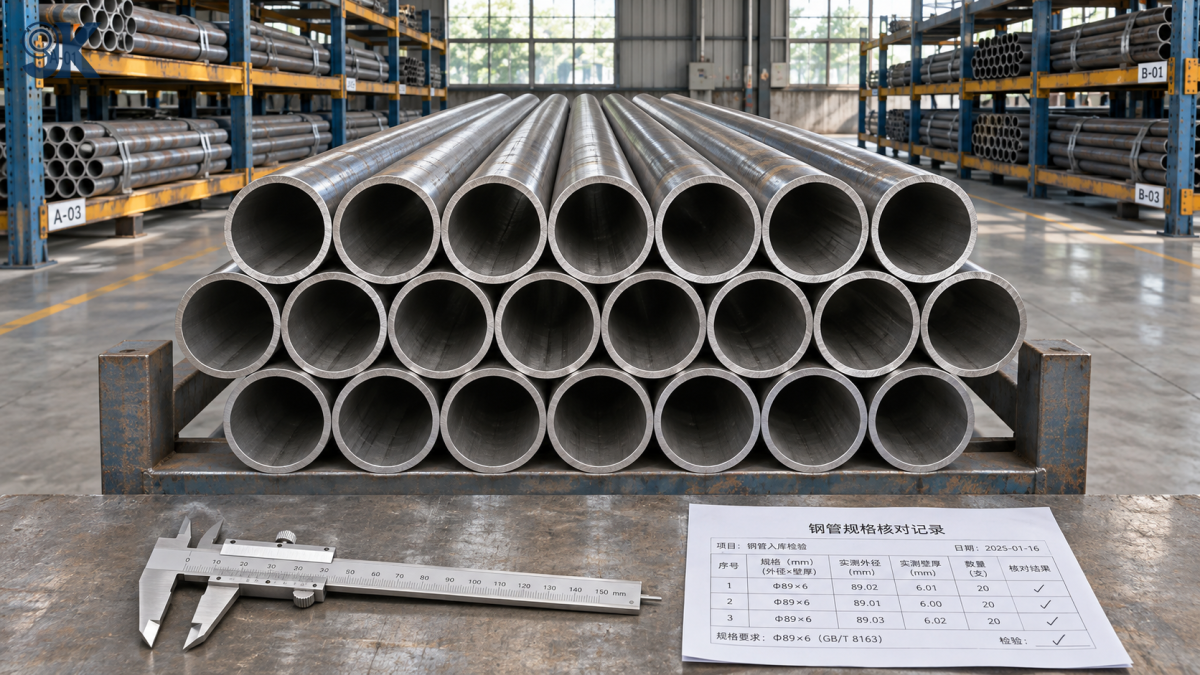
Start a price record with the exact pipe requirement. Include the material grade and applicable technical standard, outside diameter, wall thickness, length, manufacturing process and required quantity. State whether the order is for seamless or welded pipe, because their input materials and production routes differ. Surface finish, heat treatment, testing, end preparation and packaging also belong in the record when they are required.
A small change in wall thickness affects weight per meter as well as the amount of material used. A quote per metric ton can therefore look attractive while producing a higher cost per piece or per meter. Conversely, comparing only the piece price hides whether the quoted weights and dimensional tolerances are equivalent. Ask for both the pricing unit and the weight basis, especially when specifications permit a range of wall thicknesses.
Length is another source of distortion. Standard stock lengths and fixed cut lengths do not necessarily have the same yield or processing cost. If the application requires cutting, machining or a particular finish, keep that requirement unchanged in every request. A lower offer that excludes these operations is a different scope, not evidence that the market has fallen.
Choose indicators that match the pipe
Finished pipe offers are the most direct reference, but upstream material prices help explain their direction. For many welded pipes, hot-rolled coil or strip is a relevant input. For seamless pipe, billet and the cost of converting it into tube are more relevant. Identify the input used for the specific production route before selecting a reference series.
Follow prices for the same material category, region and transaction basis whenever possible. A domestic coil assessment and an export pipe offer do not cover the same costs or respond on the same timetable. Raw material prices can rise while pipe offers remain steady if mills are working through existing inventory, competing for orders or using earlier-priced inputs. The reverse is also possible when conversion costs rise or available pipe stock tightens.
Use a small set of repeatable sources: published steel price assessments, exchange or market data where relevant, mill notices, stockist offers and dated quotations. Record whether each figure is an actual offer, an indicative assessment or a traded contract price. Futures prices reflect a standardized contract and delivery location; they are useful as a directional signal, not as a substitute for a quotation on the required pipe.
Sources should also be compared on publication date, currency, tax treatment and location. An apparent price change can be caused by a revised exchange rate or a shift from a domestic tax-inclusive figure to an export price. When a source does not disclose its basis, treat it as context rather than inserting it into the same series as a firm offer.
Build a comparison that survives a new quotation
A simple record is sufficient if every entry preserves the commercial terms. Alongside the material specification, capture the offer date, expiration time, available quantity, lead time, origin, currency and delivery term. Keep the original quotation with the record so that exclusions and revisions remain visible.
When offers arrive in different currencies, retain the original amount and convert each one using a consistently selected exchange-rate source and date. Keep the exchange rate visible. That allows the pipe price movement to be distinguished from the currency movement instead of blending both into a single percentage.
For a repeat order, ask for a refreshed quote against the previous specification and quantity. Preserve the earlier delivery term and destination as well. If the new offer changes a condition, record the adjustment separately rather than connecting the two prices as though nothing else had changed. A longer production lead time, for example, may allow a mill to schedule the order differently; that price is not directly equivalent to an offer for immediate dispatch.
Separate the pipe price from the delivered cost
Ocean freight, inland transport, port charges, insurance and destination charges can move independently of the pipe price. Compare offers on a consistent delivery term and named place, then add the costs that remain outside each offer. State the assumed transport mode and shipment size: a small trial order shipped as less than a container load has a different cost structure from a full container or bulk shipment.
Incoterms allocate responsibilities between the parties, but the named place and the agreed contract still matter. An offer delivered to a port is not automatically comparable with one delivered to a warehouse. Identify which party pays for loading, export clearance, main carriage, insurance, import clearance, duties and final delivery. Confirm the inclusions with the quotation and freight documents rather than relying on a term alone.
Timing also matters. A pipe quotation may remain valid for a stated period while a freight indication expires earlier, or the freight rate may be subject to a later booking confirmation. Keep those dates separate. If shipping is booked after production, the total landed cost remains exposed to freight and currency changes even after the pipe price is fixed.
Payment terms affect the comparison too. A deposit, balance payment before shipment or extended credit changes when cash is required and how much of the order is exposed to exchange-rate movement. When the differences are material, include financing and currency assumptions in the internal comparison rather than treating the lowest unit price as the lowest total cost.
Read the direction without assuming an exact turning point
Look for movement across several observations rather than reacting to one offer. A single unusually low quotation can reflect surplus inventory, a canceled order or a different specification. An unusually high one may reflect limited mill capacity, a short deadline or a requirement for special testing. Ask what changed before interpreting either as the market direction.
Compare the timing of upstream and finished-pipe movements. If the relevant input has risen but pipe offers have not, the difference may reflect inventory purchased earlier or competition among suppliers. It does not establish how long the gap will last. If both the input and comparable pipe offers are rising, that provides a stronger indication of current upward pressure, although the next quotation is still subject to availability and order terms.
Distinguish available stock from future production. Stock may be offered at a price influenced by when it was purchased; a new production quote reflects the mill's current view of input cost and capacity. Stock also has a specific location, quantity and manufacturing date. Verify that it meets the required documentation and traceability before using its price as the benchmark for a planned production order.
Lead time deserves the same attention as price. If a low offer is tied to a later production slot, compare its arrival date with the project schedule and the cost of holding or delaying material. A price trend alone cannot show whether waiting is economical when the required delivery window is narrowing.
Set a quote refresh and ordering window
Work backward from the date the pipe is needed. Allow time for production or stock allocation, inspection, packing, inland movement, shipping and destination handling. Confirm the applicable lead times in the current offers; historical transit or production estimates should not be treated as commitments. The remaining time defines how long quotations can be observed before availability becomes a more immediate concern.
Within that window, request updates at a consistent interval and after a material change in the relevant input or freight market. The interval should reflect quotation validity and the urgency of the order: refreshing too infrequently can leave the comparison stale, while repeated requests within an unchanged validity period may add little information. Record a no-change response as well as a revised price; both are observations.
Where the required volume and delivery schedule permit, ask whether quantities can be split into separate releases and whether the price applies to each release or only to the full commitment. A staged approach can spread exposure to changing prices, but smaller lots may carry higher processing or freight costs, and later availability is not guaranteed. Compare those consequences with a single-order quote before choosing the structure.
Before accepting an offer, confirm the final specification, quantity, price unit, named delivery place, payment terms, validity and lead-time trigger in the order documents. A trend record is most useful when the accepted order can later be compared with the same scope and cost basis, including any changes agreed after the quotation.
Latest News
- How do iron ore prices affect steel pipe price trends?
- How do tariffs affect square tube export markets?
- How steel pipe price trends affect inventory valuation
- Steel pipe price forecast for 2026 amid changing raw material costs
- Square Tube Export News: What Buyers Should Watch in Freight and Supply
- What new trade investigations mean for steel pipe exports
Send Us A Message

