
News center
How to prevent steel pipe damage during ocean freight
Steel pipe damage during ocean freight can disrupt project schedules, increase replacement costs, and compromise installation quality. A bundle that leaves the mill in good condition may still arrive with dented ends, damaged coatings, or corrosion hidden beneath wet packaging. For project managers, effective Steel Pipe Logistics starts long before cargo reaches the vessel: packaging, corrosion protection, load securing, and shipping method selection all influence delivery outcomes. The following guide explains where those risks arise and how to manage them before they become site problems.
Start with the pipe, not the shipping schedule
There is no single packing method for every steel pipe shipment. Thin-wall tubes may deform under loads that heavier pipe can tolerate. Machined ends, threaded connections, internal coatings, and tightly controlled surface finishes need different protection from that required for standard structural pipe. Before requesting a freight quotation, identify which characteristics must remain intact for the pipe to be usable.
Give the supplier and logistics provider a shipment brief that includes pipe dimensions, wall thickness, grade, coating or surface condition, individual lengths, total weight, and destination. Add the intended application and any acceptance criteria for dents, scratches, corrosion, straightness, or end damage. If pipes will be stored outdoors before installation, mention that too: packaging suitable for a short covered journey may not provide sufficient protection during a long wait at the project site.
Be especially clear about critical surfaces. A minor mark on a non-contact structural surface may be acceptable under an agreed specification; a similar mark on a sealing face or precision-machined end may not be. When acceptable condition is defined only after arrival, even an otherwise manageable issue can turn into a dispute.
Choose the transport method around handling exposure
FCL, LCL, and bulk shipping can all move steel pipe, but each creates a different pattern of handling and exposure. The best choice depends not just on freight cost, but also on pipe length, cargo volume, delivery urgency, and the consequences of damage.
- Full container load (FCL): A practical option when the cargo fits the container and there is enough volume to justify dedicated space. The shipper has more control over packing, although poor weight distribution, inadequate restraint, or trapped moisture can still cause damage.
- Less than container load (LCL): Useful for small trial orders or partial shipments. Consolidation can introduce additional handling and neighboring cargo, so robust bundling, clear markings, and protection against crushing deserve particular attention.
- Bulk or breakbulk shipping: Often considered for long, heavy, or large-volume pipe that is unsuitable for standard containers. The lifting plan, stowage, weather exposure, and separation from other cargo become central to the risk assessment.
Confirm actual internal container dimensions, door clearances, payload limits, and carrier restrictions before committing to a method. Nominal container length alone is not enough to establish whether a long pipe can be loaded safely. For oversized pieces, discuss suitable equipment and port handling arrangements early rather than assuming a last-minute solution will be available.
A lower freight quote can become expensive if it requires multiple transfers or exposes precision-finished pipe to uncontrolled mixed cargo. Compare the whole route, including inland transport, terminal handling, ocean transit, destination unloading, and the time the shipment may spend waiting for collection.
Build a packing plan around the likely damage
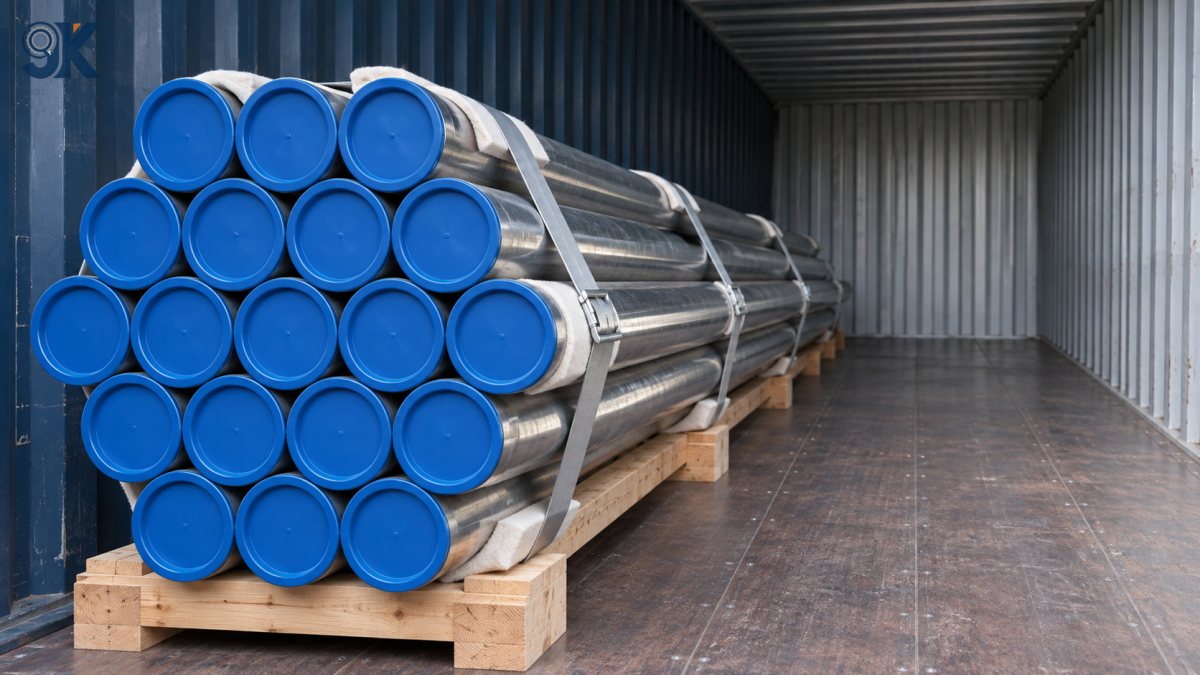
Packaging should prevent pipe-to-pipe movement, protect vulnerable surfaces, and allow cargo to be lifted without forcing handlers to improvise. Ask for a packing proposal that shows bundle weights, dimensions, banding positions, end protection, and the intended lifting points. For sensitive or unusual cargo, request photos of a representative packed bundle before the full order is prepared.
Keep bundles stable without creating pressure damage
Use appropriately sized bundles with banding selected for the pipe weight and handling conditions. Protective padding at contact points can reduce abrasion and prevent bands from cutting into coatings or surfaces. Avoid excessively tight restraint on thin-wall pipe, and do not rely on loose bands that allow individual pieces to shift. Timber supports or other suitable separators can keep bundles stable and make forklift access easier, provided their placement does not concentrate loads in a way that bends the pipe.
Separate different diameters, lengths, finishes, or project lots when mixing them would create uneven support or make identification difficult. Labels should remain readable after wrapping and handling. Include the project reference, item description, quantity, weight, and any handling instructions agreed with the carrier.
Protect ends and finished surfaces
Pipe ends are particularly vulnerable during loading, unloading, and contact with adjacent cargo. End caps or protectors should match the end type and fit securely without damaging threads or bevels. For threaded or machined ends, specify protectors suitable for the connection and check that they will remain in place through the expected handling cycle.
Coated, polished, or otherwise sensitive pipe may need non-abrasive wrapping, spacers, or additional barriers at lifting and contact points. Packaging materials should be compatible with the surface treatment and should not trap contaminants against it. Agree on how protective materials will be removed at destination, particularly when a coating must be inspected before installation.
Plan corrosion protection for the complete journey
Salt-laden air is only one concern. Condensation can form when temperature changes cause moisture inside a container or package to collect on cooler surfaces. Loading damp pipe into a closed container can make the problem worse, and sealed wrapping does not automatically prevent corrosion if moisture is enclosed with the cargo.
Start with clean, dry pipe and dry packing materials. Select protective oil, wrapping, desiccants, or other measures according to the pipe finish, transit duration, climate, and buyer requirements. Make sure the chosen treatment is compatible with later fabrication, coating, or installation. Inspect the container for leaks, standing water, damaged seals, and residue before loading; a container that appears acceptable from outside may still have a roof or floor problem.
Desiccants can help manage moisture in an appropriately prepared enclosure, but they are not a substitute for dry cargo and sound packaging. Where corrosion tolerance is especially low, agree on the preservation method and inspection requirements in writing rather than relying on a generic instruction to “pack seaworthy.”
Loading and securing are engineering decisions
Once the pipe is packed, it must remain supported and restrained throughout road transport, terminal transfers, and vessel movement. A secure-looking load can still fail if the dunnage shifts, the center of gravity is poorly controlled, or the restraints are attached to unsuitable points.
For containerized cargo, ask the loading team to document the stowage arrangement. Weight should be distributed within the container and its floor limits, while blocking, bracing, and lashings should prevent movement in the directions expected during transport. Do not assume the container walls or doors are adequate restraints. The securing method should follow the applicable cargo securing requirements, the carrier’s instructions, and relevant guidance such as the CTU Code.
For breakbulk cargo, agree on how slings, spreader equipment, lifting points, and dunnage will be selected for the pipe’s length and weight. Unsupported long sections can bend; direct contact with unsuitable lifting gear can damage coatings or ends. The loading team should also know whether bundles can be stacked and what contact protection is required.
Mixed project shipments need the same attention. If structural sections such as an I Beam travel alongside pipe, their different shapes and contact surfaces should be considered in the stowage plan. Heavy sections should not bear unpredictably on thin-wall tubes or finished pipe ends.
Make Steel Pipe Logistics visible before departure
Project managers do not need to supervise every lift personally, but they do need evidence that the agreed controls were applied. Set inspection and communication points before production is complete, before dispatch, and after loading. Assign a named contact for each stage so that a missing photo or unclear document can be resolved while the cargo is still accessible.
A practical pre-departure record should include:
- A packing list identifying bundle numbers, pipe specifications, quantities, dimensions, and weights.
- Photographs of pipe condition, end protection, bundle markings, and completed packaging before loading.
- Container condition photographs and images of the final stowage and securing arrangement, where applicable.
- Details of preservation materials and any handling or storage instructions needed at destination.
- Shipping documents consistent with the purchase order and the agreed delivery terms.
Agree on responsibilities under the selected Incoterms rule, including the named place, and confirm separately who arranges insurance and what it covers. Delivery terms allocate particular costs and risks; they do not remove the need to understand policy exclusions, claim deadlines, or evidence requirements. If damage could stop installation, check whether the project has a realistic contingency for replacement or repair.
Shandong Jiukai Metal Materials Co., Ltd. combines custom production, processing, warehousing, export documentation, and logistics coordination for steel pipe orders. Depending on the shipment, routes through ports such as Tianjin, Qingdao, and Rizhao and options including FCL, LCL, or bulk shipping may be considered. For a project team, the useful discussion is not simply which port is available, but how the chosen route affects packing, handling, timing, and traceability.
Inspect on arrival—and preserve the evidence
Receiving is the last opportunity to identify transport damage before pipe is moved into storage or issued to site. Arrange labor, lifting equipment, and a suitable inspection area in advance. Rushed unloading can create new damage and make it difficult to distinguish a transit issue from a site-handling issue.
Before opening a container, photograph its exterior, seal, and any visible damage. After opening, record the cargo position, securing materials, moisture, and package condition before anything is disturbed. For bulk or breakbulk deliveries, document the condition of bundles and visible damage as they are discharged, subject to terminal procedures and safety rules.
Check quantities and markings against the packing list, then inspect representative surfaces and critical ends in line with the purchase specification. Where damage is suspected, identify the affected bundle and pipe, photograph the issue with enough context to locate it, and record the apparent extent. Do not dispose of damaged packaging or make repairs before confirming the evidence requirements with the carrier, insurer, and relevant parties.
Notify the appropriate parties promptly and follow the contractual and carrier-specific notice procedures. A clean delivery receipt signed without qualification can complicate a later claim, so record visible exceptions when permitted. Hidden damage may require a different notification process; check the applicable deadlines rather than assuming one rule covers every shipment.
A final decision check for project teams
Before releasing the shipment, ask whether the selected method protects the features that matter most, whether the cargo can be handled safely at every transfer point, and whether the receiving team knows what to inspect. If any answer is uncertain, resolve it with the supplier and logistics provider while the pipe is still at origin.
Good ocean freight planning does not eliminate every risk. It makes those risks visible, assigns responsibility, and gives the project team a better chance of receiving pipe ready for its intended use—without discovering a preventable problem when installation is already waiting.
Latest News
- How do iron ore prices affect steel pipe price trends?
- How do tariffs affect square tube export markets?
- How steel pipe price trends affect inventory valuation
- Steel pipe price forecast for 2026 amid changing raw material costs
- Square Tube Export News: What Buyers Should Watch in Freight and Supply
- What new trade investigations mean for steel pipe exports
Send Us A Message

