
News center
How to keep steel pipe batches traceable from storage to dispatch
Keep each steel pipe batch traceable by maintaining a continuous link between the physical material, its identification marks, its storage location, and the documents released with the shipment. That link must survive every transfer: receiving, stacking, splitting bundles, processing, picking, loading, and dispatch. A pipe that matches the ordered dimensions is not ready for release if its material identity cannot be supported by records.
In steel pipe warehousing and logistics, the most common breaks in this chain occur when a bundle is divided, a label is damaged, or material is moved without recording the new location. These events are manageable when each change is captured at the time it happens and unidentified material is held until its identity is established.
Build the identity record at receipt
Begin with the information that connects the incoming pipes to their source documents. Record the purchase order or receipt reference, material designation, specified dimensions, quantity, heat number where supplied, and the applicable inspection document reference. Add a unique internal batch or stock identifier so that warehouse transactions do not rely on a heat number alone.
A heat number identifies a melt of steel; it does not necessarily identify a complete delivery, a single pipe size, or a particular production lot. The same heat can appear across different items or receipts. Conversely, one delivery can contain several heats. Keeping the heat number alongside the product description and receipt reference prevents an apparently valid number from being attached to the wrong material.
Compare the physical markings and bundle tags with the delivery documents before accepting the stock into an available location. Confirm the outside diameter, wall thickness, grade, quantity, and any ordered condition that appears on the documents. A certificate that names the correct grade but lists a different heat does not establish the identity of the pipes on the floor.
When markings are incomplete or the paperwork disagrees, place the affected material in a clearly identified hold area. Record the discrepancy against the receipt and preserve the original tags and documents. Release follows documented reconciliation with the source; a replacement label should never be created from an assumption that nearby pipes belong to the same heat.
Make labels survive storage and handling
A useful bundle label remains readable after lifting, stacking, and exposure to the conditions of the storage area. Attach it where it can be seen without disturbing a stable stack, and use a fastening method suited to the bundle and handling equipment. Keep a second means of identification available when a single tag could be torn off or obscured, especially for outdoor storage or repeated handling.
Individual pipe markings and bundle tags serve different purposes. A bundle tag identifies the group while it remains intact; individual markings support identification after pipes are separated. Where the order or applicable specification requires individual traceability, verify that each pipe carries the necessary identity before breaking the bundle. A tag attached to the outside cannot establish the identity of loose pieces once their connection to the bundle is lost.
Storage locations should be specific enough to distinguish adjacent stacks, tiers, and hold areas. Record every move against the stock identifier, including temporary moves to an inspection or processing area. A location recorded only as “yard” provides little help when similar pipes are stacked across several bays.
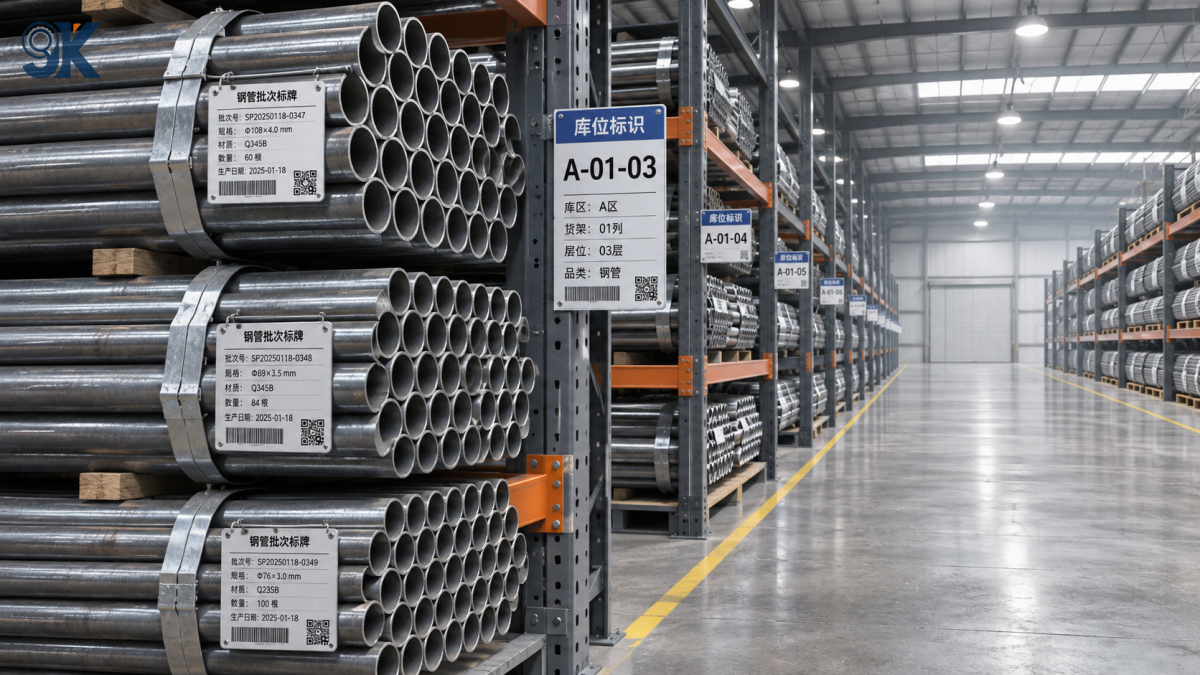
Segregation deserves particular attention when batches look alike. Pipes with the same diameter and wall thickness can differ in grade, heat, inspection status, or customer allocation. Use physical separation and visible location identification where mixing would be difficult to detect. Painted ends or color coding can assist recognition, but the meaning of each color must be controlled and supported by the written or electronic record; color alone is vulnerable to fading, repainting, and local variations in practice.
Preserve the link when a bundle is split
Splitting a bundle is a traceability handoff. Before straps are removed, identify the parent bundle and record its quantity and destination. Create a child record for each resulting group, retaining the parent identifier, heat, material description, and quantity. Label the separated pipes or groups before they leave the controlled area. The remaining stock also needs a readable identifier and an updated balance.
For example, if a bundle contains pipes from one heat and part of it is picked for an order, the picked quantity and the balance should both point back to the same receipt and heat record. If the original bundle contains more than one heat, separation requires evidence of which pipes belong to each heat. A shared bundle label that lists several heats is insufficient to assign a specific heat to an unmarked individual pipe.
Cutting and other processing introduce a similar problem. A cut piece may lose the original marking, or several pieces may be produced from one marked pipe. Transfer the identity before the mark is removed, using a method compatible with the material, surface condition, and order requirements. Record the relationship between the original pipe and the resulting pieces, including the quantity or piece references needed to reconcile them. If physical marking is restricted, controlled tags or segregated containers may be suitable when the agreed traceability requirements allow them.
The same parent-to-child logic applies when different steel products share a warehouse. For example, a stock record for Q345 AISI ENSt 37-2 A572 Gr.65 Flat Steel needs its own product description and identity; a shared heat reference alone does not make it interchangeable with pipe stock.
Investigate a mismatch before correcting the record
A missing label, an unreadable mark, and a disagreement between documents require different responses. An unreadable label may be recoverable from a still-legible pipe marking and a reliable stock history. A missing label on loose, unmarked pipes is harder: the location and appearance of the material provide leads, but they do not by themselves prove identity.
Hold the affected stock while the evidence is reviewed. Look at receipt records, previous location transfers, bundle split transactions, remaining tags, and inspection documents. Confirm whether other material was stored or processed in the same area during the period in question. If the record trail cannot establish which heat belongs to a piece, do not assign one merely to clear the discrepancy. Resolve its disposition under the applicable contract and quality procedures.
Where testing is considered, define what it can establish before taking a sample. A composition test may help distinguish materials with different chemistries, but matching a grade range does not by itself prove a particular heat number or reconstruct missing production records. Mechanical properties and inspection status also cannot be inferred from appearance or dimensions.
Record the correction with its reason, supporting evidence, date, and authorizing reference. Preserve the original entry or an audit history. Quietly overwriting a heat number removes the very evidence needed to understand whether the error affected other stock or an earlier shipment.
Connect the pick to the actual pipes
Issue a pick instruction that identifies the order line, stock identifier, required quantity, and any heat or inspection restrictions. The location guides the search, but the material at that location still needs to be matched to the instruction. If a location contains several batches, selecting the first bundle with the right dimensions is not enough.
At the point of picking, record the actual batch and quantity taken. Where an order permits multiple heats, retain the allocation by heat rather than recording only the combined total. If the order restricts mixing or requires a particular certificate, apply that restriction before material reaches the loading area. An inventory balance can show sufficient quantity while no single eligible batch satisfies the order.
Keep picked stock identified during staging. Separate orders or order lines that are visually similar, and mark the staging position as well as the bundles. If pipes are re-bundled, attach labels that retain the original batch links and list the contents accurately. A new shipping bundle can contain material from more than one source bundle only when the allocation and customer requirements allow it and each source remains traceable.
Investigate quantity differences before loading. A balance discrepancy can arise from an unrecorded partial pick, a counting error, or stock placed in the wrong location. Simply adjusting the balance may make the system agree with the floor while leaving the shipment history wrong.
Reconcile the load with the dispatch documents
At dispatch, compare the staged material with the order and packing records: product description, dimensions, quantities, package or bundle identifiers, and heat numbers where required. Match each relevant heat to the inspection document supplied for that material. Verify that the document references correspond to the shipment and that any specified inspection or document requirements have been met.
A certificate can be technically valid yet unsuitable for the load if it covers a different heat or product. Equally, an accurate packing list does not resolve a missing certificate when the order requires one. Keep the link from each shipping bundle to its source batch in the dispatch record, even when the customer-facing packing list uses a different reference format.
During loading, record the package identifiers and quantities actually placed on the vehicle or in the container. If a bundle is exchanged because of damage, space, or handling constraints, update the allocation and documents before release. A final count performed before such a substitution no longer describes the finished load. Secure labels so they remain accessible at receipt without placing anyone in an unsafe position during unloading.
Once the shipment leaves, retain the receipt, movement, processing, picking, inspection, and dispatch records in a form that allows a shipment reference to lead back to the relevant stock and heat records. The reverse route matters too: a heat number or receipt reference should identify the stock and shipments associated with it. Test that retrieval periodically using an actual dispatch record; a missing link found during a routine review is easier to resolve while the material history is still accessible.
Latest News
- How do iron ore prices affect steel pipe price trends?
- How do tariffs affect square tube export markets?
- How steel pipe price trends affect inventory valuation
- Steel pipe price forecast for 2026 amid changing raw material costs
- Square Tube Export News: What Buyers Should Watch in Freight and Supply
- What new trade investigations mean for steel pipe exports
Send Us A Message

