
News center
How long does it take to get steel plate from China?
Steel plate lead time from China can range from a few weeks for available stock on a short shipping route to several months for mill production, extensive processing, or a distant destination. The difference is not simply the voyage. Procurement teams also need to account for stock verification, document review, inland transport, vessel schedules, customs clearance, and delivery from the destination port.
The most useful question is not “How quickly can you ship?” but “When can the specified plate realistically arrive at the point where we need it?” Those are different dates, often controlled by different parties.
What is a realistic delivery window?
As an initial planning allowance, an order using verified stock may reach a nearby Asian destination in roughly three to six weeks after the order is fully confirmed. Longer routes, transshipments, destination clearance, or processing can extend that window substantially. Mill-produced plate often requires several additional weeks before it is ready to ship, and special requirements may take longer.
These are budgeting ranges, not carrier schedules or delivery commitments. A quote for “stock plate” is only a useful starting point if the material is actually available in the required grade, thickness, dimensions, and quantity. Similarly, an ocean transit estimate generally covers port-to-port movement, not the complete time to a factory.
Ask each supplier to separate the schedule into milestones rather than provide one rounded figure:
- Order confirmation and technical approval.
- Stock allocation or mill production, followed by any cutting or testing.
- Inspection, packing, inland transport, and export procedures.
- Vessel departure, port-to-port transit, and any transshipment.
- Destination clearance, unloading, and inland delivery.
Some activities can overlap. Documents may be prepared while the material is being processed, for example. Others cannot: a vessel booking is of limited value if the plate is not released in time for the terminal cut-off. Avoid adding every quoted duration blindly, but do ask which activities depend on a preceding approval.
Stock plate versus a new mill order
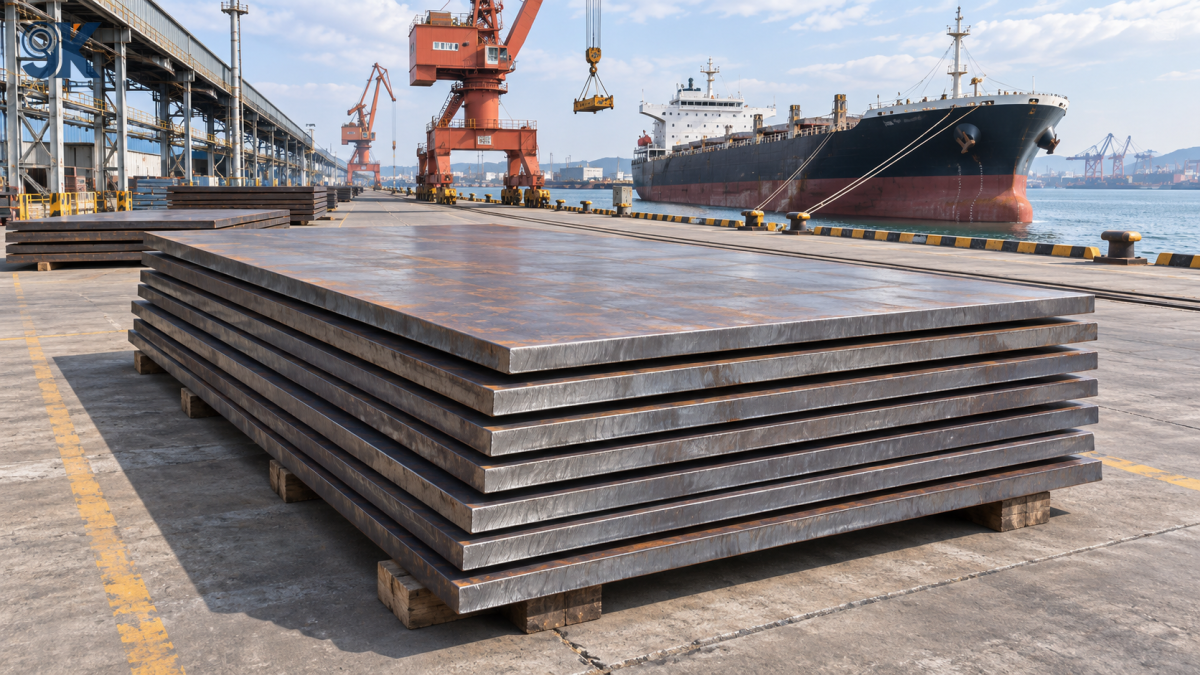
Available stock is usually the quickest option when the specification is common and the quantity can be assembled from suitable lots. Even then, “available” needs checking. A trader may have access to plate at another warehouse without having reserved it, or the available thickness may be acceptable while the width, test documentation, or heat traceability is not.
Before treating stock as confirmed, request the quantity, location, dimensions, grade, and available mill test documentation. If the purchase requires material from a particular mill, a single heat, or a specific test result, say so before the supplier allocates it. Material that looks interchangeable on a price list may not satisfy the project documentation package.
A new production order gives the buyer more control over the specification, but it also introduces mill scheduling. The clock may not start when the purchase order is sent: the mill or supplier may wait for technical agreement, a deposit where applicable, and confirmation of the production slot. Small quantities can be especially difficult if they do not fit the mill’s minimum order or rolling schedule.
There is a practical cost trade-off. Stock may carry a higher unit price, yet a mill order that arrives after a fabrication slot has been lost can be more expensive overall. Conversely, paying a premium for immediate stock makes little sense if the project cannot accept the available certificates or dimensions.
Specifications and processing can change the critical path
Thickness, width, grade, surface condition, and required tolerances all affect sourcing. A plate that needs to be cut into standard rectangles may move through a workshop quickly; a set of profiled parts with tight dimensional requirements, edge preparation, identification marking, or additional inspection needs more coordination. The supplier must also confirm that the starting plate is large enough to produce the specified parts with acceptable yield.
For machinery fabrication, send the drawing and acceptance criteria with the inquiry, not after agreeing on price. Clarify whether dimensions apply before or after cutting, which edges need preparation, how individual pieces must be marked, and whether the receiving team needs traceability back to each plate or heat. Late changes can mean rework or replacement rather than a simple adjustment.
Inspection is another frequent source of schedule confusion. If a third party must witness testing or release the goods, establish who appoints the inspector, what notice is required, and whether shipment can proceed before the final report is issued. The same applies to mill test certificates: confirm the required standard, document format, and review process against the project specification. Do not assume every stock lot comes with the exact documentation your end customer expects.
Shandong Jiukai Metal Materials Co., Ltd. describes its business primarily as steel pipe supply and related services, including drawing evaluation, processing, warehousing, and export coordination. For a plate inquiry, the buyer should confirm the available grades, processing capability, and sourcing arrangements for that particular order rather than assume pipe inventory or capabilities automatically extend to plate.
Shipping time is only part of the transport decision
China offers several export gateways, including Tianjin, Qingdao, and Rizhao. The best loading port depends on where the plate is stored or processed, inland haulage, suitable vessel availability, and the destination. A port closer to the supplier is not necessarily the fastest route if it requires an inconvenient sailing or transshipment.
Container shipping can be practical for plate that fits the equipment and can be safely loaded within applicable weight limits. For smaller shipments, less-than-container-load service may be available, but heavy steel requires careful checking: not every consolidation service or warehouse will accept dense cargo or oversized pieces. Consolidation and deconsolidation also add handling stages.
For large, heavy, or oversized lots, breakbulk or other suitable non-container services may be worth comparing. Their schedules and port handling arrangements need to be checked for the actual route. The lowest quoted ocean rate is not automatically the lowest landed cost once lifting, securing, terminal charges, inland transport, and potential waiting time are included.
Ask the forwarder whether the transit estimate assumes a direct sailing and which vessel cut-off applies. A missed cut-off can move the cargo to a later departure even when production finished on time. If the project date is tight, request the next viable sailing as well as the preferred one.
Where buyers lose time after the goods are ready
A plate order can be physically ready while its paperwork is still under review. The commercial invoice, packing list, transport document, and any required origin or inspection documents need to match the transaction and the destination’s requirements. Differences in descriptions, weights, consignee details, or document references can create questions at exactly the point when the buyer expects release.
Steel import measures vary by destination and product. Depending on the jurisdiction and classification, duties, trade remedies, licensing, reporting, or other requirements may affect cost and clearance. Confirm the tariff classification and current rules with a qualified customs broker before committing to a delivery date. A supplier’s export experience does not remove the importer’s responsibility to verify destination requirements.
The named delivery term matters too. Under FOB, for example, the supplier’s delivery obligation and the buyer’s transport responsibilities differ from an arrangement that includes carriage to a destination. Use the agreed Incoterms rule, edition, and named place in the contract; then identify who books freight, insures the cargo if required, handles import clearance, and pays each local charge. Arrival at the destination port is not the same as delivery to the workshop.
How to compare quotes without buying a schedule problem
Request quotations on the same basis: identical grade and dimensions, quantity, processing, inspection, documents, delivery term, and destination. Then look beyond the price per tonne. A cheaper offer may exclude cutting, third-party inspection, port charges, or inland delivery; another may include them but rely on a longer production schedule.
For each offer, distinguish a confirmed date from an estimate. A credible schedule identifies the stock location or expected mill slot, the date material can be released, the intended loading port, and the assumptions behind freight transit. Ask how long the offer and stock allocation remain valid. If the supplier cannot reserve material until payment or technical approval, factor that gap into the plan.
Consider splitting an urgent requirement only after checking the consequences. Sending available plate first may protect an early fabrication activity, but it can increase freight and handling charges or leave the buyer with mixed heats and separate document sets. A split shipment is useful when the first lot genuinely unblocks work—not merely when it makes the departure date look better.
Before issuing the purchase order, work backward from the date the plate must be available for fabrication. Allow for unloading, incoming inspection, and any local transport, then agree on milestone updates and a response plan if production or the sailing slips. That conversation is usually more valuable than negotiating a promising lead time that neither side has broken down.
Latest News
- How steel pipe price trends affect inventory valuation
- Steel pipe price forecast for 2026 amid changing raw material costs
- Square Tube Export News: What Buyers Should Watch in Freight and Supply
- What new trade investigations mean for steel pipe exports
- The role of scrap supply in steel industry development
- How energy costs shape steel pipe price trends
Send Us A Message

