
News center
How does zinc coating protect galvanized pipe from corrosion?
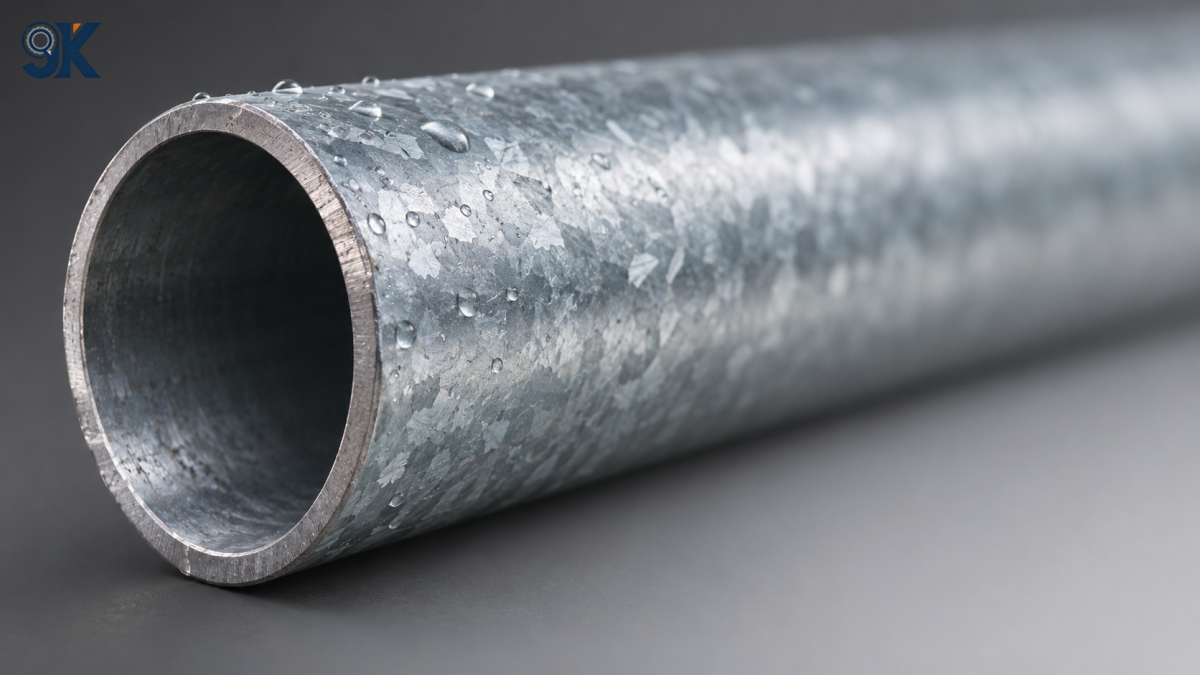
The zinc coating on galvanized pipe protects steel in two complementary ways: it separates the steel from the environment and can corrode sacrificially when a small area of steel is exposed. For maintenance personnel, that distinction matters. A scratched coating does not automatically mean the pipe has lost all protection, but neither does a galvanized surface guarantee that corrosion cannot develop.
Understanding where the zinc is being consumed, what is attacking it, and whether the pipe wall is still sound helps turn an inspection into a useful maintenance decision. The sections below explain the protective mechanisms and how to apply them in the field.
How the zinc coating on galvanized pipe protects steel
1. It creates a physical barrier
Zinc covers the steel surface and limits direct contact with moisture and oxygen. On hot-dip galvanized products, the coating typically includes zinc-iron alloy layers bonded to the steel, with an outer zinc-rich layer. The coating is more than a loose film, although it can still be damaged by abrasion, cutting, welding, or aggressive service conditions.
As zinc weathers, it forms corrosion products on the surface. Under suitable atmospheric conditions, these products can develop into a relatively adherent patina that slows further zinc corrosion. The patina does not form or perform identically in every environment: repeated wetting, trapped moisture, and chemical exposure can change the corrosion process.
The American Galvanizers Association describes both the barrier and sacrificial mechanisms, as well as zinc’s weathering behavior, in its explanation of galvanizing protection.
2. It provides sacrificial protection at exposed steel
Zinc is more electrochemically active than steel. When zinc and exposed steel are electrically connected and both are in contact with a suitable electrolyte, such as a film of moisture, zinc preferentially corrodes. This is called sacrificial or cathodic protection.
For a maintenance technician, the practical example is a small scratch that reaches the steel. The surrounding zinc can provide some protection to the exposed area. That protection is not unlimited: it depends on conditions including the size of the damaged area, the availability of adjacent zinc, and the nature of the electrolyte. A wide bare patch should not be treated as protected simply because zinc remains elsewhere on the pipe.
Important distinction: zinc corrosion is part of the protective process. The maintenance concern is whether zinc is being consumed faster than expected, whether steel has become exposed, and whether corrosion is affecting the pipe’s required wall thickness or function.
What changes the life of a galvanized coating?
There is no single service life that applies to every galvanized pipe. The coating’s initial condition matters, but so does the environment on each side of the pipe. A dry indoor installation and a pipe exposed to salt deposits, condensation, or chemical washdown can deteriorate very differently.
Water chemistry deserves particular attention for internally wetted pipe. The performance of zinc depends on factors such as pH, dissolved constituents, temperature, and flow; no single visual inspection of the outside can establish internal condition. The U.S. Environmental Protection Agency discusses corrosion control and water chemistry in its technical recommendations for drinking-water systems.
Reading the surface: patina, white deposits, and red rust
Surface appearance is useful evidence, but it is not a complete diagnosis. Record what you see, where you see it, and whether it is changing between inspections.
- Dull gray surface: Galvanized zinc commonly loses its initial bright appearance as it weathers. A dull surface alone is not proof of failure.
- White deposits: White zinc corrosion products may appear where surfaces remain wet or poorly ventilated. A light deposit is not automatically a structural problem, but heavy, recurring, or widespread deposits justify investigation of moisture retention and remaining coating condition.
- Red or brown rust: This can indicate corrosion involving iron or steel. Check whether it originates from the pipe, a damaged coating, welds, fasteners, or rust-contaminated material nearby. Confirm the source before defining the repair.
- Flaking, pitting, or leakage: These signs require closer assessment. Visible damage may extend beyond what can be seen, particularly at supports, beneath deposits, or under insulation.
The American Galvanizers Association provides additional context on wet storage stain and white corrosion products. In service, the underlying moisture problem is often as important as the deposit itself: cleaning a surface without correcting recurring wetness may not prevent it from returning.
A practical inspection route for maintenance teams
Start with the service conditions, not just the appearance of the coating. Identify what the pipe carries, whether it is pressurized, and whether access or insulation removal requires a permit. If the line contains a hazardous substance, follow the site’s isolation and safety procedures before disturbing it.
- Review the history. Check previous inspection records, leak reports, repairs, operating changes, and known exposure to condensation or chemicals. Repeated repairs in one area may point to a design or operating issue rather than an isolated defect.
- Walk the accessible length. Look for damaged coating, rust staining, deposits, deformation, and leakage. Pay special attention to threaded ends, cut edges, welds, bends, supports, and areas that are difficult to wash or dry.
- Inspect concealed risk points. Where site procedures permit, assess representative areas beneath insulation or at supports. Do not assume that a clean, exposed section represents the condition of a covered section.
- Document each finding. Record the location, approximate size, appearance, likely exposure, and a photograph. Mark whether the defect is on an external surface or is evidence of a possible internal problem.
- Determine whether measurement is needed. A coating-thickness gauge may help assess accessible coating where a suitable method and baseline are available. Where wall loss is suspected, qualified personnel can select an appropriate wall-thickness assessment, such as ultrasonic testing, subject to surface access and procedure limitations.
- Set the next action. Classify the finding for monitoring, coating repair, engineering assessment, or replacement according to the pipe’s service, applicable inspection rules, and site acceptance criteria.
A coating-thickness reading and a steel wall-thickness reading answer different questions. The first concerns the protective layer; the second helps evaluate the remaining pipe wall. Neither should be substituted for the other, and a single reading should not be treated as proof that the rest of a pipe is sound.
When is a local coating repair enough?
A small, accessible area of damaged zinc may be suitable for repair when the steel beneath remains sound and the service specification permits the chosen method. Typical repair materials include suitable zinc-rich paints, zinc-based solders, and sprayed zinc. The selection depends on access, surface preparation, operating temperature, exposure, and the governing project requirements.
ASTM A780/A780M addresses repair of damaged and uncoated areas of hot-dip galvanized coatings. Use the edition specified for the job and follow its requirements together with the repair material manufacturer’s instructions. Do not assume that applying any product labeled “zinc” automatically produces an acceptable repair.
Before coating, remove contaminants and prepare the surface as required. Confirm that the surface is dry enough and that application conditions are suitable. Afterward, inspect the repaired area and document the product, preparation, application, and any required coating-thickness checks.
Escalate rather than simply paint over the defect when corrosion is extensive, pitting or wall loss is suspected, leaks are present, or the cause remains active. A coating repair does not restore lost pressure-containing wall thickness. The responsible engineer should determine whether further testing, a section replacement, or another corrective action is necessary.
Common mistakes that shorten protection
- Leaving cut or welded areas unprotected. Fabrication can remove or disturb zinc locally. Inspect those areas after work and repair them where the specification requires it.
- Ignoring the source of trapped water. A repaired patch beneath a continuously wet support may deteriorate again if drainage, contact, or insulation details are not addressed.
- Judging internal condition from the exterior. Internal deposits, water chemistry, and flow conditions can create problems that are not visible outside the pipe.
- Treating every white deposit as pipe failure. Investigate its extent and cause before deciding on corrective work; appearance alone does not establish remaining zinc thickness.
- Assuming another metal is automatically compatible. A stainless component, for example, does not make a mixed-metal joint corrosion-proof. Assess electrical contact, moisture exposure, and the complete assembly before selecting or changing materials.
Material selection is a separate decision from maintaining an existing zinc coating. For teams evaluating materials for other fabricated components, Jiukai Metal also lists Hot Rolled Stainless Steel Plate. Its suitability depends on the component design and environment; it should not be interpreted as a direct substitute for galvanized pipe.
Frequently asked questions
Does a scratch mean galvanized pipe must be replaced?
Not necessarily. Adjacent zinc may provide sacrificial protection to a small exposed area, and a local coating repair may be appropriate. Assess the defect’s size, exposure, steel condition, and applicable specification. Suspected wall loss or leakage needs a separate engineering assessment.
Can galvanized pipe corrode from the inside?
Yes. The internal zinc coating can be consumed or damaged, and internal conditions may lead to deposits or localized corrosion. Investigate recurring discoloration, reduced flow, leaks, or other symptoms in the context of the system’s water or process-fluid history.
Should red rust always be covered with zinc-rich paint?
No. First establish its source and determine whether the pipe wall is sound. If the defect is suitable for coating repair, prepare the surface and use a method permitted by the governing specification. Painting over active corrosion or a leaking, thinned wall does not resolve the underlying problem.
Latest News
- Which export market trends affect demand for square tubes?
- How do iron ore prices affect steel pipe price trends?
- How do tariffs affect square tube export markets?
- How steel pipe price trends affect inventory valuation
- Steel pipe price forecast for 2026 amid changing raw material costs
- Square Tube Export News: What Buyers Should Watch in Freight and Supply
Send Us A Message

