News center
Can damaged zinc coating on galvanized pipe be repaired?
Damaged zinc coating on galvanized pipe can often be repaired, but the right method depends on the size of the affected area, the service environment, and the applicable specifications. For maintenance teams, prompt inspection and repair can help limit corrosion and extend pipe service life. This guide explains how to assess coating damage, prepare the surface, and choose a suitable repair method, such as zinc-rich paint or zinc-based repair materials.
The distinction is between a coating defect and a pipe defect. A scrape that exposes sound steel is usually a localized coating job. A pipe with deep pitting, leakage, distortion, or suspected wall loss needs an engineering assessment before anyone reaches for a repair coating.
What does the damage look like?
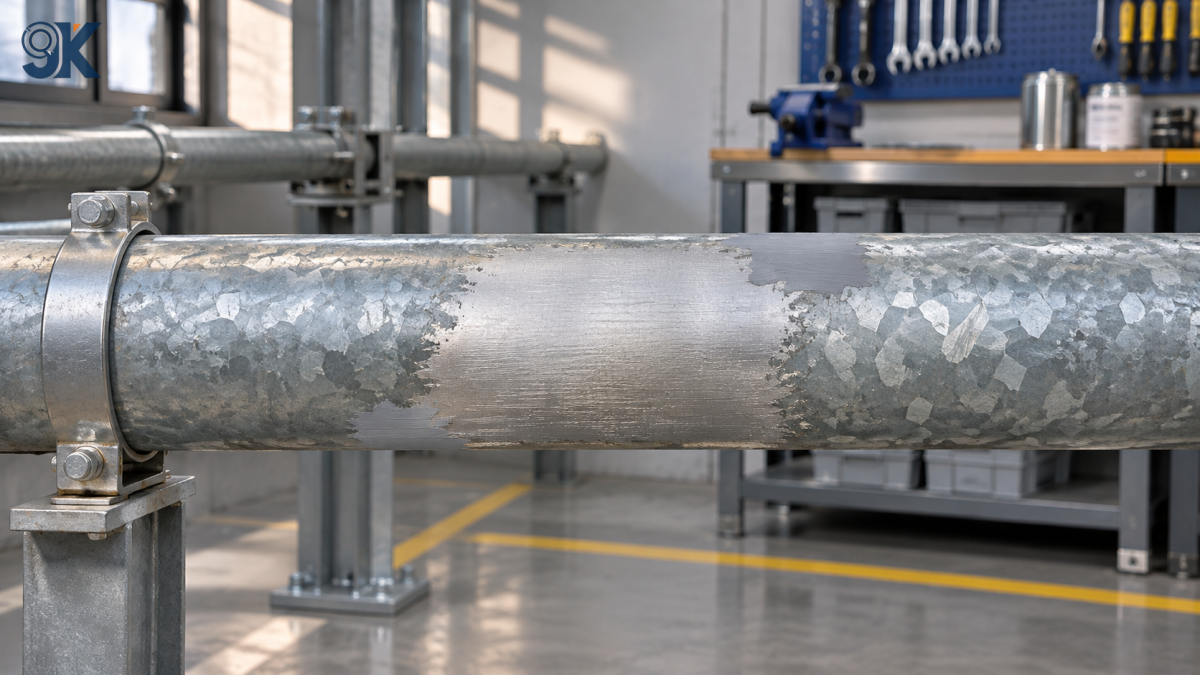
Start by cleaning the area enough to see what is present. Dirt, white corrosion products, and red rust can obscure the edges of a defect. White deposits on galvanized steel do not automatically mean the coating has failed: they can form when zinc reacts with moisture. Determine whether the zinc beneath them remains sound before removing more material than necessary.
Red rust generally means iron corrosion is occurring. It calls for closer attention, particularly at welds, threaded joints, cut ends, clamps, and low points where water collects. A narrow rust line beneath a clamp may be larger than it appears; release or move the support when it is safe and authorized to do so. Check the pipe underneath rather than coating only the visible edge.
Look beyond the coating surface. If the steel is pitted, soft-looking, leaking, or visibly thinned, the repair decision belongs with the person responsible for pipe integrity. A coating can slow further external corrosion, but it cannot restore lost wall thickness or make a pressure-containing component safe. Where appropriate, arrange wall-thickness measurements or other inspection under the site’s procedures.
Also establish whether the damage is external or internal. External touch-up is often practical on an accessible line. A damaged internal coating, particularly in a small-bore pipe, is a different problem: surface preparation, application, and inspection may be impractical without removal or specialized equipment.
Choose the repair method for the job, not just the scratch
For hot-dip galvanized steel, ASTM A780/A780M describes repair methods for damaged and uncoated areas, including zinc-rich paints, zinc-based solder, and sprayed zinc. Check the edition and acceptance requirements specified for the project; the standard is not a blanket approval for every coating product or every damaged pipe. The original galvanizing specification, customer requirements, and service conditions can also determine whether touch-up is acceptable.
Zinc-rich paint: usually the practical field choice
A suitable zinc-rich coating is often the most convenient option for small external scratches, handling damage, or exposed steel at a weld. It can be applied locally without removing a long section of pipe, provided the surface can be prepared and kept within the product’s application limits.
Choose a product intended for galvanizing repair, not merely a silver-colored paint. Check its technical data for the required surface preparation, application method, dry-film thickness, curing conditions, and compatibility with any existing coating or topcoat. Some products are single-component; others require mixing and have a limited working life. Those differences matter during a shutdown window.
A brushed patch will not necessarily look or weather exactly like the surrounding hot-dip coating. Appearance alone is a poor acceptance test. What matters more is whether the preparation, application, thickness, and curing meet the specified repair system.
Zinc-based solder and sprayed zinc
Zinc-based solder materials can be useful for localized repairs where heating is permitted and the operator can control the process. They are less attractive around live services, combustible materials, sensitive equipment, or inaccessible joints. A hot-work permit and the site’s isolation and fire precautions may be necessary. Never assume that heating an in-service pipe is acceptable because the repair area is small.
Thermal spraying with zinc can be appropriate for larger accessible areas or controlled shop work. It requires suitable preparation, equipment, operator competence, and inspection. On a crowded pipe rack, the containment and access requirements may make it less practical than removing the component for shop repair—or replacing it.
For an extensively damaged loose component, stripping and re-galvanizing may be worth discussing with a galvanizer. Its suitability depends on the component’s condition, fabrication details, venting and draining provisions, and whether removal is feasible. It is not an automatic remedy for a thin or corroded pipe.
Surface preparation is where most field repairs are won or lost
A coating applied over oil, loose rust, salts, or damp steel may look acceptable on the day of the job and fail much earlier than expected. Preparation should extend beyond the obvious bare spot to reach sound surrounding material and provide the transition required by the selected product.
Remove oil and grease using a suitable cleaning method before abrasive or power-tool preparation; otherwise, contamination can be spread across the surface. Remove loose corrosion products, damaged coating, and welding residue as applicable. Follow the specified preparation grade and the coating manufacturer’s instructions rather than assuming a quick pass with a wire brush is sufficient.
On a welded pipe, pay particular attention to the heat-affected area and weld profile. Sharp spatter, slag, and rough edges make a consistent film difficult to achieve. Remove residue and address weld irregularities as permitted by the fabrication and repair procedure. Do not grind a pressure weld or parent metal without authorization.
Dust must be removed after preparation. If the pipe is outdoors or carrying a cold fluid, check for condensation: a surface can feel dry and still be unsuitable for coating. Use the product’s temperature, humidity, and dew-point requirements, and do not coat over visible moisture. If those conditions cannot be maintained through the required curing period, reschedule or provide suitable protection.
Applying and checking a zinc-rich repair
Before opening the container, confirm the repair area, product, preparation standard, and acceptance criteria with the work order or project specification. Check the product’s shelf life and mix it as directed. Zinc-rich materials can settle in the container, so inadequate mixing can leave the applied film inconsistent.
Apply the coating by the permitted method, working it into the prepared area and covering the edges of sound adjacent coating as instructed. Avoid building a thick, soft patch in one pass if the product requires multiple coats. Respect the minimum and maximum recoating intervals, as well as the time needed before handling or returning the line to service.
Inspect for missed edges, pinholes, runs, poor adhesion, and damage caused during reassembly. Measure dry-film thickness where the specification requires it, using an appropriate calibrated gauge and a procedure suitable for the substrate and repair area. A small curved pipe and a nearby existing zinc layer can make readings awkward, so interpret them using the instrument and project procedures rather than relying on one isolated reading.
Record the location, preparation method, product, application conditions, and inspection result. This is useful at the next shutdown: a recurring defect at the same clamp suggests a mechanical or moisture-trapping problem that another coat of paint alone is unlikely to solve.
When local repair is not the best answer
A patch is a reasonable choice when the exposed area is limited, the pipe is sound, and the surface can be properly prepared. The balance changes when damage is widespread, access is restricted, or the pipe is near the end of its service life. Repeated touch-ups on a corroded line can consume maintenance time without addressing the underlying risk.
Consider replacement or a more extensive refurbishment when corrosion has spread beneath supports, the defect cannot be inspected fully, or the required preparation cannot be achieved. For pressure systems, the decision must account for operating conditions and the applicable integrity requirements. A repaired exterior coating is not evidence that the inside wall is sound.
The environment also changes the decision. A dry indoor utility line and a pipe exposed to coastal spray, persistent condensation, or chemical washdown do not face the same demands. A zinc-rich repair may need an approved topcoat in a more aggressive environment, but compatibility and the complete coating system should be confirmed before application.
For drinking-water contact, food-related service, or other regulated applications, do not select a repair material solely because it is suitable for galvanized steel. Confirm that the specific product and use meet the applicable local requirements. External pipe identification, electrical bonding, and fire protection requirements should likewise be checked before covering or altering any component.
Prevent the same damage from returning
Coating damage often starts during lifting, transport, installation, or adjustment. Use appropriate lifting protection, avoid dragging pipe across hard edges, and inspect contact points before commissioning. At supports, investigate rubbing, trapped water, and incompatible contact materials rather than simply making the repair patch larger.
The support structure deserves its own assessment. A pipe may be galvanized while its supporting member has a different finish or maintenance requirement. For example, an A36 H Beam-(1) used in a fabricated frame should not be assumed to have the same coating system as the pipe; verify the specified finish and inspect the contact arrangement for the actual assembly.
Where replacement is the better option, accurate information helps avoid a second round of site modification. Record the pipe dimensions, grade or specification where known, end preparation, coating requirements, quantities, and any drawing details. Shandong Jiukai Metal Materials Co., Ltd. provides steel pipe customization and processing support and can review specifications and drawings as part of a replacement inquiry. The responsible site engineer should still confirm suitability for the operating system.
Before closing the work order, make one final check: has the team repaired an isolated coating defect, or merely covered a symptom of wall loss, trapped moisture, or movement? If the cause remains uncertain, document it and schedule follow-up inspection rather than treating a fresh zinc-colored patch as proof that the pipe is sound.
Latest News
- How do iron ore prices affect steel pipe price trends?
- How do tariffs affect square tube export markets?
- How steel pipe price trends affect inventory valuation
- Steel pipe price forecast for 2026 amid changing raw material costs
- Square Tube Export News: What Buyers Should Watch in Freight and Supply
- What new trade investigations mean for steel pipe exports
Send Us A Message

