How could electric arc furnace investment reshape steel industry development?
How could electric arc furnace investment reshape steel industry development?
Could electric arc furnace investment redefine the economics of steel industry development—and change how manufacturers source steel pipes and profiles? For business leaders, the opportunity extends beyond expanding capacity. It involves balancing electricity costs, scrap availability, emissions requirements, and product quality. As steelmakers assess new production routes, downstream buyers must consider how these investments could influence pricing, material consistency, and supply reliability.
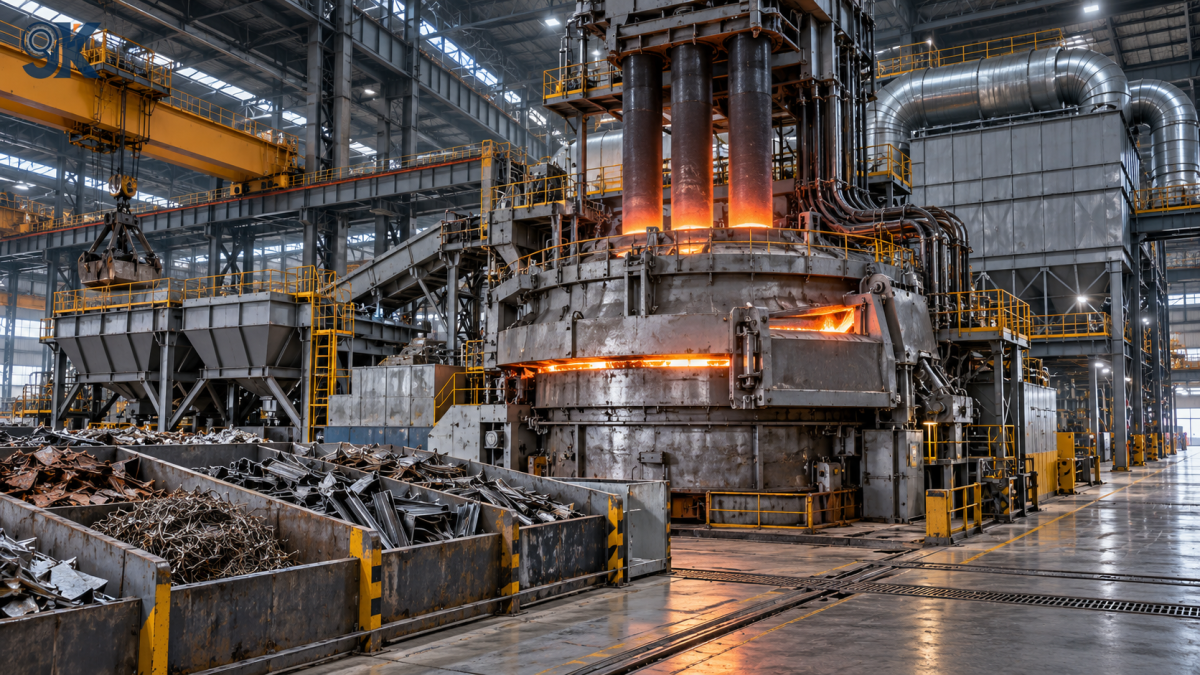
The important distinction is between installing a furnace and building a commercially dependable supply chain around it. An electric arc furnace, or EAF, can offer production flexibility and a route to lower-emission steel. Neither advantage automatically produces cheaper pipe, better profiles, or shorter delivery times. Those outcomes depend on where the furnace operates, what it melts, and how effectively the surrounding facilities turn liquid steel into qualified products.
Investment changes the cost structure, not just the equipment
Compared with the conventional blast furnace–basic oxygen furnace route, scrap-based EAF steelmaking shifts more commercial exposure toward electricity and metallic feedstock. Coke and iron ore no longer dominate the same way. Instead, power contracts, scrap grading, transport distances, and access to direct reduced iron or hot-briquetted iron become central investment questions.
That shift can change which locations are attractive for steelmaking. A site near scrap collection networks, reliable electricity, and downstream rolling capacity may have advantages over one selected mainly for access to iron ore. But an apparently attractive power tariff is not enough. Grid connection costs, demand charges, interruption risks, and the ability to secure suitable power over the investment horizon all matter.
For a new project, the furnace quotation is therefore a poor shortcut for judging competitiveness. Secondary metallurgy, casting equipment, oxygen supply, dust collection, water systems, and rolling facilities can determine whether the plant delivers its intended product mix. A low-cost melting operation can still become an expensive supplier if downstream yield is weak or finishing capacity is constrained.
The practical investment question is not simply, “How much steel can this furnace melt?” It is, “How much saleable steel can this integrated operation deliver, at the required specification, through different energy and scrap price conditions?”
Scrap quality could become a stronger dividing line between producers
More EAF capacity means greater attention to the quality of available metallic feedstock. Scrap is not one interchangeable commodity. Manufacturing offcuts, obsolete machinery, shredded material, and mixed demolition scrap carry different chemical compositions and contamination risks. Sorting improves consistency, but it does not make every grade suitable for every steel product.
Residual elements such as copper and tin deserve particular attention because they are difficult to remove through conventional steelmaking practice. Depending on their concentration and the product requirements, they can affect processing and surface performance. Producers targeting demanding applications may need cleaner scrap, carefully controlled charge blends, or dilution with suitable iron units.
This creates a commercial tension. The products offering attractive margins may require the most expensive metallic inputs and tighter process control. A business case based on low-priced mixed scrap should not quietly assume a sales mix dominated by demanding grades.
For buyers of steel pipes and profiles, the useful question is not whether scrap was used. It is whether chemistry, cleanliness, mechanical properties, and batch consistency meet the intended application. EAF steel is not inherently inferior or automatically equivalent; producer capability and the purchasing specification decide the issue.
Pipes and profiles will feel the transition through different routes
The connection between a new furnace and a finished steel pipe is often indirect. Welded pipe depends on suitable strip or plate, followed by forming, welding, sizing, and any required heat treatment or testing. Seamless pipe typically starts from suitable billet and follows a different manufacturing route. Structural sections depend on casting and rolling configurations suited to their dimensions and grades.
Consequently, an announcement of additional EAF capacity does not necessarily mean more supply for a particular tube size or profile. A plant producing billets for reinforcing bar may have little immediate relevance to a machinery manufacturer buying precision tubing. Even where the intended product fits, qualification and production ramp-up can separate announced capacity from dependable deliveries.
Consider a machinery manufacturer ordering tubes that will be welded into frames and then machined at connection points. The buyer needs predictable wall thickness, suitable weldability, dimensional control, and consistent processing behavior. A change in upstream steelmaking route is manageable if those requirements remain controlled. Unannounced variation in chemistry, heat treatment, or manufacturing practice is the greater concern.
Purchasing teams should therefore distinguish a furnace-route change from a change to the approved material or manufacturing route. They are not automatically the same event, but either may justify review under the buyer’s quality procedures. Trial material should pass through the actual fabrication process, not just incoming inspection.
Lower emissions may influence market access, but evidence matters
Scrap-based EAF production generally offers lower direct steelmaking emissions than the conventional integrated route. However, the full emissions picture depends on electricity generation, metallic feedstock, process efficiency, and the accounting boundary used. An EAF using carbon-intensive electricity cannot be assessed in the same way as one supplied with lower-carbon power.
For exporters and their customers, this makes product-level evidence more useful than a broad “green steel” description. Buyers may need emissions information that identifies the production site, relevant product, reporting period, methodology, and verification status. Whether particular documentation is required must be checked against the destination market and applicable contract or regulatory obligations.
There is also a boundary problem downstream. A steelmaker’s reported figure should not automatically be presented as the finished pipe’s footprint. Tube forming, welding, heat treatment, coating, and transport may need consideration under the chosen methodology. Comparing quotations with inconsistent boundaries can make one offer appear cleaner without establishing a genuine advantage.
The sensible commercial approach is to separate three questions: does the product meet its technical requirements, is its emissions claim supportable, and does the customer value that claim enough to affect the purchasing decision? None should substitute for the others.
Will EAF expansion make steel cheaper?
Not consistently. Additional qualified supply can put pressure on prices, but rising demand for suitable scrap can offset part of that effect. Electricity costs, financing, utilization, and the cost of iron units also influence the result. A new plant operating below its intended output may face a very different cost position from its investment presentation.
EAF operations can offer more production flexibility than a conventional integrated works, although practical flexibility depends on the whole plant. This may help producers respond to demand swings. It does not mean a rolling mill can economically switch between every grade and section size on short notice. Campaign planning, order sizes, and finishing bottlenecks still shape availability.
Buyers should be cautious about building long-term budgets around an assumed EAF discount. A more useful approach is to understand quotation validity, adjustment terms, minimum order quantities, and delivery commitments. If a supplier proposes a price formula, its reference inputs should reasonably reflect the supplied product rather than an unrelated headline steel index.
Procurement needs a closer link between mill changes and delivery planning
As production routes diversify, service providers need to connect upstream documentation with downstream execution. Shandong Jiukai Metal Materials Co., Ltd., based in China’s Shandong steel pipe supply network, combines custom production coordination, deep processing, warehousing, export documentation, and logistics. In this setting, the relevant service is translating a drawing and application into a clear specification, then maintaining traceability through processing and shipment.
For a small trial order, that may mean confirming the material requirements before cutting or machining begins. For a recurring production order, it may mean agreeing how mill changes are communicated and which inspection records accompany each shipment. Neither task can be replaced by a general assurance that the upstream producer has installed newer equipment.
- Define acceptance requirements, including dimensions, mechanical properties, delivery condition, and application-specific testing.
- Clarify which changes require buyer approval, particularly where an established material has already been qualified.
- Separate mill production time from processing, consolidation, customs clearance, and ocean transit.
- Confirm batch identification survives cutting, repacking, and mixed-order shipment where traceability is required.
Shipping choices also affect the outcome. Jiukai’s access to ports including Tianjin, Qingdao, and Rizhao provides routing options, while FCL, LCL, and bulk shipment serve different order profiles. The appropriate choice depends on cargo dimensions, handling exposure, sailing schedules, and total landed cost—not merely the lowest freight quotation.
Some manufacturers will also review material selection as they reassess supply chains. If a redesign introduces a product such as 7003 Aluminum Coil, that is a separate engineering decision, not an automatic substitute for steel. Strength, stiffness, joining, corrosion behavior, and fabrication requirements must be checked against the component’s actual duty.
The stronger investment case is built around qualified demand
Electric arc furnace investment can reshape steel industry development by changing input dependencies, production locations, emissions profiles, and supplier relationships. The strongest projects will connect suitable feedstock and dependable power with processing capability and a realistic customer base. Furnace capacity alone is an incomplete measure of their prospects.
For manufacturers, the next step is specific: identify which purchased grades and dimensions could be affected, ask suppliers about qualification and change-control plans, and test alternative material before relying on it for scheduled production. A new furnace becomes commercially relevant when it can supply the right product repeatedly—with evidence that matches the promise.
Latest News
- How anti-dumping duties change market access for steel pipe exports
- How could electric arc furnace investment reshape steel industry development?
- How Steel Pipe Warehousing and Logistics Affect Damage Rates and Delivery Costs
- Seamless vs Welded Steel Pipe: Which Option Fits Budget and Lead Time
- ASTM and EN Standards for Carbon Steel Pipe in Pressure Systems
- When a Standard Steel Pipe Works Better Than a Custom Specification
Send Us A Message

