
How anti-dumping duties change market access for steel pipe exports
A competitive steel pipe quotation can become unworkable when anti-dumping duties enter the landed-cost calculation. A distributor may have an acceptable mill price, a confirmed freight offer, and customer demand, yet still face a margin shortfall because the imported pipe falls within a trade-remedy measure. Anti-dumping duties change market access by raising entry costs, differentiating suppliers by applicable rates, and adding uncertainty to purchasing and inventory decisions.
The first question is therefore not whether a shipping route is available, but whether the exact product, origin, and producer-exporter combination are covered. For buyers following Steel Pipe Export News, an investigation announcement is a signal to reassess exposure—not proof that every steel pipe shipment faces the same duty. Before committing to an order, establish the applicable scope, rate, and timing, then test whether the landed cost still supports the intended selling price.
Market access becomes a commercial calculation, not just a customs question
Anti-dumping measures generally address imports found, through the importing jurisdiction’s procedures, to be dumped and to cause legally relevant injury to domestic industry. For a buyer, the immediate effect is an additional import cost. The broader effect is a change in which suppliers can compete profitably in a particular market.
A shipment may remain legally importable while becoming commercially unattractive. A distributor selling standard pipe into a price-sensitive market may be unable to pass the extra cost downstream. A supplier serving a more specialized application may retain business where qualification requirements, availability, or processing capabilities limit substitution. The same measure can therefore affect commodity inventory and project-specific purchasing differently.
Supplier comparisons also become more granular. Where the measure assigns different rates to named companies, a country-level sourcing comparison is insufficient. The actual producer, exporter, and any conditions attached to the claimed rate matter. A trading company’s quotation should not be treated as evidence that a particular mill’s rate will apply.
Start with the product description, then verify the tariff classification
“Steel pipe” is too broad a description for a reliable duty assessment. Measures may distinguish products by manufacturing method, dimensions, grade, end finish, coating, technical standard, or intended application. Seamless pipe, welded tube, mechanical tubing, and line pipe should not automatically be treated as one customs or trade-remedy category.
Tariff codes are important screening tools, but they may not settle coverage. Depending on the jurisdiction, codes listed in a notice can be indicative, while the written scope description controls. A shipment outside a listed code may still require examination, and goods within a listed code may qualify for an express exclusion.
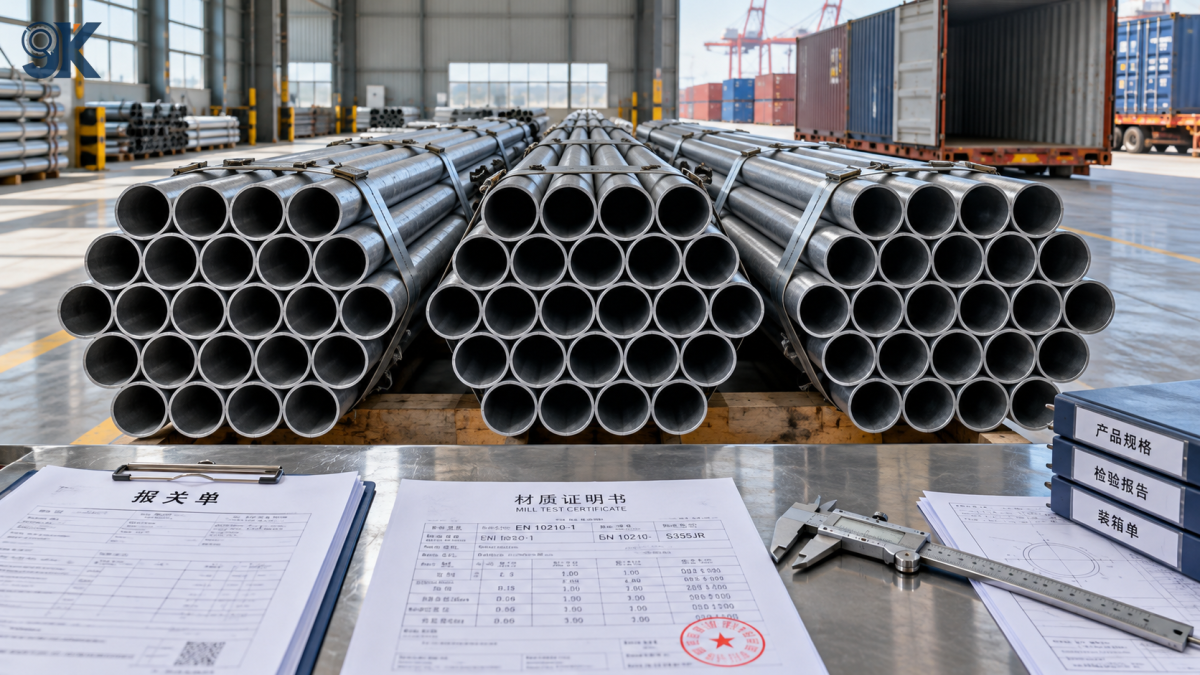
A useful working file connects these points to the purchase order. Generic catalog pages are rarely enough when scope depends on technical characteristics. Drawings, mill test certificates, production descriptions, and invoice wording should tell a consistent story about the goods being imported.
Why the quoted duty rate may not be the final exposure
An attractive rate in a supplier presentation needs independent verification. It may refer to a previous period, a different legal entity, or a producer-exporter relationship that does not match the proposed transaction. Some systems distinguish individually assessed companies from other suppliers; others apply particular documentation requirements before a specific rate can be used.
There is also a difference between a customs payment at entry and the final duty liability. In some jurisdictions, importers pay a cash deposit that can later be adjusted through review or assessment procedures. Elsewhere, collection works differently. Buyers should establish which system applies rather than assuming that the amount paid at clearance permanently closes the exposure.
For a distributor, this affects both margin recognition and working capital. Goods may be sold before the final liability is settled. A quotation based only on the initial deposit can therefore understate the commercial risk, even when the shipment clears without delay.
Build the landed-cost model around the destination’s rules
The model should separate the product price, freight, insurance, ordinary customs duty, anti-dumping duty, any countervailing duty, applicable safeguards, taxes, clearance charges, and inland delivery. Do not assume that every charge uses the same calculation base or that all measures can be added as simple percentages. Interactions, exclusions, and tax treatment require destination-specific confirmation.
Use at least a verified-current-treatment case and a downside case reflecting a credible identified uncertainty. The latter might involve failure to qualify for a claimed company rate or a potential change under an active proceeding. It should not be an arbitrary surcharge presented as a legal forecast.
Where tax is recoverable, distinguish cash paid at import from the lasting economic cost. Where liability may be revised, record the contingent exposure separately. This gives purchasing and finance teams a clearer basis for deciding whether to proceed, negotiate, or defer.
Read trade developments by stage, not by headline
An investigation, a provisional measure, a final determination, and a later review do not have the same commercial meaning. An investigation can change supplier behavior before any duty is collected, while a published review may alter rates for future entries or affect earlier liabilities under the destination’s system.
The most useful trend analysis follows the legal event through to its operational consequences:
- Investigation begins: identify potentially covered inventory, open purchase orders, and contracts with fixed resale prices.
- Provisional action is announced: verify the covered entry dates, payment requirements, and any exceptions rather than relying on the announcement headline.
- Final measures take effect: update approved suppliers, pricing assumptions, and documentary requirements.
- A review, expiry process, or scope decision occurs: assess what actually changes and when; a review does not automatically suspend existing collection.
Shipment timing deserves particular attention. The relevant trigger may be customs entry or another legally defined event, not the purchase order date or vessel departure. Exceptional retroactive treatment can arise under certain procedures, but it should never be assumed without checking the applicable rules and notices.
This is why a shipment already on the water can carry a different risk from stock already released into the market. Commercial teams need status visibility at order, loading, arrival, and customs-entry stages—not simply an estimated delivery date.
Changing the route does not necessarily change the origin
Routing pipe through a third country, changing the invoicing entity, or using a different port does not by itself remove origin-based duty exposure. Warehousing, repacking, relabeling, and simple finishing should not be presumed to confer a new origin. Origin treatment depends on the importing jurisdiction’s rules and the actual manufacturing operations performed.
More substantial processing also requires careful assessment. Whether an operation changes origin is a legal and factual question, and anti-circumvention provisions may extend measures to certain third-country processing or modified products. A proposal described only as a “duty-free route” is therefore a reason to request manufacturing details, not a sufficient sourcing solution.
Legitimate alternatives include purchasing from a genuinely different origin, selecting a supplier with an applicable verified rate, or buying a technically suitable product outside the measure’s scope. Each alternative needs its own evidence. A different tariff code, invoice description, or minor dimensional adjustment does not establish exclusion.
For machinery applications, substitution must also preserve the required mechanical properties, dimensional tolerances, weldability, machinability, and traceability. Saving duty is not a sound trade-off if the replacement pipe fails the customer’s specification.
Adjust purchasing terms before committing inventory
Anti-dumping exposure is easier to manage before the order becomes binding. A sales contract should identify who handles import clearance, who funds duties and deposits, and how a change in treatment affects the agreed price. Incoterms help allocate certain delivery obligations, costs, and risks, but do not by themselves settle every issue of statutory importer liability or later duty reassessment.
Fixed-price resale contracts need particular care. An importer that accepts open-ended duty exposure while promising a fixed delivered price may carry a risk that neither the mill nor the customer has priced. Possible responses include a defined quotation-validity period, a clearly drafted duty-adjustment clause, or a purchase decision conditional on resolving a specific scope question.
Supplier documentation obligations should be equally explicit. Require accurate producer and exporter identification, consistent product descriptions, and any prescribed statements supporting the claimed treatment. Where a broker needs information before entry, set the document deadline before loading rather than leaving clarification until arrival.
Mixed consignments require separate product assessments. A shipment containing pipe and Color Coated Corrugated Board should not receive one assumed trade-remedy treatment merely because the goods share a container or supplier. Each line needs its own classification, scope review, and supporting description.
Decide whether to proceed, reprice, or change the source
A workable decision distinguishes known cost from unresolved liability. Proceeding can be reasonable when scope is clear, supplier identity supports the applicable rate, documentation is available, and the selling margin absorbs the verified landed cost. Repricing is more appropriate when coverage is established but the original commercial terms no longer support the transaction.
Pause the commitment when the unresolved point could materially change the economics: uncertain product coverage, unsupported origin, an unverified preferential company rate, or a timing issue under an active proceeding. These are specific reasons to obtain customs or trade-remedy advice; freight savings cannot compensate for an unknown duty basis.
Changing suppliers is justified only after the alternative passes the same assessment. Compare the verified duty position alongside specification compliance, lead time, minimum order quantity, and documentation reliability. A lower mill price or apparently unaffected origin is not enough on its own.
The useful output from monitoring trade developments is an updated sourcing decision: which pipe can enter, from which producer, under what documented treatment, and at what commercially acceptable cost. Record the official basis and verification date with each live quotation so that a later regulatory change triggers a deliberate review rather than an unexpected loss at clearance.
Latest News
- How anti-dumping duties change market access for steel pipe exports
- How Steel Pipe Warehousing and Logistics Affect Damage Rates and Delivery Costs
- Seamless vs Welded Steel Pipe: Which Option Fits Budget and Lead Time
- ASTM and EN Standards for Carbon Steel Pipe in Pressure Systems
- When a Standard Steel Pipe Works Better Than a Custom Specification
- What to Check Before Choosing a Steel Pipe Export Supplier for Your Market
Send Us A Message

