
Steel Pipe Price Forecast 2026: Scenarios for Procurement Budgets
A useful steel pipe price forecast for 2026 starts with three budget paths: lower replacement costs if demand weakens and supply remains available, broadly stable costs if production adjusts to orders, and higher costs if input inflation or supply restrictions tighten availability. None supports a reliable universal price per tonne. Pipe manufacturing route, specification, destination, and shipment timing determine how each scenario reaches the final invoice.
The practical starting point is a current, technically compliant quotation with a defined delivery basis. From there, separate the exposure to steel inputs, processing, freight, currency, and import charges. This makes a budget adjustable when conditions change without treating every movement in the steel market as an equal movement in delivered pipe costs.
Three scenarios for the 2026 purchasing budget
The scenarios below describe conditional market outcomes, not measured forecasts or assigned probabilities. Their purpose is to connect observable developments with purchasing decisions. Different pipe categories can follow different paths during the same period.
A change of scenario needs supporting evidence. A single low stock offer does not establish a falling market, and one expensive freight quotation does not establish a general shortage. More persuasive signals include repeated quotation changes across comparable suppliers, changes in available production slots, and consistent movement in relevant feedstock costs.
Where a downside market stops helping
Falling steel inputs create room for lower pipe quotations, but the adjustment is uneven. Stock purchased at earlier prices can delay reductions, while a seller clearing inventory can temporarily quote below the cost of newly produced material. These offers have different implications for repeat orders.
The strongest purchasing opportunity occurs when lower quotations coincide with confirmed availability and unchanged technical requirements. A cheaper offer with an unsuitable wall thickness, an unapproved grade substitution, or insufficient machining allowance does not reduce the cost of the required component.
The base case still requires room to move
A broadly balanced market does not produce identical monthly prices. Mill maintenance, order concentration, and shipment schedules create local changes in availability. A budget built around one annual average can therefore miss the periods when material is actually required.
Separating committed consumption from less certain demand preserves flexibility. Firm quantities can follow production milestones, while later releases retain room for specification changes or revised order volumes. The value of this arrangement depends on clear release deadlines and the supplier’s capacity commitments.
An upside scenario can arrive through logistics
Higher landed costs do not require a global steel shortage. Reduced shipping capacity, additional destination charges, or a change in applicable trade measures can raise the delivered cost while the mill quotation remains steady. Conversely, a mill increase can be partly offset by cheaper transport or favorable currency movement.
When delivery windows tighten, price protection and physical supply protection deserve separate treatment. A fixed price has limited operational value if the production slot, shipment window, and contractual response to delay remain unclear.
Match the market signal to the pipe being purchased
Welded and seamless pipe do not share an identical cost structure. Welded pipe has a direct connection to strip or plate feedstock, with forming, welding, sizing, testing, and finishing added afterward. Seamless pipe depends on billet or other suitable starting stock and the capacity required for piercing, rolling, and subsequent processing. A hot-rolled coil trend therefore provides incomplete evidence for a seamless tube budget.
Further processing changes the sensitivity again. Cold drawing, heat treatment, honing, precise cutting, and demanding dimensional tolerances add costs that do not automatically fall when commodity steel becomes cheaper. For a heavily processed tube, the finished quotation can remain firm even while its starting material declines.
Dimensions also affect availability. A common outside diameter and wall combination may be available from several stockholders, while a less common size requires a production run. Under those conditions, batch size and scheduling can matter more than a small change in the underlying steel price.
Related sheet purchases need their own reference point. For example, DX52D Galvanized Steel Plate listed alongside pipe in a machinery bill of materials belongs in a separate quotation category: its substrate, coating requirements, and product form differ from the pipe line items. Combining them under one steel escalation assumption can distort the budget.
Build the forecast around landed cost
A workable budget distinguishes the material quotation from the cost of receiving usable material at the required location. Start with the agreed product price, then identify origin transport and handling, export-related charges, international freight, insurance where applicable, destination charges, import duties, and inland delivery. Recoverable taxes should be distinguished from permanent costs, while their cash-flow effect remains visible.
Quotation comparisons require the same named delivery location and commercial basis. An FOB quotation and a delivered quotation allocate different transport costs and responsibilities. Even two offers using the same trade term need their inclusions reviewed, especially where terminal handling, unloading, or destination services are separately charged.
Currency exposure belongs on the payment timeline. The relevant exchange rate depends on the quotation currency, deposit date, balance-payment terms, and any agreed currency protection. Applying a single exchange-rate assumption to the entire annual spend can hide exposure concentrated around large shipments.
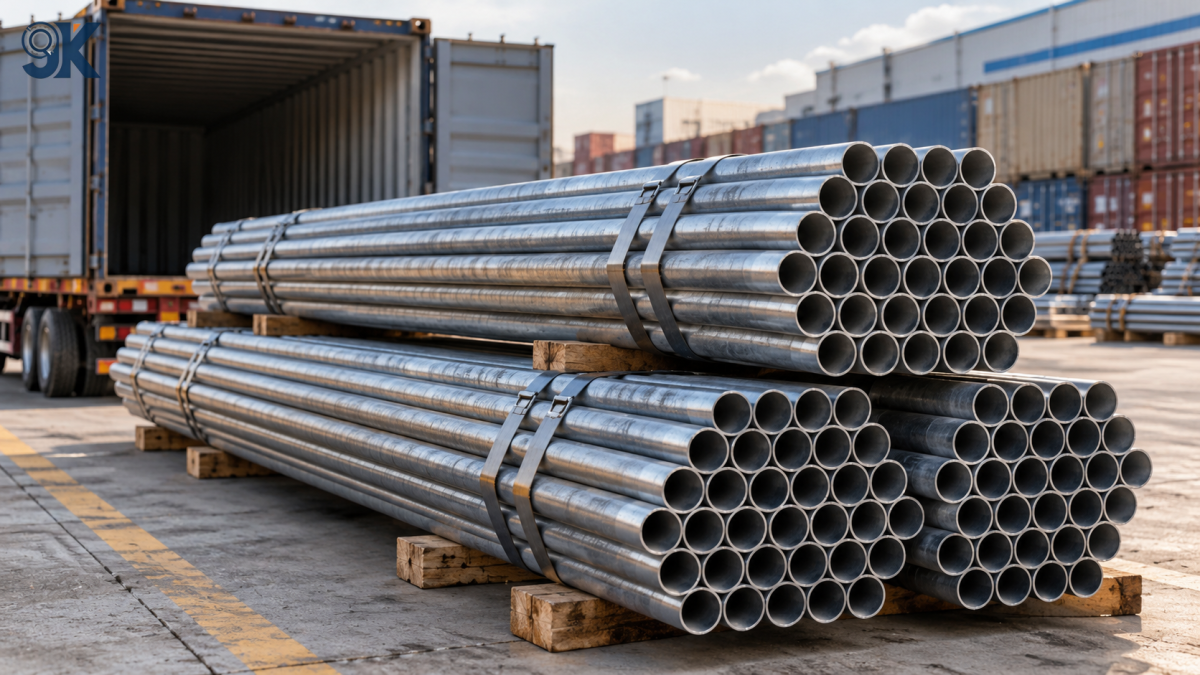
Shipment configuration adds another source of variation. Pipe length, bundle dimensions, shipment weight, and handling requirements influence container suitability and freight allocation. Small consolidated shipments have a different charge structure from full-container or bulk movements. A lower ocean freight headline does not guarantee a lower delivered cost for every shipment size.
For machined components, cost per usable piece adds an essential second view alongside cost per tonne. Supplied length, straightness, surface condition, and machining allowance affect yield. A higher-priced tube that reduces scrap or machining time can produce a lower component cost, provided those savings are established from the actual drawing and process.
Set contingencies against identifiable exposure
A single contingency percentage applied to the whole order is difficult to justify without supporting history. A more transparent approach separates the base quotation from allowances for the components that remain open. Freight awaiting booking, exchange rates before payment, and material awaiting price confirmation each have different triggers and deadlines.
Use the following structure as a budget model rather than a numerical forecast:
Budgeted landed cost = compliant material quotation + defined logistics and import costs + allowances for unresolved exposures.
Each allowance needs a reason for inclusion and a point at which it becomes a confirmed cost. Once freight is booked at an agreed rate, replace that estimate with the booked amount and retain only charges still exposed under the contract. This prevents the same uncertainty from being counted twice.
Import charges require destination-specific treatment. Product description, classification, origin, and applicable measures determine the result. A duty assumption copied from a previous shipment is only useful when those conditions still match. Where treatment remains unresolved, keep it visible as a separate budget item rather than burying it inside a higher pipe price.
The downside scenario also has a cost boundary: waiting. Compare the potential saving from delaying an order with storage, financing, minimum-order constraints, and the consequences of missing a production window. Lower future prices offer little benefit if the required processing capacity is no longer available.
Turn market changes into purchasing triggers
A forecast becomes useful when it defines what would change an order decision. For material required soon, the relevant trigger is a compliant offer that meets the production schedule and approved budget. For later requirements, evidence of sustained feedstock reductions and shorter lead times supports keeping some volume uncommitted.
An upward revision deserves stronger consideration when several signals align: comparable quotations rise, validity periods shorten, and confirmed production dates move outward. A supplier’s statement that prices are increasing becomes more meaningful when supported by these observable changes.
Contract structure determines how much flexibility remains after an order is placed. A fixed-price agreement should identify the specification, quantity, release dates, and treatment of changes. An adjustable-price agreement needs a relevant reference, a defined adjustment date, and a clear statement of which cost components move. A broad steel index alone may poorly represent a precision tube with substantial processing content.
Technical approval should precede any commitment intended to protect the budget. If dimensions, inspection scope, or processing requirements remain unsettled, later changes can reopen both price and delivery. Reserving tonnage without resolving those details leaves a gap between the purchased material and the material the drawing requires.
Keep the 2026 forecast attached to the order calendar
Review timing should follow exposure. Open requirements near a production deadline deserve attention when quotations expire or capacity changes. Longer-range demand can be reviewed around production-plan updates, relevant input movements, and changes in shipping or import conditions. Constantly revising a budget against unrelated steel headlines adds activity without improving accuracy.
Maintain a dated record of comparable offers, including specification, quantity, delivery basis, lead time, validity, and payment terms. This reveals whether a price change comes from the market, a different scope, or a different allocation of costs. It also preserves the basis for approving a purchase when later quotations move in either direction.
The next budget revision should state what changed: the material price, the required specification, the delivery schedule, or an unresolved landed-cost component. That explanation makes the 2026 forecast usable at the point where money and production capacity are committed.
Latest News
- Steel Pipe Price Forecast 2026: Scenarios for Procurement Budgets
- How anti-dumping duties change market access for steel pipe exports
- How could electric arc furnace investment reshape steel industry development?
- How Steel Pipe Warehousing and Logistics Affect Damage Rates and Delivery Costs
- Seamless vs Welded Steel Pipe: Which Option Fits Budget and Lead Time
- ASTM and EN Standards for Carbon Steel Pipe in Pressure Systems
Send Us A Message

