When steel pipe requires hydrostatic testing under ASTM A53
Steel pipe supplied to ASTM A53/A53M generally requires hydrostatic testing of each length, but seamless Type S pipe has a permitted alternative: nondestructive electric testing may replace the hydrostatic test under the applicable provisions of the standard. Electric-resistance-welded Type E pipe and furnace-butt-welded Type F pipe follow different requirements. A statement that pipe has been “NDT tested” therefore does not, by itself, establish that the required hydrostatic testing has been completed or validly replaced.
For quality and safety teams, the acceptance decision starts with the pipe’s manufacturing type, the ASTM edition specified in the order, and any additional purchaser requirements. Intended service pressure alone does not determine whether the mill must perform a hydrostatic test. The practical question is whether the supplied pipe followed the testing route permitted by the governing specification and whether the delivery records demonstrate that compliance.
Identify the pipe type before deciding which test is required
ASTM A53/A53M covers seamless and welded steel pipe, including black and hot-dip zinc-coated products. Its manufacturing designations matter because testing requirements do not transfer automatically from one type to another. Grade identifies a separate set of requirements; “Grade B” alone is insufficient to establish the permitted pressure-testing route.
- Type S—seamless pipe: Hydrostatic testing is a prescribed route, with nondestructive electric testing available as an alternative under the standard’s provisions. A purchase order can expressly require hydrostatic testing and thereby restrict that choice.
- Type E—electric-resistance-welded pipe: Hydrostatic testing applies. For NPS 2 and larger, the standard also requires nondestructive electric examination of the weld seam. That seam examination is an additional requirement, not a general substitute for hydrostatic testing.
- Type F—furnace-butt-welded pipe: Hydrostatic testing applies. The alternative provided for seamless pipe should not be extended to this manufacturing type.
These distinctions make an incomplete material description a significant inspection problem. An order reading only “ASTM A53 Grade B steel pipe” leaves out information needed to evaluate the testing evidence. The manufacturing type should be identifiable in the order, product certification, and associated marking or traceability records.
Use the edition incorporated into the purchase contract or project specification. Section numbering, referenced examination methods, and detailed provisions must be checked against that edition. An online summary or a certificate referring to another revision cannot resolve a contractual difference.
When an electric test can replace the hydrostatic test
For Type S seamless pipe, the permitted electric-testing alternative is the main reason an ASTM A53 delivery may legitimately lack hydrostatic test results. Where the governing edition allows the manufacturer to choose that route, and the purchase order does not require hydrostatic testing, absence of a hydrostatic record does not automatically justify rejection.
Acceptance still requires evidence that the alternative was performed in accordance with the applicable requirements. “NDT passed” is too broad to establish this. Nondestructive testing includes several methods, and an examination performed for another purpose may not satisfy ASTM A53’s alternative-testing provisions.
The documentation should identify the examination method and connect it to the supplied pipe. The inspector should then check the referenced method standard, required coverage, equipment standardization, and acceptance provisions. Any marking or certification required to identify the alternative testing route should also be present.
The situation changes when the purchaser specifies hydrostatic testing. For example, a project may require every supplied length of seamless pipe to be hydrostatically tested, even though ASTM A53 otherwise permits an electric-testing alternative. In that case, the supplier must meet the additional contractual requirement. A permitted option in the base standard does not cancel an explicit purchase-order instruction.
For Type E pipe, avoid confusing weld-seam examination with substitution. A certificate showing electric examination of the seam can demonstrate compliance with that examination requirement while leaving the hydrostatic-test requirement unresolved. Quality teams should evaluate the two obligations separately.
What the hydrostatic test actually demonstrates
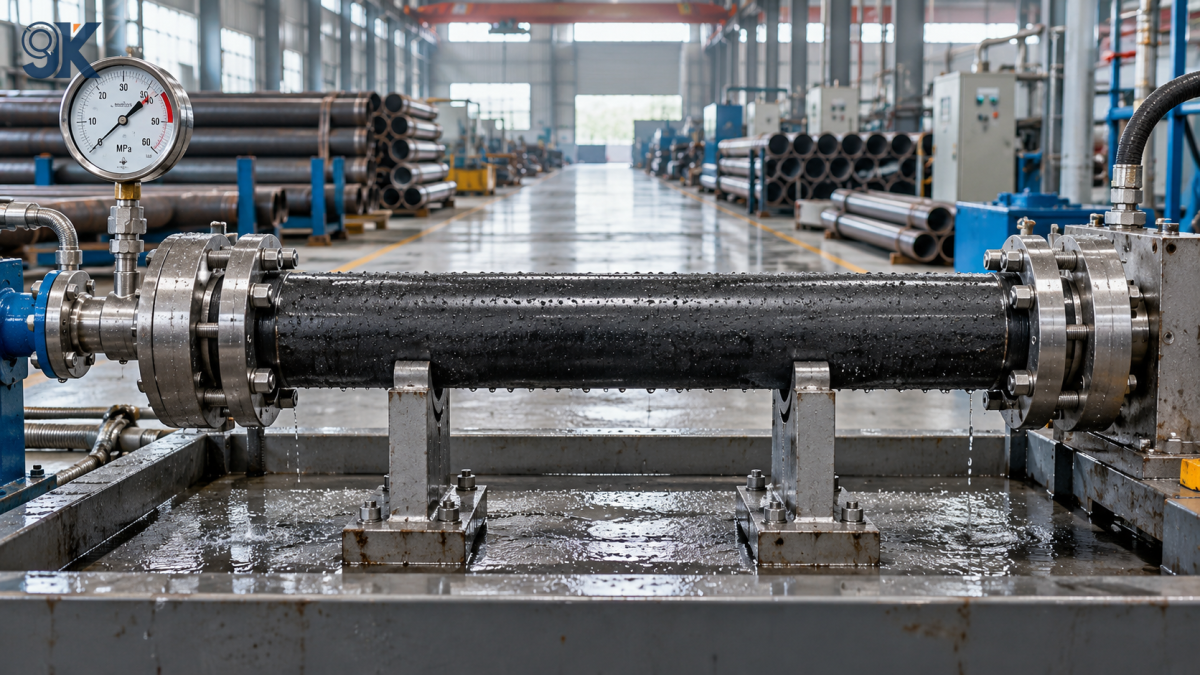
A hydrostatic test subjects the pipe to internal water pressure under specified conditions and checks for leakage. Its value lies in demonstrating pressure containment during that controlled test. It does not establish every aspect of material quality, weld quality, or fitness for the final application.
Electric examination serves a different purpose: it detects discontinuities through the response of the selected examination system. Its sensitivity depends on the method, setup, reference standards, and applicable acceptance criteria. A pipe can satisfy one form of examination without providing the evidence generated by the other.
This distinction explains why some requirements call for both tests. Hydrostatic testing and electric weld examination answer different inspection questions. Neither should be described simply as a universally “better” test, and neither should be accepted as interchangeable without a provision authorizing that substitution.
Likewise, a mill hydrostatic test does not establish the allowable operating pressure of the completed piping system. Service pressure depends on the governing design code, material properties, dimensions, temperature, joint details, allowances, and other design conditions. Treating the certificate’s test pressure as the pipe’s service rating can lead to an unsafe selection.
Factory testing also does not replace pressure testing required after fabrication or installation. Field welds, threaded connections, fittings, valves, and assembly work introduce conditions that were absent when an individual pipe length was tested at the mill.
Check pressure and duration against the specified pipe
A hydrostatic test record needs more than a pressure value. The specified test conditions depend on the applicable ASTM provisions and the pipe being supplied. Relevant inputs include size, wall thickness or weight designation, grade, and manufacturing type, together with any additional requirements in the order.
Do not apply a single remembered pressure to every ASTM A53 pipe. The standard contains pressure requirements and limitations that must be read together. A value copied from another diameter, wall thickness, or product type can produce an incorrect acceptance decision even when the test equipment operates correctly.
The same discipline applies to holding time. Reaching the required pressure momentarily does not establish that the prescribed test was completed. The procedure must maintain the required conditions for the applicable duration and assess the pipe against the specified leakage criterion.
Where detailed test reports are contractually required, compare the recorded pressure and duration with the correct requirement for that order item. Check the units as well. ASTM A53/A53M uses inch-pound and SI systems, and values from the two systems should not be mixed casually during calculations or acceptance review.
If a supplier proposes a different test pressure, request the technical basis before accepting the deviation. A higher figure does not automatically prove a more suitable test, and a lower figure cannot be justified solely by saying that the intended operating pressure is low.
What quality teams should verify before release
Effective acceptance links the order, the physical pipe, and the certification. A credible-looking test report is of limited value if it cannot be connected to the delivered material. Conversely, the absence of a separate pressure chart is not automatically a failure when the contract requires certification of compliance but does not require individual chart records.
Review the documentation at the level of detail required by the purchase order and inspection plan. The following checks address the most consequential gaps:
- Specification identity: Confirm ASTM A53/A53M, the governing edition, type, grade, size, and wall designation against the ordered material.
- Testing route: Establish whether the pipe was hydrostatically tested or, for eligible seamless pipe, accepted through the permitted electric-testing alternative.
- Additional examination: For Type E pipe within the applicable size range, verify the required weld-seam electric examination as well as hydrostatic-test compliance.
- Traceability: Connect certificates and test records to the delivered pipe through the identification system used for the order. A heat number identifies material origin but may not, by itself, identify an individual length’s test history.
- Required evidence: Check that certification, test reports, and any purchaser-specified inspection records have been supplied in the agreed form.
If detailed hydrostatic records form part of the acceptance package, they should provide enough information to identify the tested material and assess the test conditions and result. Depending on the contract, supporting evidence may include equipment identification, pressure-instrument calibration status, test dates, and inspector authorization.
Distinguish these purchaser requirements from the standard’s minimum documentation obligations. A buyer can require individual length records, witnessed testing, or recorded pressure traces, but those expectations should be stated before production. Adding them after delivery can create a documentation dispute even when the underlying testing was performed.
Where records conflict, hold the affected material from release while the discrepancy is resolved. A certificate declaring hydrostatic testing and a separate document identifying an alternative route need a clear explanation tied to the supplied lengths. A verbal assurance cannot resolve contradictory acceptance evidence.
Write the testing requirement before the order is placed
The most useful purchasing language states the required outcome directly. If hydrostatic testing is essential, specify that every supplied length must receive the ASTM A53/A53M hydrostatic test under the contract edition, and state whether substitution by nondestructive electric testing is prohibited. Add the required reporting, traceability, and witnessing arrangements where those are necessary.
If the seamless-pipe alternative is acceptable, allow it explicitly and require the supplier to identify the selected route in the certification. This gives receiving inspectors a defined acceptance basis and prevents them from rejecting compliant material simply because the mill used an authorized option.
Keep mill testing separate from project pressure-testing obligations in the specification. A request for “hydrotested pipe” can otherwise be misunderstood as covering the eventual fabricated spool or installed system. Each testing stage should have its own scope, acceptance basis, and responsible party.
When a delivery arrives without hydrostatic evidence, the next step is therefore specific: identify the pipe type, read the testing provisions of the contract edition, check the purchase-order restrictions, and establish traceability to the declared testing route. Type S pipe with a properly documented permitted alternative may be acceptable. Type E pipe supported only by a weld-seam examination record still needs evidence that its hydrostatic obligation was met. Release should follow that documented distinction.
Latest News
- How anti-dumping duties change market access for steel pipe exports
- How Steel Pipe Warehousing and Logistics Affect Damage Rates and Delivery Costs
- Seamless vs Welded Steel Pipe: Which Option Fits Budget and Lead Time
- ASTM and EN Standards for Carbon Steel Pipe in Pressure Systems
- When a Standard Steel Pipe Works Better Than a Custom Specification
- What to Check Before Choosing a Steel Pipe Export Supplier for Your Market
Send Us A Message

