
Steel Pipe Warehousing and Logistics: Planning Call-Offs for Phased Projects
A phased project can have enough steel pipe on order and still leave an installation crew waiting. The problem is often a mismatch between delivery batches and work-front readiness: early shipments consume laydown space, while late shipments interrupt erection, fabrication, or mechanical installation. Repeated handling also increases the chance of damaged ends, mixed bundles, and lost identification.
Effective Steel Pipe Warehousing and Logistics separates the purchase commitment from the physical release. Reserve material against an approved specification, then issue call-offs tied to installation packages, confirmed stock status, processing requirements, and realistic transport lead times. The working plan needs three connected controls: a package-level demand schedule, a warehouse allocation record, and a release approval process that reflects current site conditions.
Build the call-off schedule around installable packages
A purchase order grouped only by diameter and tonnage rarely tells a warehouse what the site needs next. Installation may require several pipe sizes, wall thicknesses, or lengths together. Dispatching the largest available bundle first can leave the site with substantial stock but no complete work package.
Start with the construction or fabrication sequence. Assign each release to a defined destination, such as a pipe rack section, equipment area, fabrication bay, or assembly stage. Break its demand down into identifiable material lines rather than a single total weight.
- Material identity: applicable standard, grade, outside diameter, wall thickness, length, and required end condition.
- Package demand: piece count and weight, with an agreed basis for theoretical or actual weight.
- Required condition: as-supplied, cut, beveled, coated, or otherwise processed according to the approved order.
- Destination constraints: delivery point, unloading method, access restrictions, and available storage footprint.
- Control references: purchase order line, work-package reference, drawing revision where relevant, and required inspection documents.
Keep installation allowances separate from confirmed demand. Cutting allowances, expected fabrication losses, and contingency stock should have an identified basis and owner; they should not become an unexplained percentage added to every release. Where cutting is required, reconcile the cutting plan with available stock lengths before reserving quantities.
Work backward from the site-ready date
The date needed on site is not the date to send a dispatch instruction. A call-off may still require stock verification, cutting, inspection, rebundling, transport booking, customs preparation, and delivery appointments. For international movements, vessel schedules and destination clearance add dependencies that a warehouse cannot remove by loading faster.
Calculate the latest release date backward from the required arrival date using confirmed lead times for the actual route:
Latest release date = required site arrival date − receiving allowance − destination transport and clearance − main transit − origin handling and clearance − processing and dispatch preparation − agreed contingency.
Use this as a dependency map, not a guarantee. Some activities can run in parallel, while others cannot begin until material or documents are approved. Distinguish the cargo-ready date from vessel departure and site arrival. A shipment that meets the warehouse dispatch date can still miss an installation window if the transport assumptions were wrong.
A forecast should reserve planning capacity without automatically authorizing irreversible work. The preparation instruction and firm dispatch release should state exactly what each approval permits.
Make warehouse availability mean more than “in stock”
A stock balance is not a release commitment. Pipe may be physically present but awaiting inspection, allocated elsewhere, undergoing processing, or missing the documents required for acceptance. The inventory report should distinguish received, accepted, reserved, processing, ready-to-dispatch, dispatched, and quarantined material.
For every reserved line, connect the project allocation to a warehouse location and identifiable bundles or pieces. Where heat-level traceability is required, retain that relationship through cutting, splitting, and repacking. Agree how identification will be transferred before original markings are removed or become difficult to read.
The warehouse layout should support release order. Store pipe on suitable supports, segregate different specifications, protect required surface and end conditions, and maintain safe retrieval access. Stacking heights, support spacing, lifting methods, and floor capacity need to suit the actual pipe dimensions, bundle arrangement, and handling equipment.
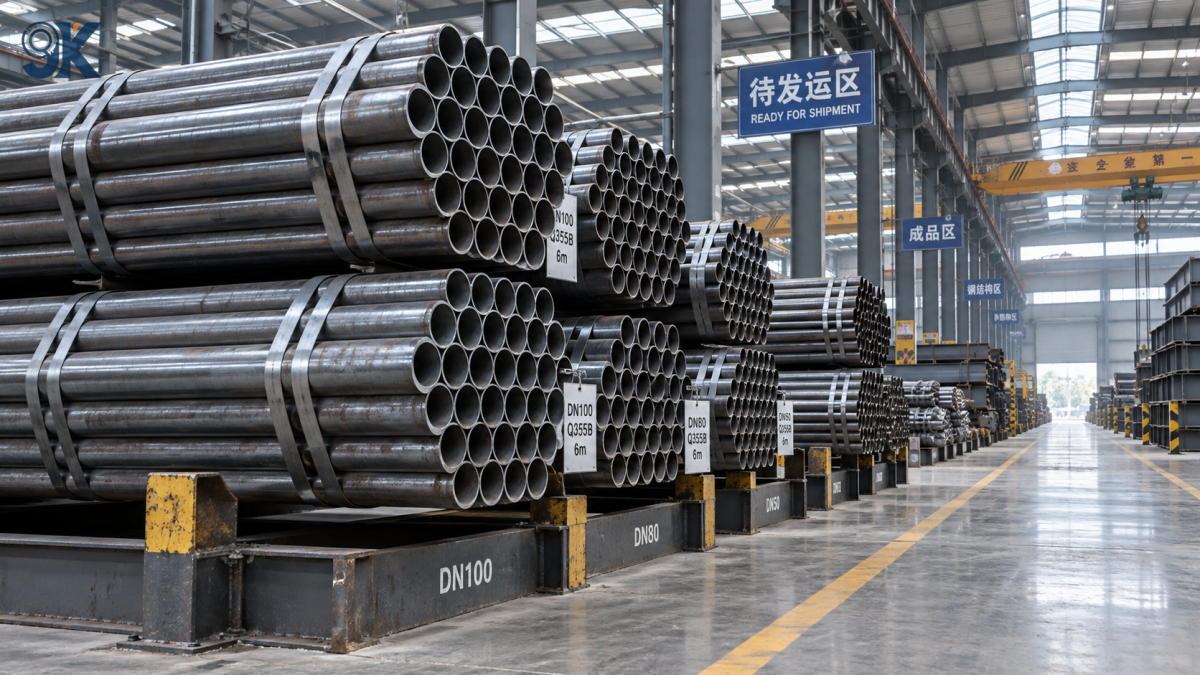
A useful pre-release verification follows the material from its storage location through any processing area to the dispatch lane. Confirm that the physical identity, quantity, condition, and document references still match. A spreadsheet total alone will not reveal that the next package is buried beneath later-phase stock.
Choose shipment sizes against site capacity and transport constraints
Smaller releases reduce site inventory but create more picking, loading, documentation, and freight transactions. Larger releases may use transport capacity better, yet consume storage and bring forward handling costs. Compare these effects using the complete delivery cycle rather than freight cost per tonne alone.
For each proposed batch, establish whether the site can unload it within the receiving slot, store it without obstructing access, and consume it in the planned sequence. Check the longest pieces and heaviest bundles against vehicle or container suitability, loading arrangements, lifting capacity, and destination access. Weight capacity alone does not establish transport feasibility.
- FCL: consider when cargo dimensions and quantities suit container loading and the destination can handle the planned unloading method.
- LCL: assess for smaller suitable consignments, while accounting for consolidation schedules, additional handling, packaging, and dimensional acceptance.
- Bulk or breakbulk shipping: evaluate where cargo size, volume, or handling requirements make containerized options unsuitable.
Port selection should follow the available service, cargo acceptance, inland movement, sailing schedule, and destination arrangements. A convenient origin port does not necessarily produce the earliest site delivery. Confirm the actual routing before incorporating its transit time into a firm call-off.
Mixed-material procurement needs separate packing decisions. If a project also purchases Copper Coil, assess its packaging, segregation, and handling requirements independently rather than assuming it can share steel pipe bundles or supports. Commercial consolidation should not override cargo protection.
Keep processing instructions attached to the release
Cutting, beveling, and other specified processing can simplify site work, but they also introduce another approval dependency. Do not authorize processing from an outdated drawing merely because the original pipe specification is unchanged. A revised cut length can make previously acceptable stock unsuitable for the intended package.
Each processing instruction should identify the source stock, output quantities, dimensions, tolerances, end preparation, marking requirements, and inspection hold points agreed in the order. The resulting packing list must describe what will actually be shipped, not just repeat the original purchase description.
Resolve remnants at the same time. Usable offcuts should remain identifiable in the stock record, with their dimensions and allocation status recorded. Otherwise, they may be counted as available tonnage even though they cannot satisfy the next package. Confirm whether processing losses and remnants belong within the project’s purchased stock and how they affect the remaining balance.
Use a firm release gate before loading
A dispatch instruction should be a controlled approval, not an informal message saying “send the next batch.” It needs a unique reference, revision, authorized issuer, material schedule, destination, requested delivery window, and explicit instructions for partial shipment.
- Confirm site readiness. Verify that access, permits where applicable, lifting equipment, unloading personnel, and laydown space are available for the proposed load.
- Verify releasable stock. Match accepted quantities and completed processing to the approved package. Resolve shortages before loading.
- Check documents. Reconcile packing lists, required material certificates, shipment references, and export documents where applicable.
- Confirm transport and responsibility. Check booking status, cargo restrictions, loading and unloading responsibilities, insurance arrangements, and the agreed Incoterms rule and named place.
- Authorize dispatch. Record approval and circulate the final shipment details to the warehouse, logistics coordinator, and receiving team.
Partial shipment needs a deliberate decision. Sending available pipe may help when it supports an independent work front. It may be wasteful when missing items prevent the package from being installed. Ask whether the proposed delivery enables usable work, not simply whether a truck can leave full.
Before departure, retain appropriate loading and condition records, including bundle identification and quantities. These support receipt checks and discrepancy investigation, but do not replace the agreed inspection or transport documentation.
Revise the plan without losing control of committed stock
Project schedules change; the release process should show which changes remain feasible. Establish a forecast horizon for tentative demand, a preparation window for confirmed processing, and a dispatch freeze point after which changes may affect bookings, handling, or storage charges. Set these boundaries from actual supplier and carrier commitments rather than applying an arbitrary standard period.
When a work front slips, first identify the shipment’s status. Unprocessed reserved stock may be reassigned more easily than cut material. Packed cargo may require repacking, while cargo already handed to a carrier may need a different delivery or storage arrangement. Record the revised destination and approval instead of silently editing the original call-off.
Maintain an exception list covering blocked stock, missing documents, overdue approvals, booking changes, and site restrictions. Give each item an owner and a decision deadline linked to the latest workable release date. This makes a schedule review a place to resolve constraints rather than merely report late shipments.
Storage terms also need attention before delays occur. Agree the included storage period, extension basis, stock ownership, risk allocation, insurance responsibilities, inspection access, and treatment of uncalled balances. Reserved inventory can remain physically available while becoming commercially disputed if these points are left open.
Close each delivery against the next call-off
At receipt, reconcile bundle or piece identification, quantity, visible condition, and documents against the dispatch record. Record discrepancies promptly under the agreed procedure and isolate questionable material where acceptance or traceability is unresolved. Do not let an unverified delivery automatically appear as usable site stock.
Then update three balances separately: accepted material at site, releasable material in storage, and material still awaiting production or processing. Adjust the next call-off for confirmed receipts and approved changes, not merely for quantities shown as dispatched. The next release decision should reflect both what the site can use and what the warehouse can actually supply.
Latest News
- How anti-dumping duties change market access for steel pipe exports
- How Steel Pipe Warehousing and Logistics Affect Damage Rates and Delivery Costs
- Seamless vs Welded Steel Pipe: Which Option Fits Budget and Lead Time
- ASTM and EN Standards for Carbon Steel Pipe in Pressure Systems
- When a Standard Steel Pipe Works Better Than a Custom Specification
- What to Check Before Choosing a Steel Pipe Export Supplier for Your Market
Send Us A Message

